The balance is the heart of the watch movement. This organ must operate continuously, precisely, accurately adjusted, rhythmically, reliably, and consistently. Galileo Galilei once measured time intervals during his research by counting his own pulse.
The balance is the central component regulating the oscillating system. It performs the same function as the pendulum in stationary clocks, namely to oscillate uniformly. Thanks to this invention, pocket watches and wristwatches—so common today—became possible. However, the accuracy of their oscillations still depends on gravitational forces, ambient temperature, and even atmospheric pressure.
The balance is made from alloys such as nickel silver, brass, or beryllium bronze. In the movement, it must be positioned in a perfectly poised state on its axis; special instruments are used for this operation.
Special Instruments
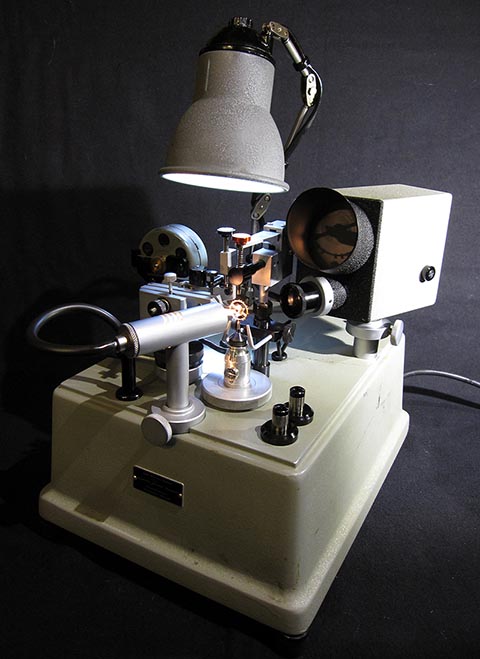
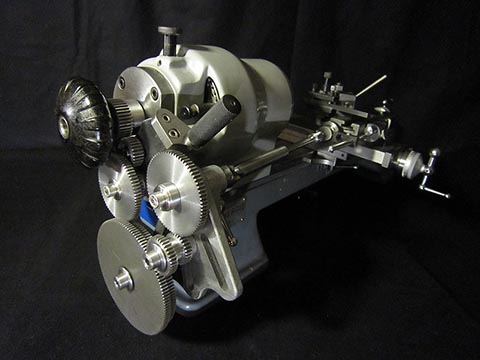
Jean Widmer-Steiner, Jema-Apparate, Balance Poising Machine
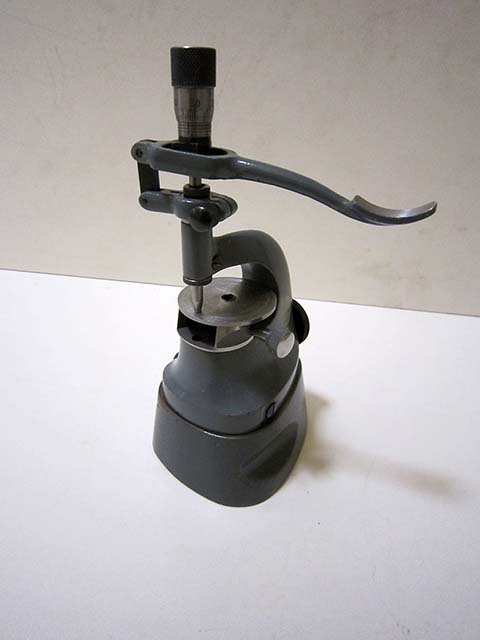
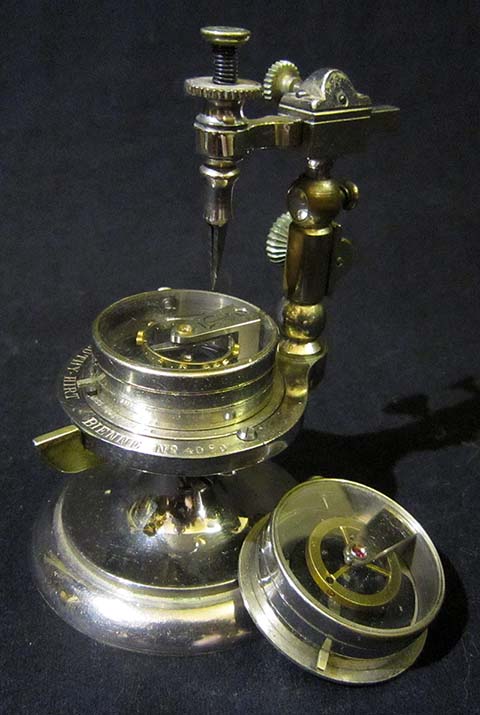
These devices perform the same function as a poising tool, but on a more professional level. The balance wheel must be adjusted so that there are no heavy spots on the rim; otherwise, the watch will run at different rates in different positions.