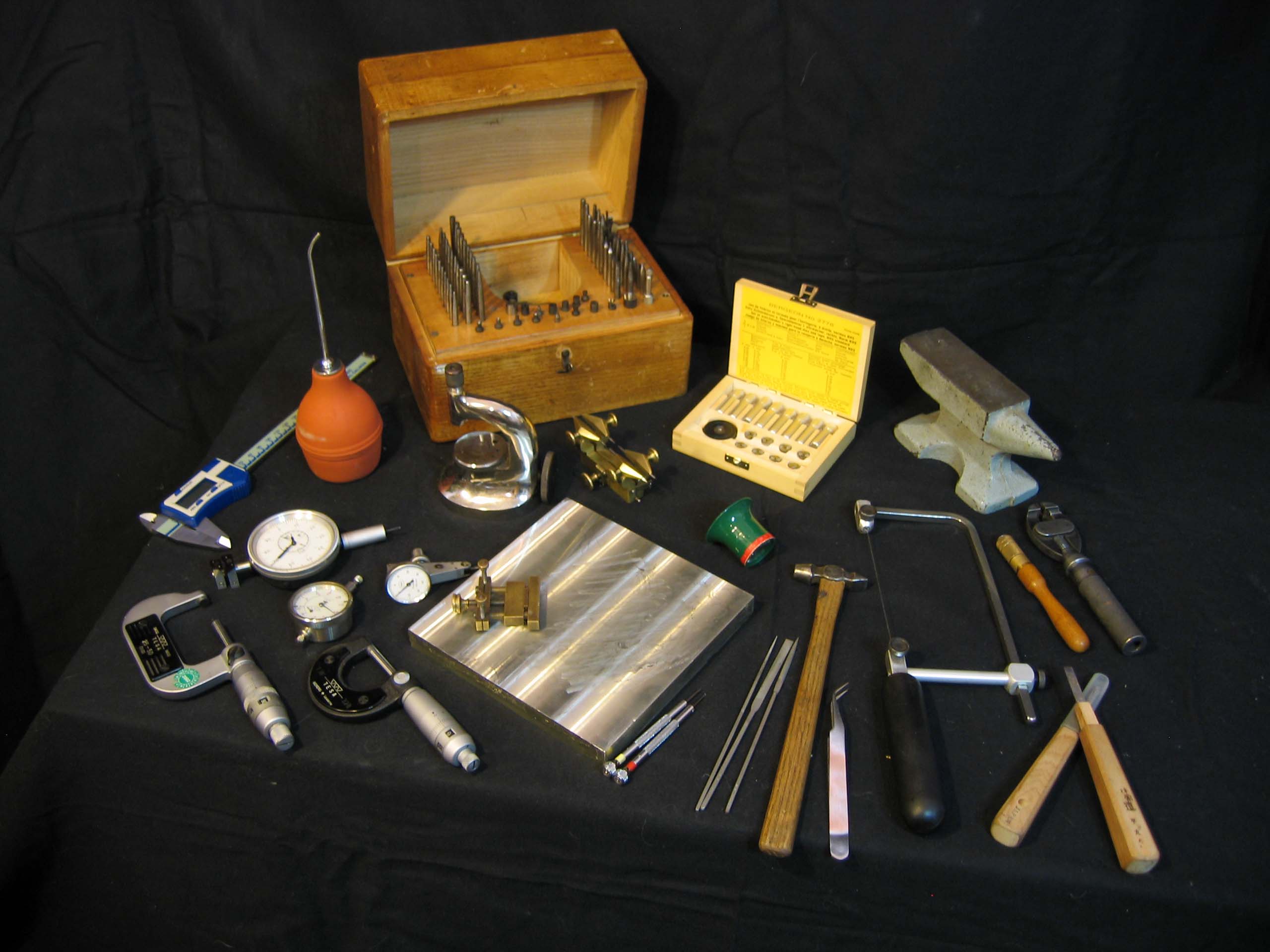
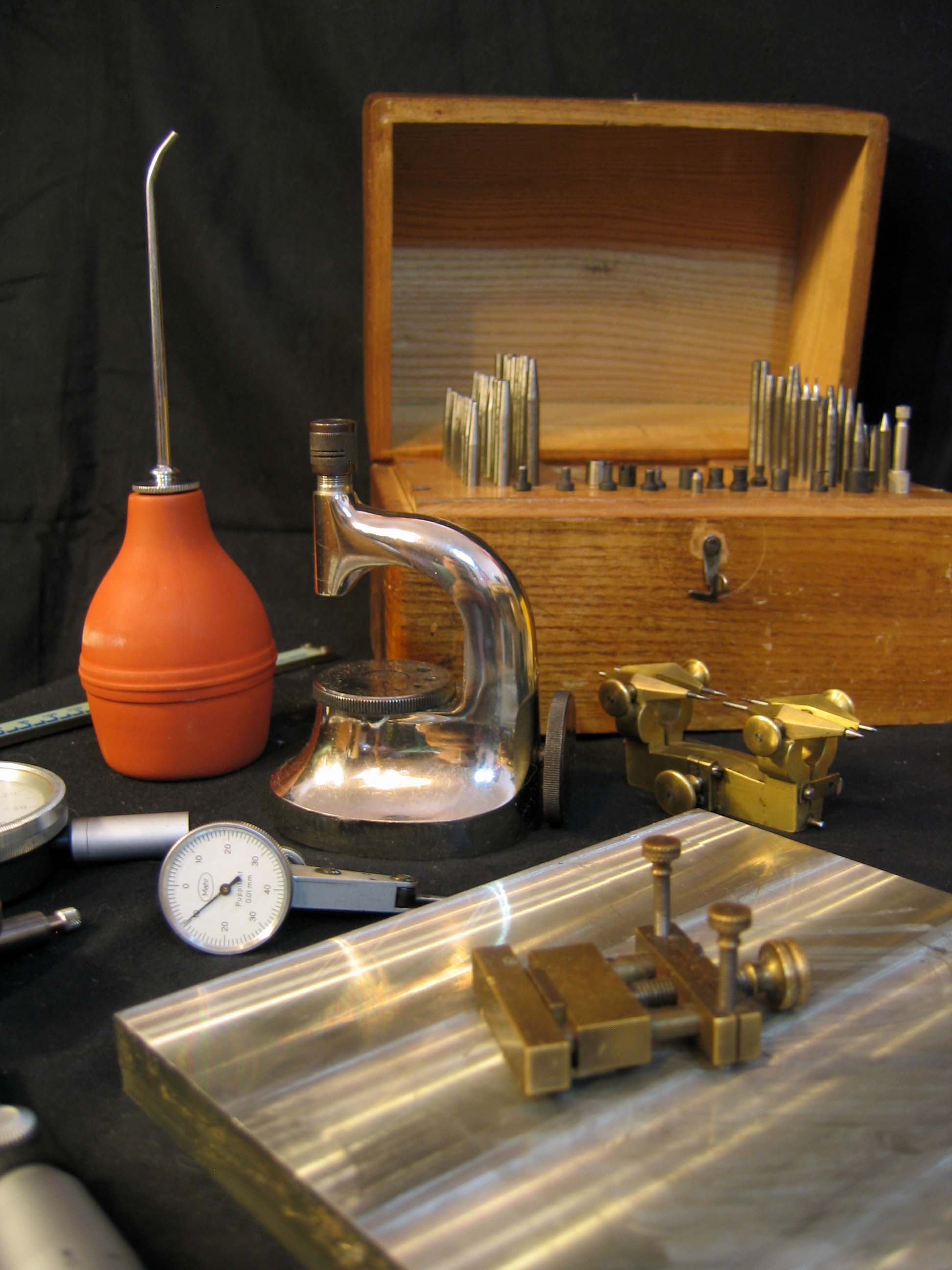
A watch is an extremely complex mechanism. In addition to machines, its production requires numerous tools, measuring instruments, and fixtures. Optical and measuring instruments such as microscopes, calipers, micrometers, and dial indicators also play an important role. In addition, there are precision screwdrivers, tweezers, gravers, files, etc., as well as taps, dies, grinding devices, various grinding and polishing compounds, tin blocks, and much more.
Equipment
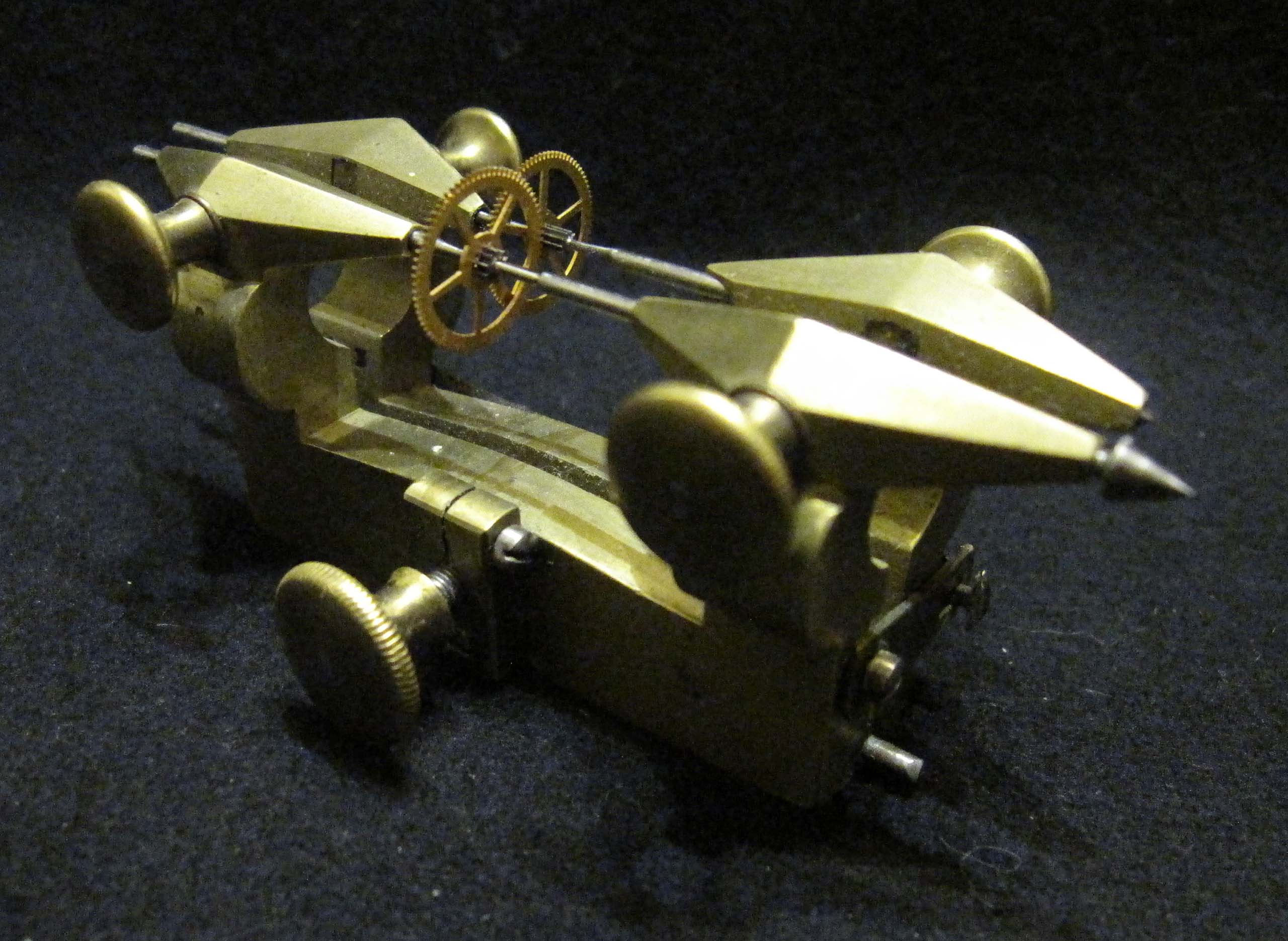
Gear Rolling Machine
This machine is used to correct the tooth profile and improve gear meshing.
It can correct many errors, such as excessive engagement due to oversized teeth or an enlarged gear after certain machining processes. However, one drawback is that the teeth may become slightly uneven after rolling.
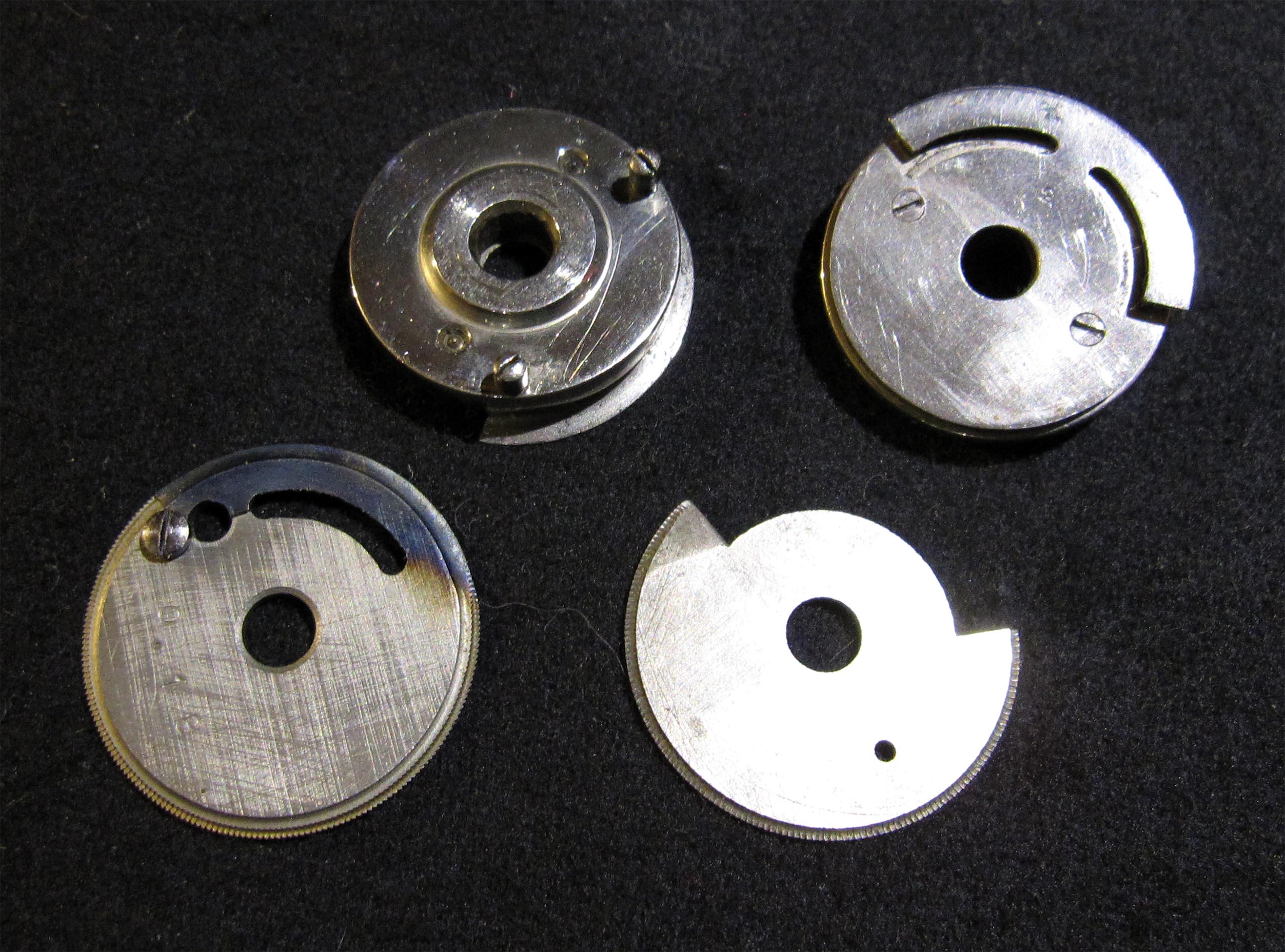
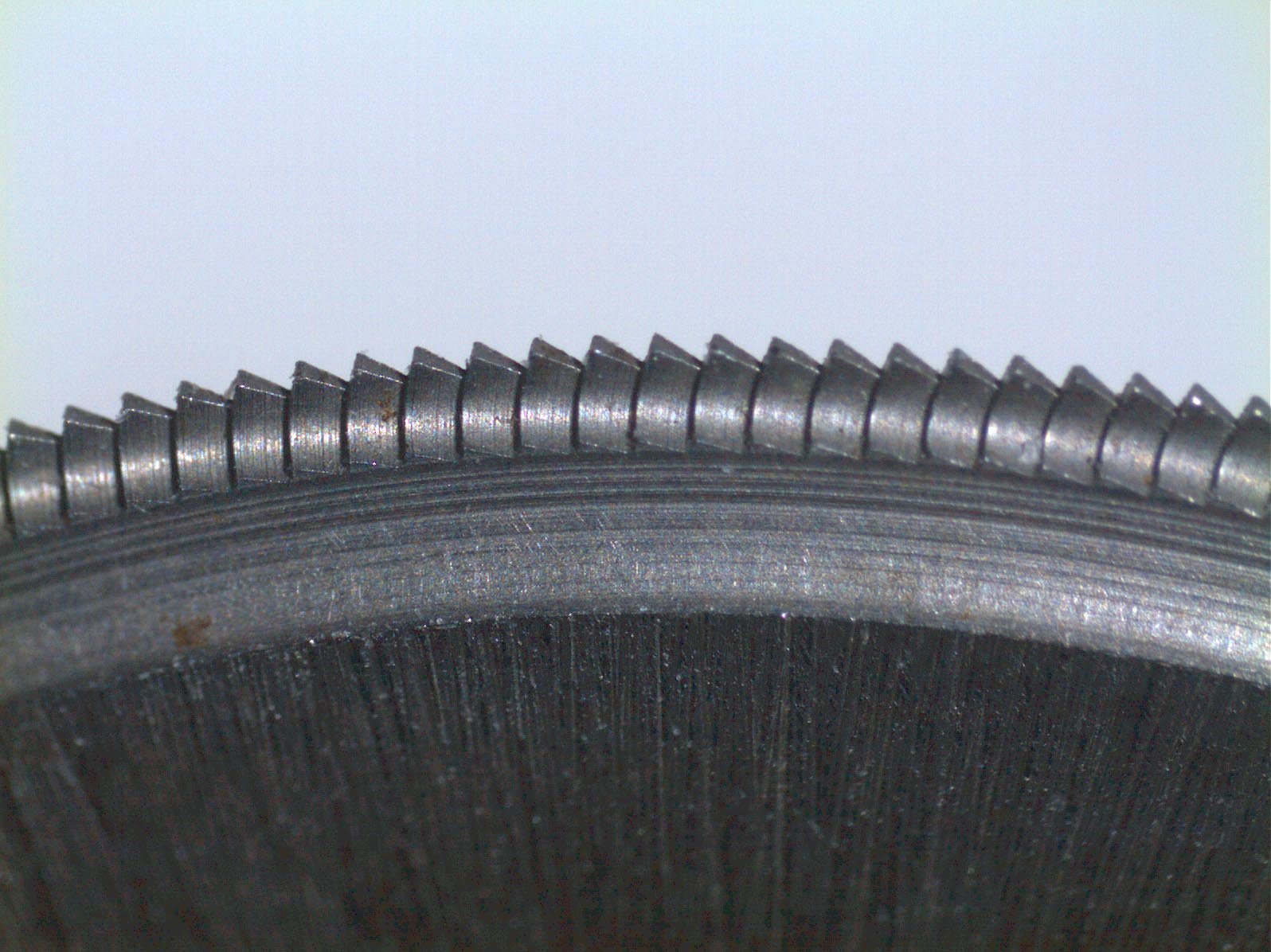
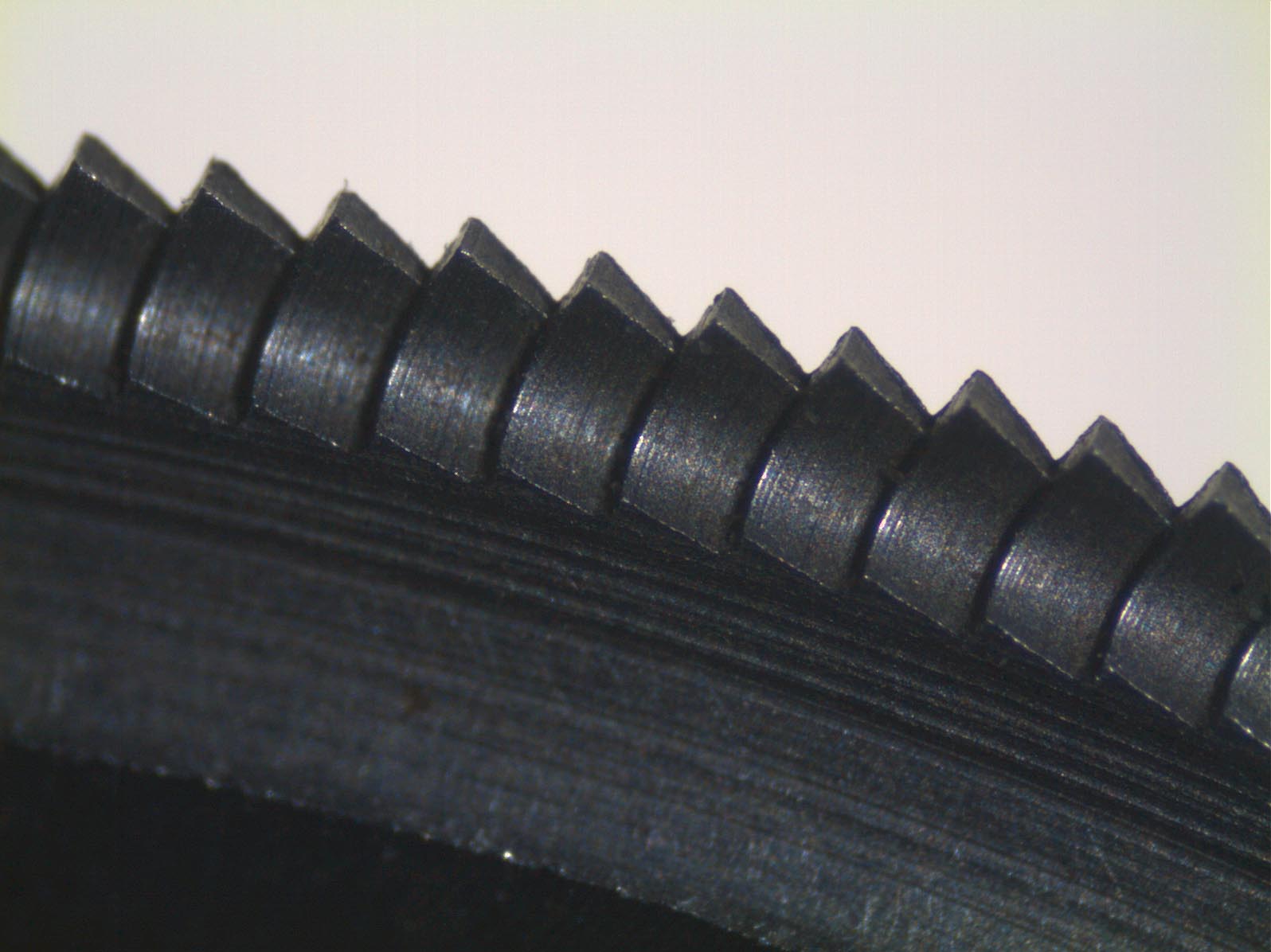
The cutters have a fine-toothed profile along approximately two-thirds of their circumference; the remaining part is smooth. This segment acts as part of a screw-like drive and engages the next tooth gap. During rolling, the wheel advances by one pitch, ensuring a continuous cutting process.
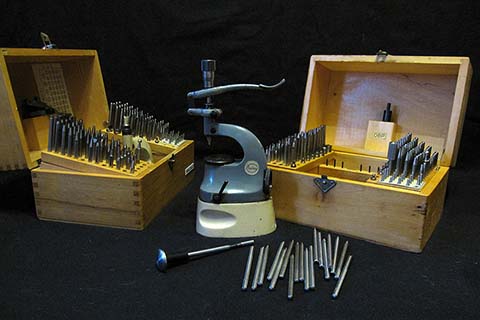
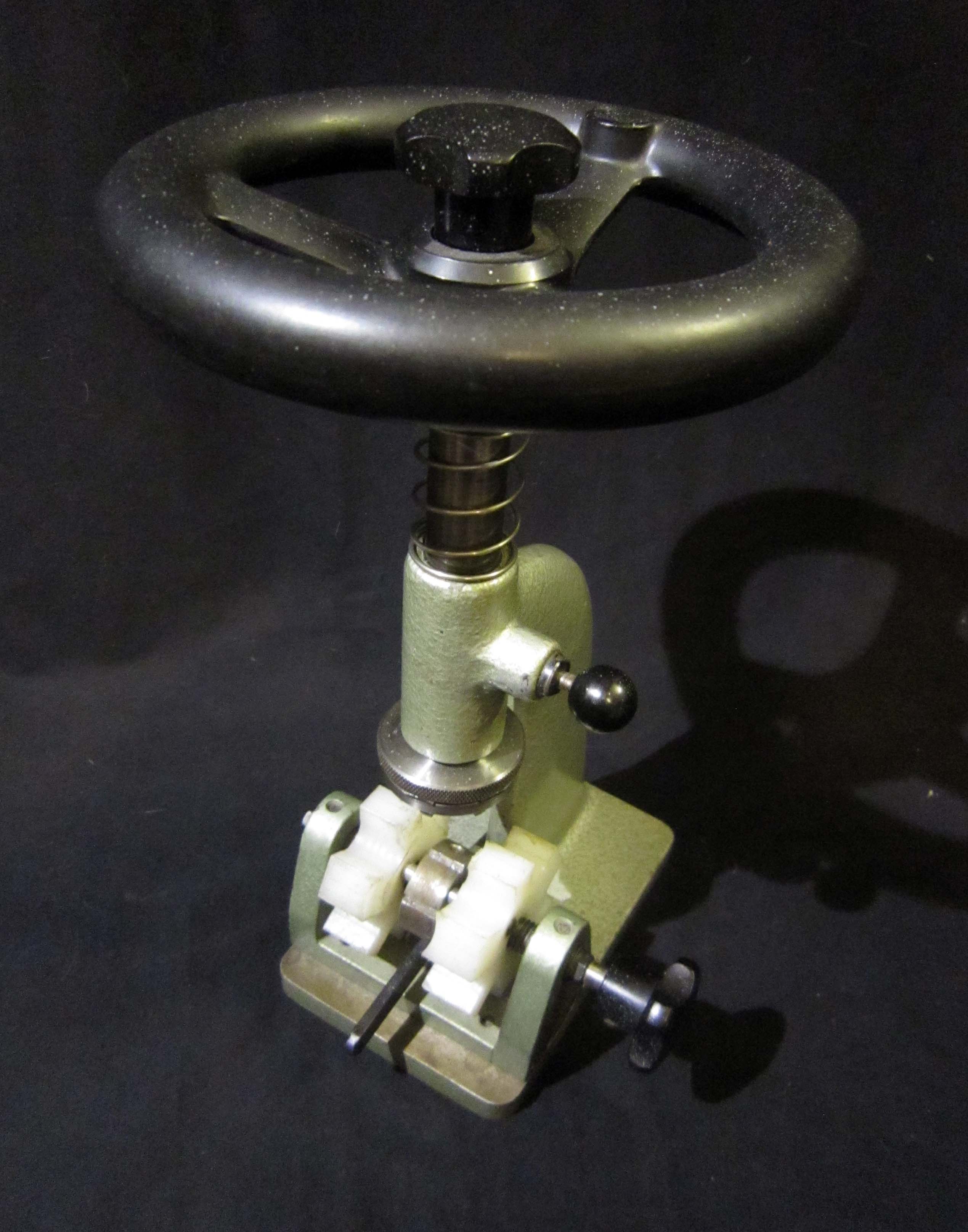
Staking Tool with Jewel Press Attachment
The staking tool with jewel press attachment is versatile, for example for mounting wheels onto pinions.
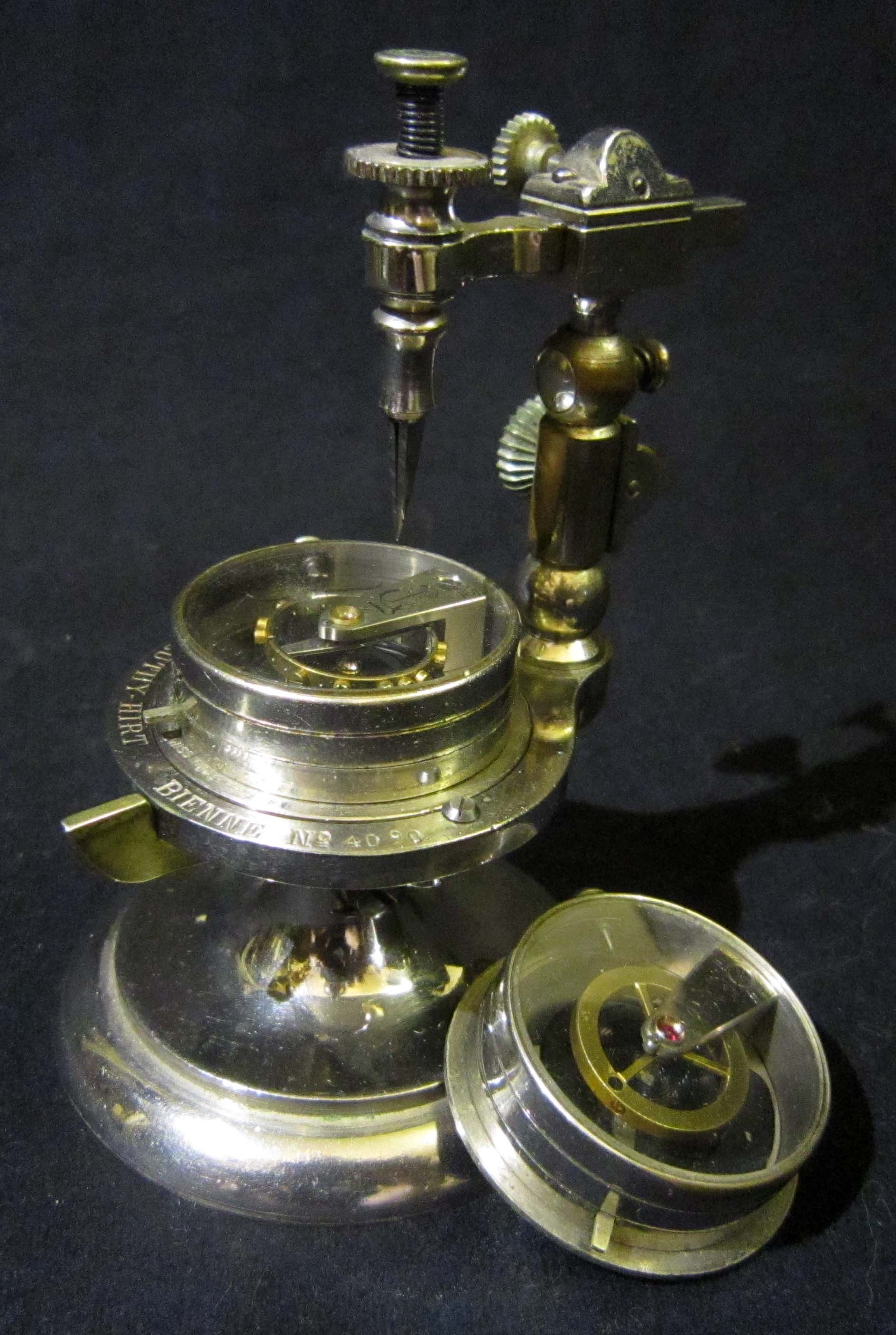
The Luthy-Hirt device is used to determine the length of a balance spring. It essentially consists of two parts: a reference balance at the bottom and a clamping collet at the top. The oscillation frequency of the balance can be adjusted from 10,000 to 22,000 semi-oscillations per hour. The position of the clamp can be adjusted in various directions: vertically, circularly left and right, forward and backward, as well as by rotating it around its own axis.
Although this device was developed around 1900, it remains relevant and usable to this day.
Operating Principle
The inner end of the balance spring is usually fixed to the balance staff, while the outer end is secured in the clamp of the measuring device. When the lever is actuated, both balances begin to oscillate. Based on the frequency of the overall system, it can be determined whether both balances oscillate synchronously. If not, the spring length can be adjusted accordingly by shifting the attachment point.
The number of spring coils should be neither too large nor too small. To count the coils more easily, white paper can be placed beneath the glass. If the number of coils is already defined but the frequency deviates significantly from the target value, a different spring can be tried.
The diameter of the spring must be in a specific ratio to the balance. If the number of coils and diameter are already predetermined, only a few parameters remain adjustable. For example, a stronger or weaker spring can be selected. In extreme cases, only the balance itself remains. If it has screws, these or their positions can be modified—but only if the balance was manufactured by oneself. If it is not of one's own production and it is clear that no previous adjustments were made, it is better not to alter it.
Of course, the correct spring length can also be verified using rate results with a timing machine. However, fixing the spring with a pin causes minimal deformation. If this deformation point lies far from the next fixing point, it can affect the quality of the spring.
The balance in the Luthy-Hirt device is large and heavy, while the pivots are very fine. This ensures that the balance oscillates for a long time. The pivot bearings have no shock protection, which makes shipping such devices by post very problematic.
Rawyler Case Back Wrench
Case opener for unscrewing watch case backs.
Interesting
Istvanplatz in front of the Victor Dietel apartment building in Greiz — a Istvan Sky memorial project.
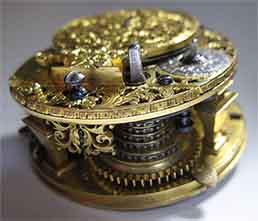
Repair and restoration of bracket clock with a verge escapement, is activated by a fusee (snail) and chain.
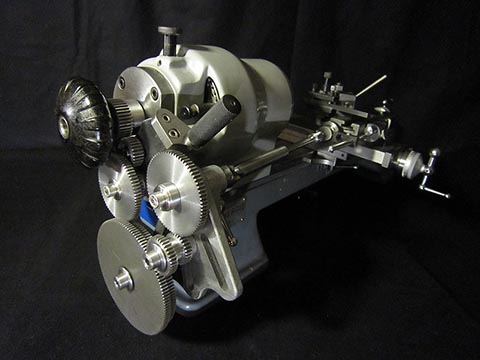
Threading attachment for Schaublin 70 handmade 2016 by Alexander Babel.
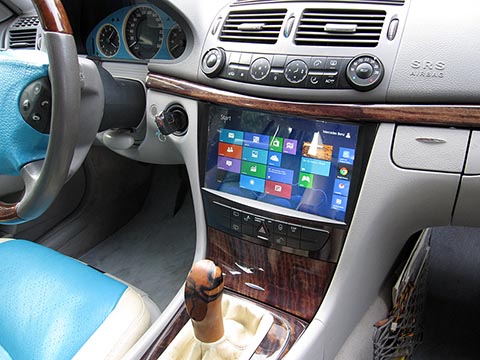
Car-PC for Mercedes Е Klasse W211. Designed and manufactured 2014
Contact
Alexander Babel is autodidakt as designer, engineer, precision mechanic, toolmaker, watchmaker and goldsmith.