Staking Tool, Hand-Setting Tool, Presses and Similar Devices in the Watchmaker’s Workshop
In the watchmaker’s workshop there are various pressing devices with different functions. However, they are all based on a similar operating principle: at the bottom there is a support for the workpiece, and at the top a press punch designed for a specific operation. The shape and size of the inserts and punches differ only slightly, but unfortunately the method of securing the punches varies from one press to another. In jewel presses, the holders usually have a diameter of 4 mm, whereas in a staking tool the punches have a diameter of 4.7 mm. Therefore, each press requires a matching set of punches. The most extensive and versatile set of punches is offered by the Boley staking tool.
Successful work depends on the good condition of the punches and dies. They must be precisely ground and handled with care.
I own two identical Boley staking tools. I use one exclusively for pressing work and the other for rougher operations.
First, I would like to discuss the more common devices and, in my view, their strengths and weaknesses.
BOLEY Staking Tool with Jewel-Press Attachment
SEITZ Jewel Press
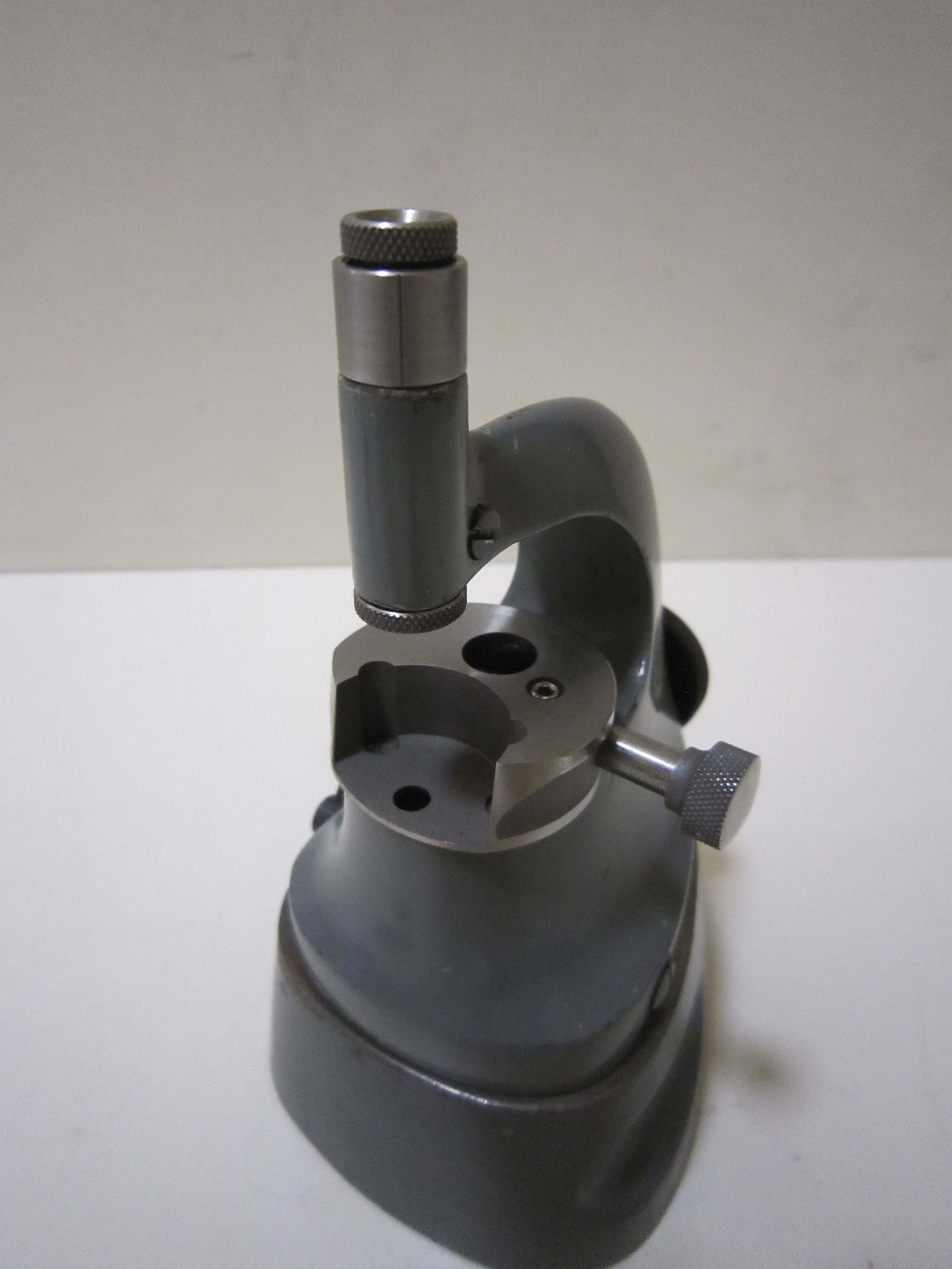
HORIA Jewel Press with Micrometer Screw
HORIA Hand-Setting Tool
BERGEON PLATAX Combined Tool for Removing the Double Roller and the Balance Staff
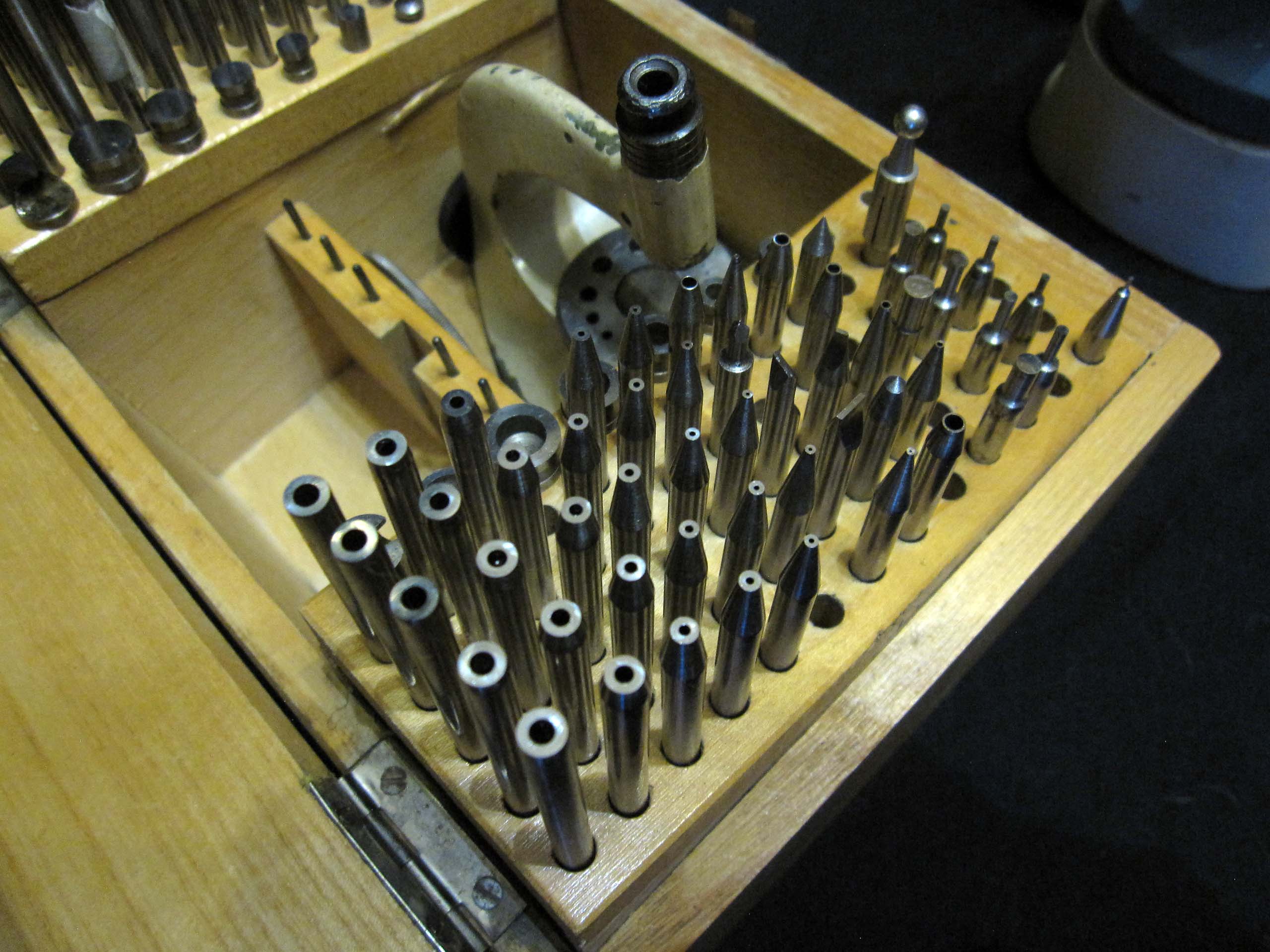
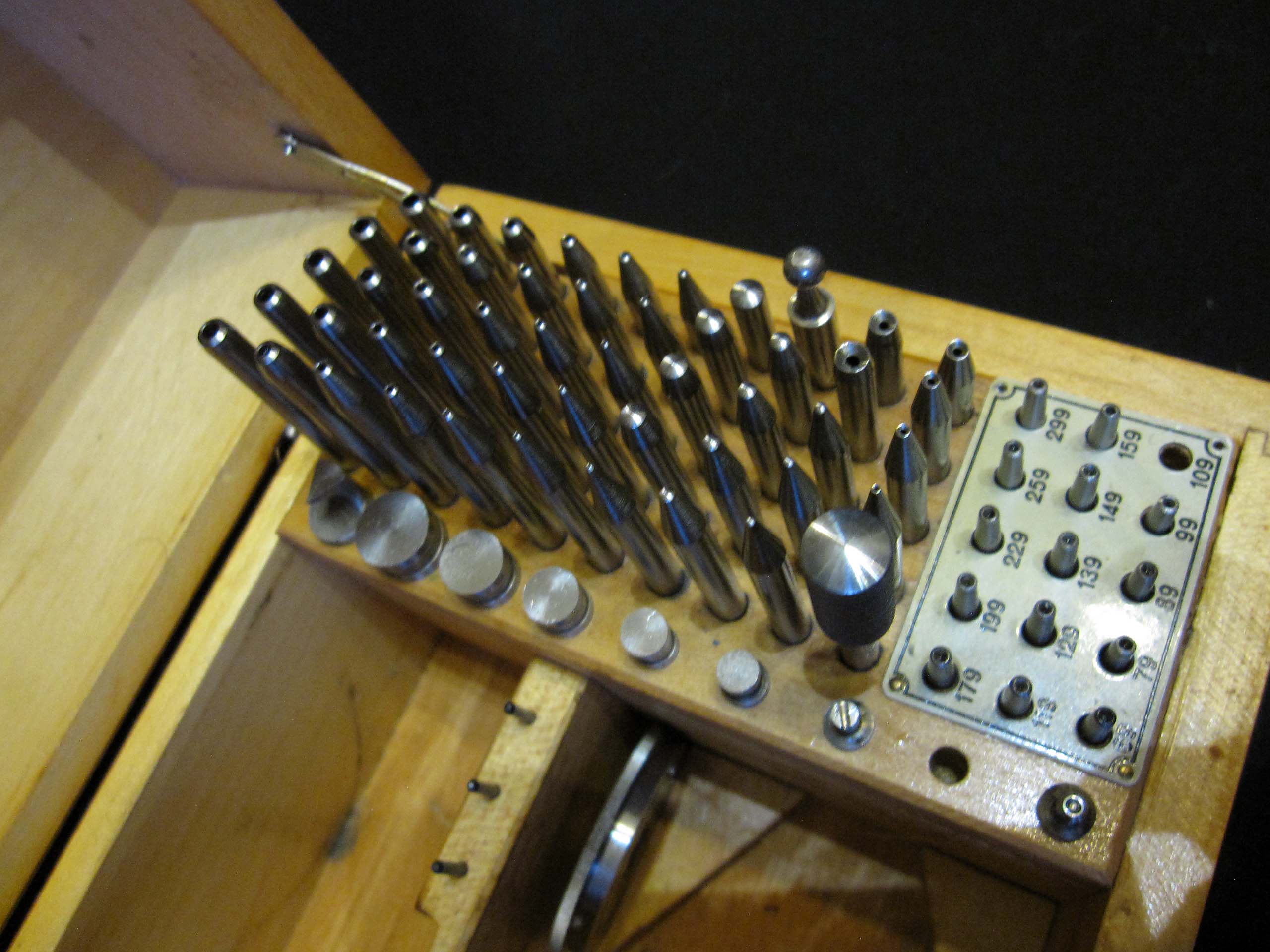
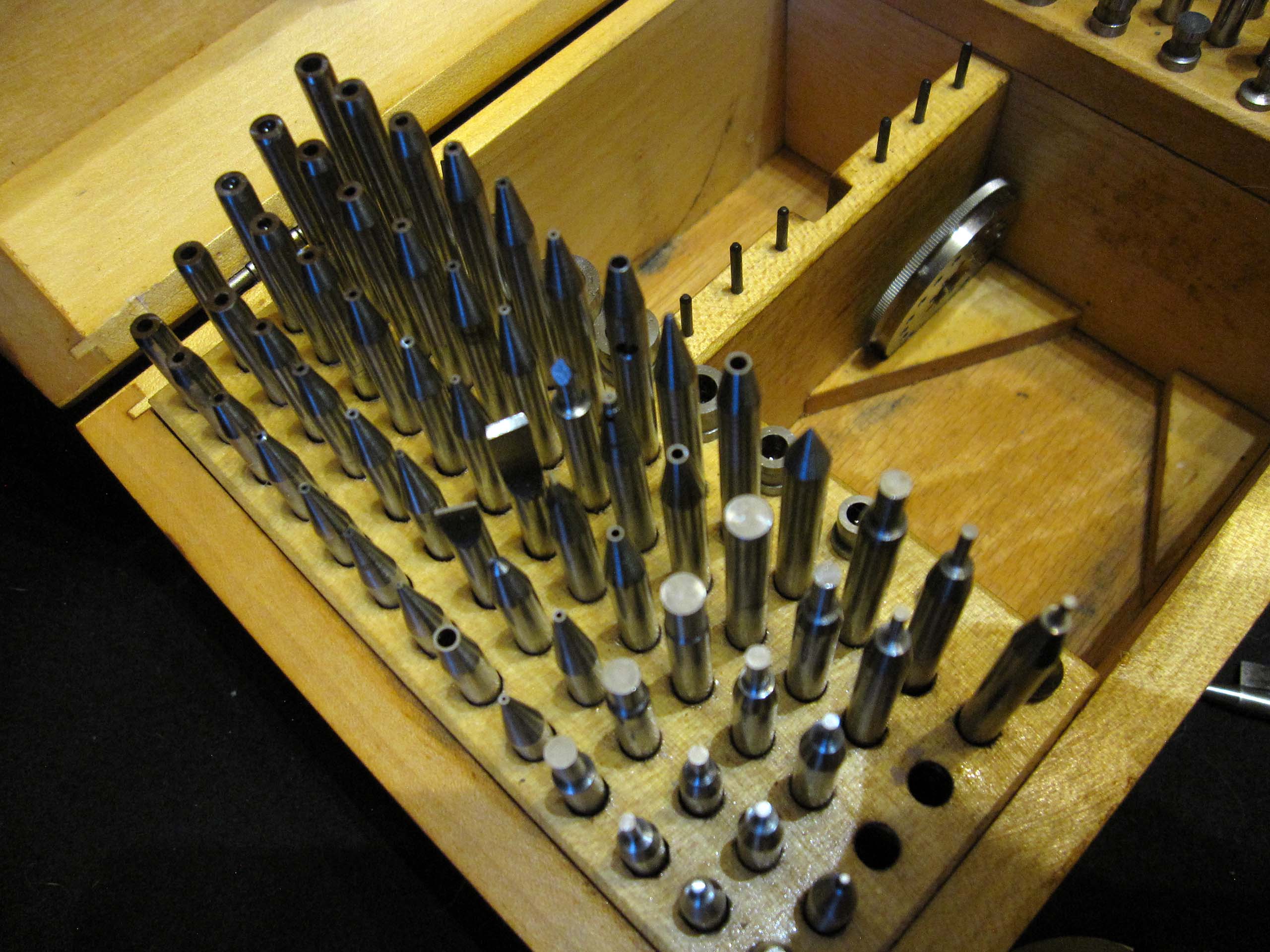
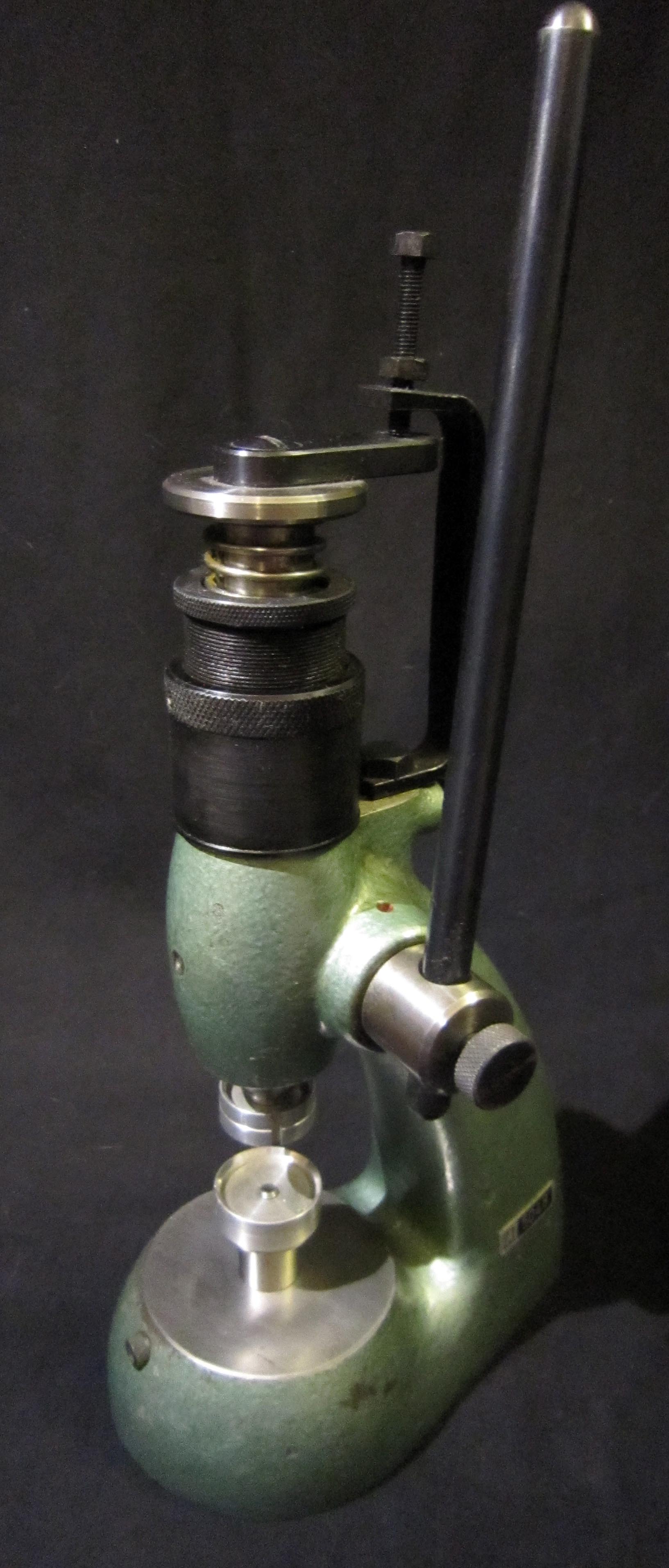
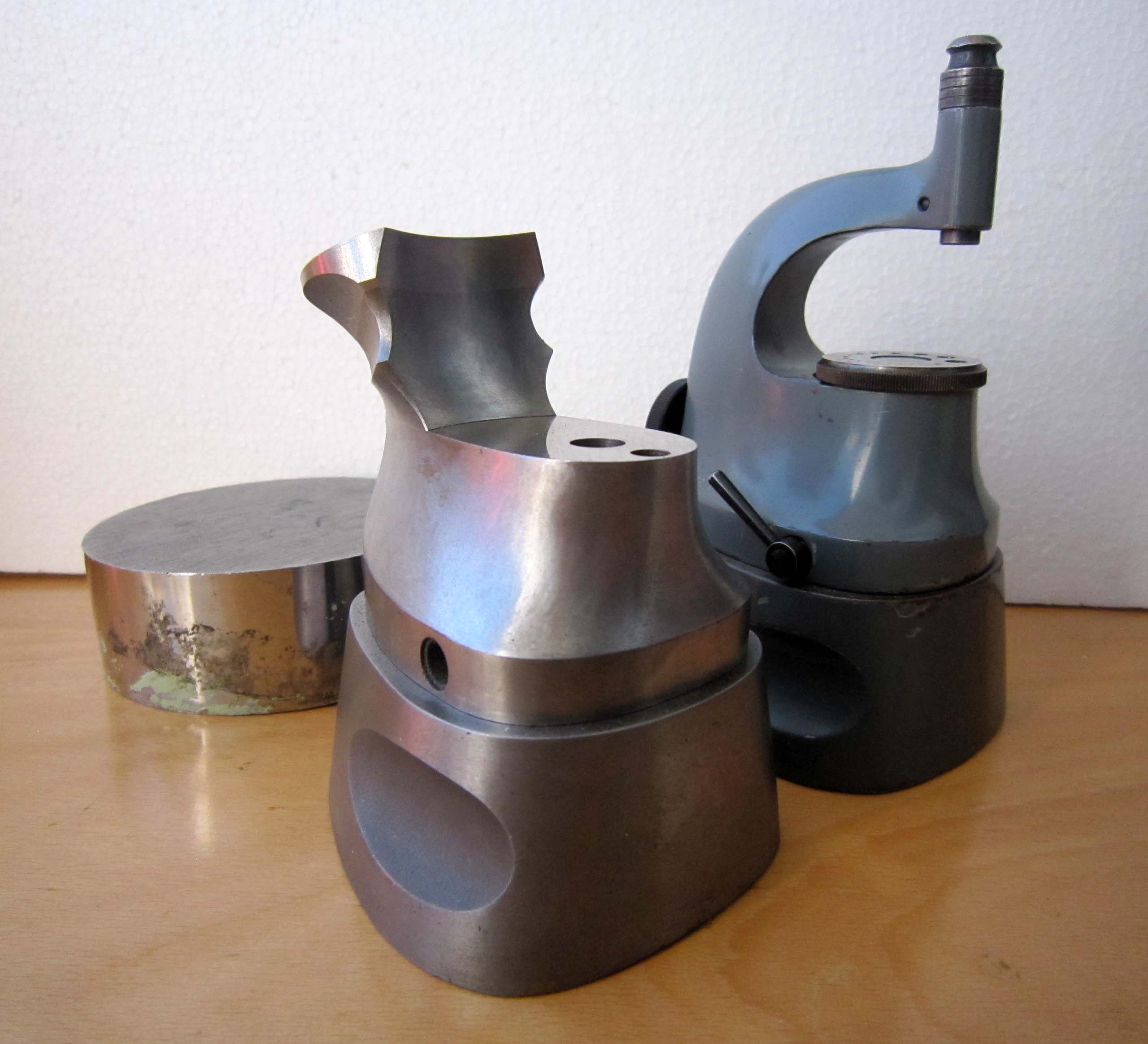
BOLEY Staking Tool with Jewel-Press Attachment
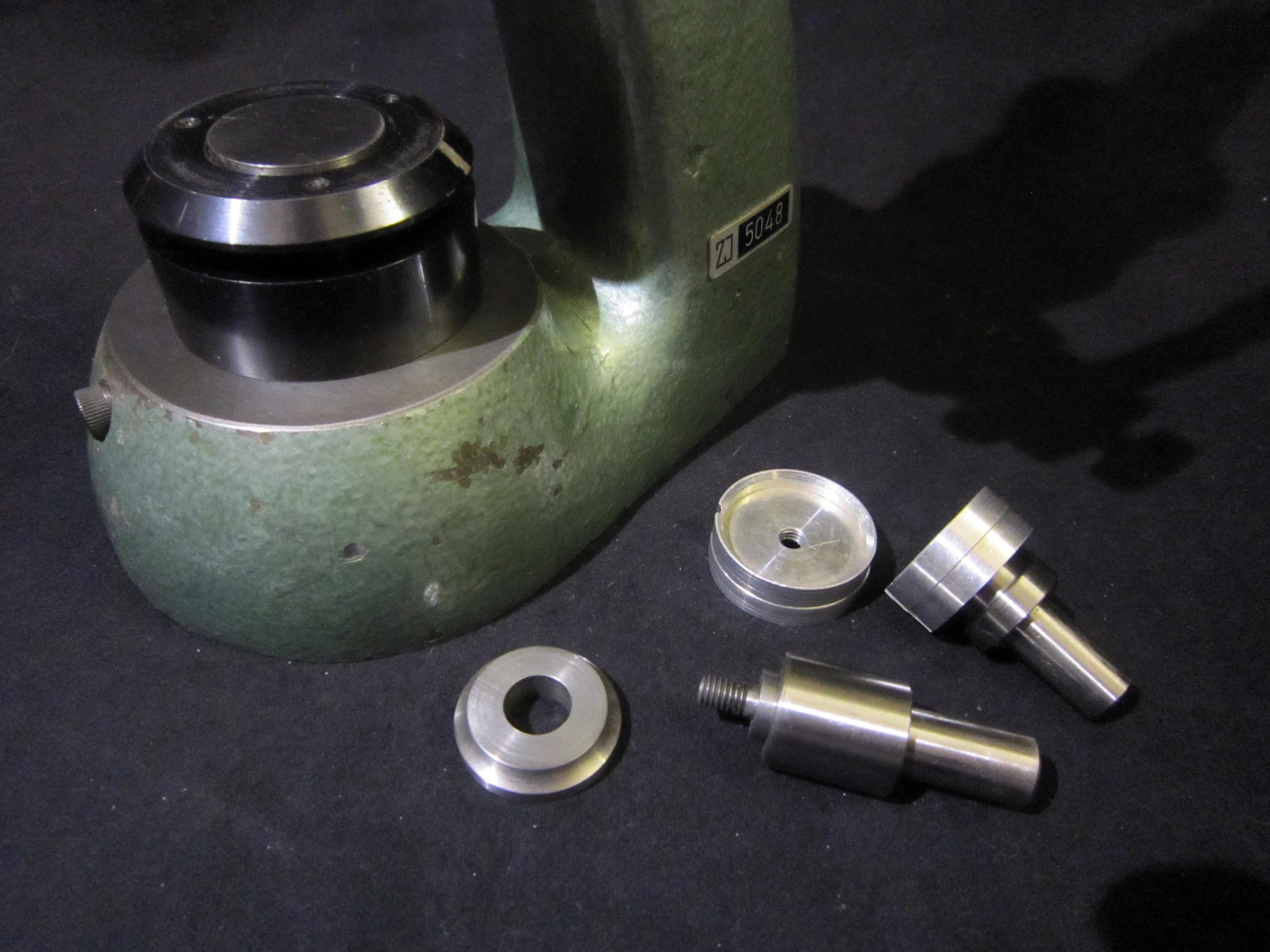
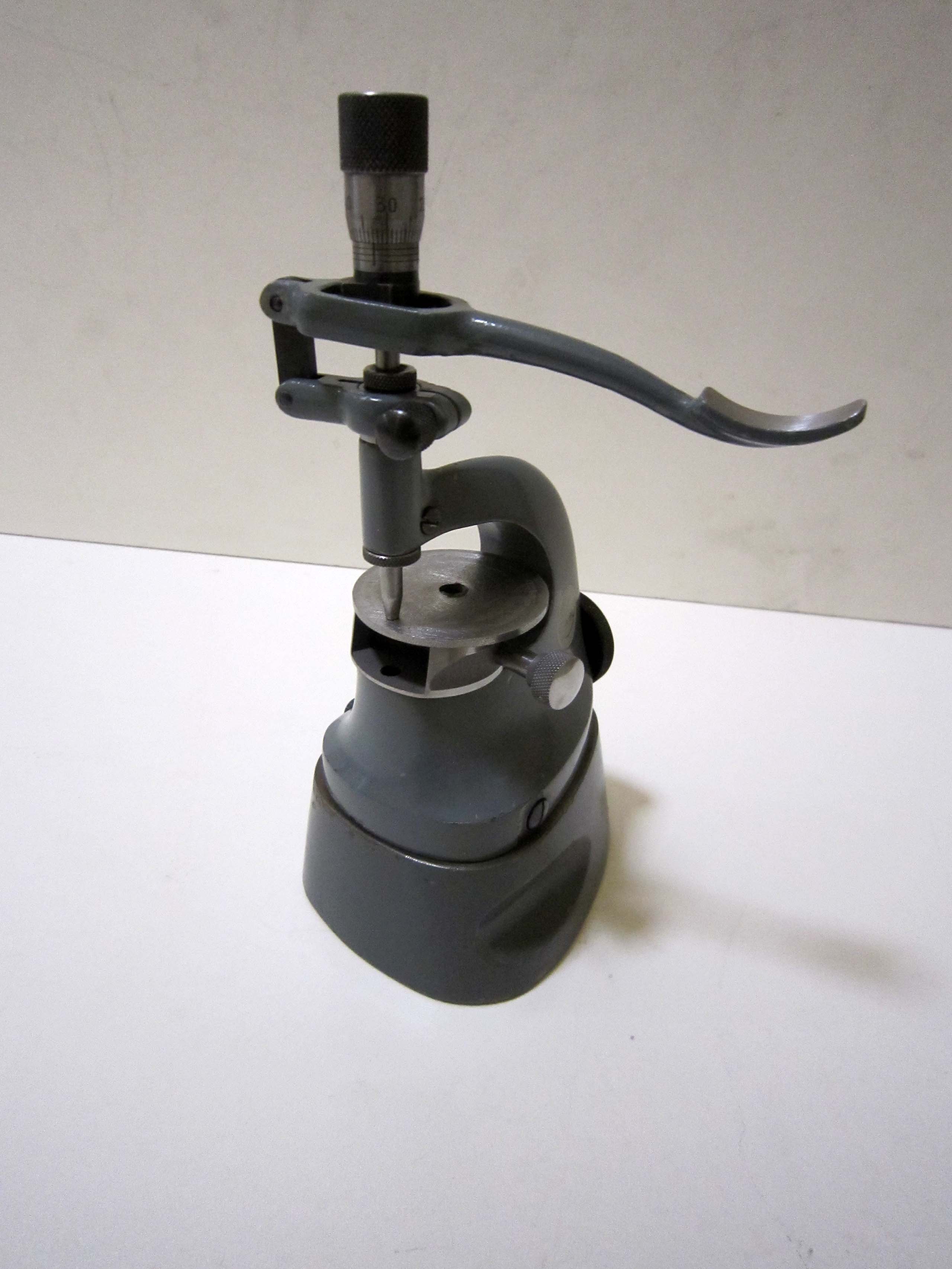
The staking tool with jewel-press attachment consists of a lower base and an upper section in the form of a table with a pivoting holder above it. The holder has an opening for the micrometer screw and the punches. On the table there is a perforated steel disc. Additionally, a lever handle is provided for pressing.
This device is versatile in use, for example for pressing wheels onto pinions. In this process, the seat on the pinion is slightly riveted, preventing the wheel from turning on the pinion. With this tool, other watch movement components—such as bushings, shafts, or jewels—can also be pressed in or out precisely and cleanly. Fine operations such as riveting or staking can likewise be performed.
Depending on the size and shape of the parts, various punches, dies, supports, and anvils are available. The punches may be shaped like chisels, drifts, or center punches.
The different punches allow the insertion of functional jewels or bushings. The jewel-press attachment is equipped with a micrometer screw to adjust the pressing depth. Successful work depends on the good condition of the punches. They must be precisely ground and handled with care.
Advantages:
+ large selection of punches in various shapes and sizes
+ press lever available
+ micrometer screw with 0.01 mm accuracy
+ heavy and stable base
+ raised working position
+ precise and stable construction
+ comfortable handling
+ various dies, supports, and anvils available
Disadvantages:
- no system to regulate the contact pressure of the nut, which affects the micrometer accuracy
- no locking handle for the micrometer
SEITZ Jewel Press
The jewel press consists of a table with a curved holder above it, to which a press lever is attached. The device includes approximately 60 different punches and inserts. It was manufactured in Switzerland in the 1950s–60s.
HORIA Jewel Press with Micrometer Screw
It consists of a table with a vertical holder that carries a pressing device with a micrometer screw.
Using the micrometer screw, jewels can be pressed in to the desired depth.
Advantages:
Disadvantages:
- micrometer accuracy only 0.02 mm
- no press lever provided
- only compatible punches and supports can be used
- limited selection of punches
HORIA Hand-Setting Press
The HORIA is a device commonly used by watchmakers for fitting or pressing on hands and other watch components.
The unit consists of a table with a vertical holder on which two to four pressing tools are mounted.
The desired pressing depth can be adjusted using a micrometer nut.
Advantages:
Disadvantages:
- only compatible punches and supports can be used
- limited selection of punches
BERGEON PLATAX Combined Double Roller (Plateau) and Balance Staff Remover
Bergeon offers a combined tool for removing the double roller and the balance staff, known as the Platax. This tool combines two operations and is essentially two different devices in one.
However, the set includes only:
1 centering punch
3 driving punches with holes of 0.10 mm; 0.15 mm; 0.20 mm
3 sleeves with base and holes of 0.90 mm; 1.10 mm; 1.40 mm
1 reducing bushing
The punches have an outer diameter of 3 mm; punches from a staking tool with a diameter of 4.7 mm are therefore not compatible.
Advantages:
+ two operations possible
Disadvantages:
- limited selection of punches
- no press lever provided
Pressing in Watch Crystals
For fitting watch crystals, a larger press is used than the devices described above.
Press Jaggi, Perrin & Cie Machines, Bienne
Press Jaggi, Perrin & Cie Machines, Bienne
The Jaggi press is very solidly built and can also be secured to the workbench with a screw. The upper and lower inserts are interchangeable. In order to use standard Bergeon press dies, I manufactured a suitable adapter.
Advantages:
+ heavy and stable
+ very finely adjustable pressing force
+ precise guides
Disadvantages:
in my opinion, none
Own Project
Various pressing devices have been presented above. The double roller can also be removed using plateau-removing pliers No. 2810, a plateau remover in punch form No. 30070, or the Platax 2677. To press out the balance staff, one uses Unruhmax or a staking tool. In my opinion, however, each of these devices has certain weaknesses. The main disadvantage is probably that a separate tool is required for each operation.
For this reason, I came up with the idea of developing an additional attachment for one of these press devices that could be used universally for all operations based on the pressing principle. For this purpose, I chose the BOLEY staking tool. The decisive advantages were:
Advantages:
+ large selection of punches in various shapes and sizes
+ press lever available
+ micrometer screw
+ heavy and stable base
+ raised working position
+ precise and stable construction
+ comfortable handling
+ various dies, supports, and anvils available
It indeed offers numerous advantages. For example, to remove a pinion cleanly from a wheel, suitable punches are required — and these are available in great variety with the staking tool.
The demanding process of pressing out a balance staff or a pinion can be directly felt and controlled by hand when using the lever of the Boley jewel-press attachment. The balance or wheel must be securely fixed between the perforated steel plate and the support foot. This prevents the balance spokes from bending.
In addition, the BOLEY staking tool with jewel-press attachment has a relatively heavy and stable base. The raised working level is also very comfortable.
One disadvantage is that the perforated steel plate and the punches of used devices are often damaged.
Based on all these considerations, I developed an additional attachment for this Boley device, making it even more versatile.
A round insert was designed and modified which, similar to the PLATAX, is used for removing the double roller and the balance staff. The space for the inserted balance was enlarged; its maximum diameter can now be up to 24 mm. This insert has a handle used to secure the perforated plate. Its diameter was also increased to 45 mm. The number of slots (from 1 to 2 mm) and holes (from 0.6 to 2.8 mm) was increased from 10 to 12.
Thanks to the wide selection of punches, they can be used not only for pressing out the balance staff or a pinion, but also for many other tasks. Here the watchmaker can fully apply his ingenuity to develop new applications for this attachment in the staking tool.
This is entirely my own new project, and later I will present a detailed report on its implementation!
,
Interesting
Istvanplatz in front of the Victor Dietel apartment building in Greiz — a Istvan Sky memorial project.
Repair and restoration of bracket clock with a verge escapement, is activated by a fusee (snail) and chain.
Threading attachment for Schaublin 70 handmade 2016 by Alexander Babel.
Car-PC for Mercedes Е Klasse W211. Designed and manufactured 2014
Contact
Alexander Babel is autodidakt as designer, engineer, precision mechanic, toolmaker, watchmaker and goldsmith.