Polishing on Tin (Black Polishing)
Polishing on a tin block is a technique used to achieve a very smooth and uniform surface. This method allows only steel, whose properties permit it, to be polished to a perfect shine. Sometimes this method is called black polishing because the surface roughness is so low that it can fully reflect light. At certain angles, the polished surface appears completely black.
Polishing Technique:
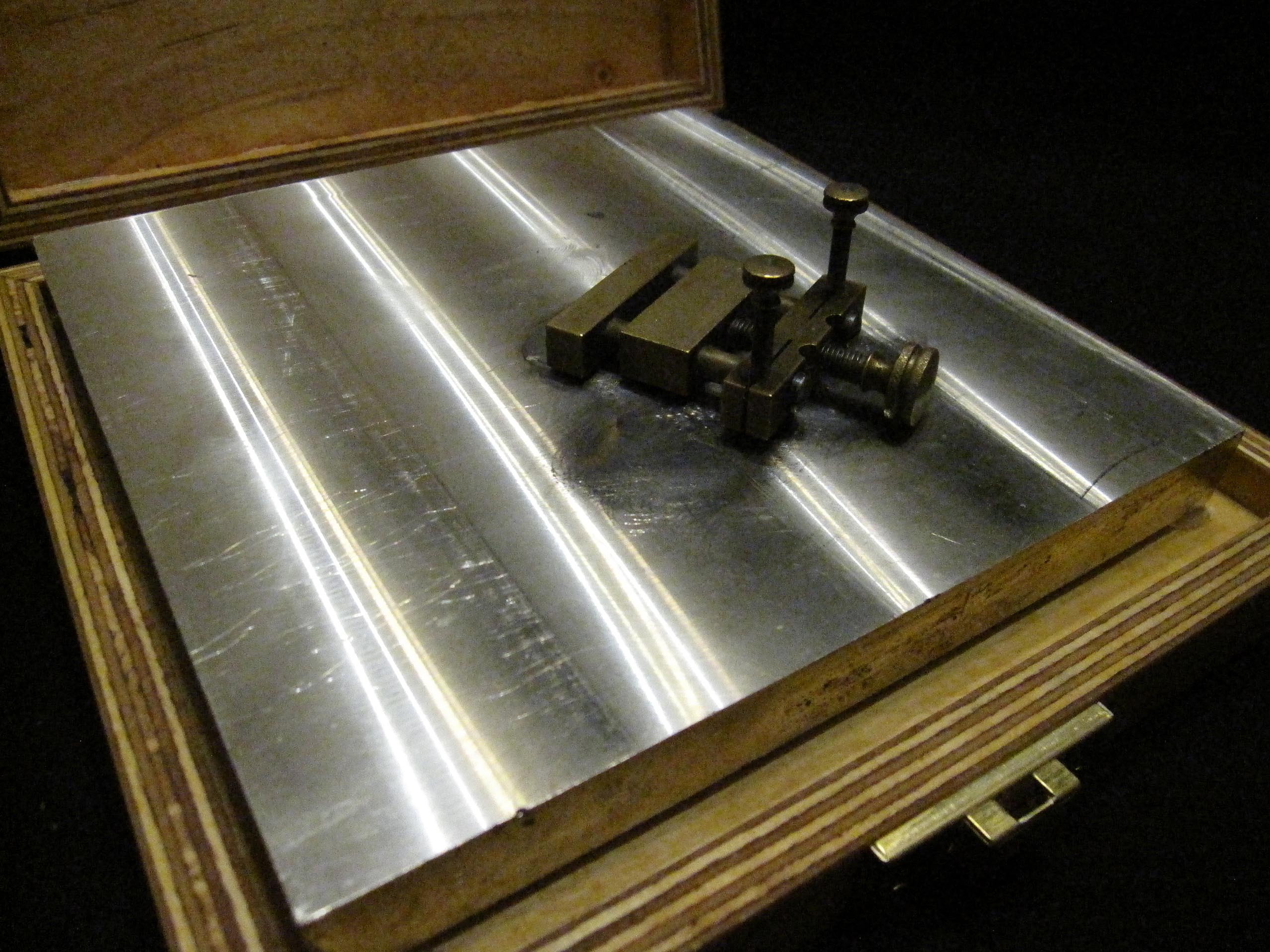
First, the parts are ground on glass with oil and aluminum oxide-based grinding paste. Once the entire surface is rough enough, the actual polishing on the tin block can begin. The tin block is lightly coated with diamond paste, after which the workpiece is polished in circular motions. Material is removed both from the block and the workpiece. The diamond paste becomes drier, and it is important to recognize the moment when the pressure on the block should be increased and the radius of the circular motions reduced. Afterwards, the tool and the workpiece should be slightly lifted during movement so that the workpiece does not run out of the polished radius and get scratched by the paste again. Polishing can be finished at a grain size of 1 µm. The diamond particles wear down during polishing, which is why the grit is finer in the final stage.
Finer diamond pastes are also available commercially in different concentrations and qualities. Good pastes can sometimes cost 100 euros for 10 grams. Diamond paste must not be confused with Diamantine, which is an aluminum oxide-based paste.
Tips:
The most important aspect of polishing is cleanliness. Work from coarser to finer paste. Glass or tin blocks should be used with only one type of abrasive. When moving to the next step, everything should be thoroughly wiped. Even a single grain of coarse diamond paste can embed in the soft tin and scratch the polished surface. Rinsing the tin block with gasoline does not help, as the diamond particles are firmly embedded in the tin. Only removing a layer of tin from the block helps.
Tin blocks should be stored in separate boxes, well protected from dust and other unwanted particles.
The surface polished to completion should ideally not be touched afterwards. The tiniest dust particles on gloves, cloths, or brushes can very quickly cause scratches.
Parts such as screws, levers, and springs are fixed on a flat grinder. For this, I prefer sealing wax, as used by jewelers, because remnants of shellac are difficult to remove in practice. Sealing wax, on the other hand, can be removed within seconds in an ultrasonic bath with turpentine or gasoline without leaving traces.