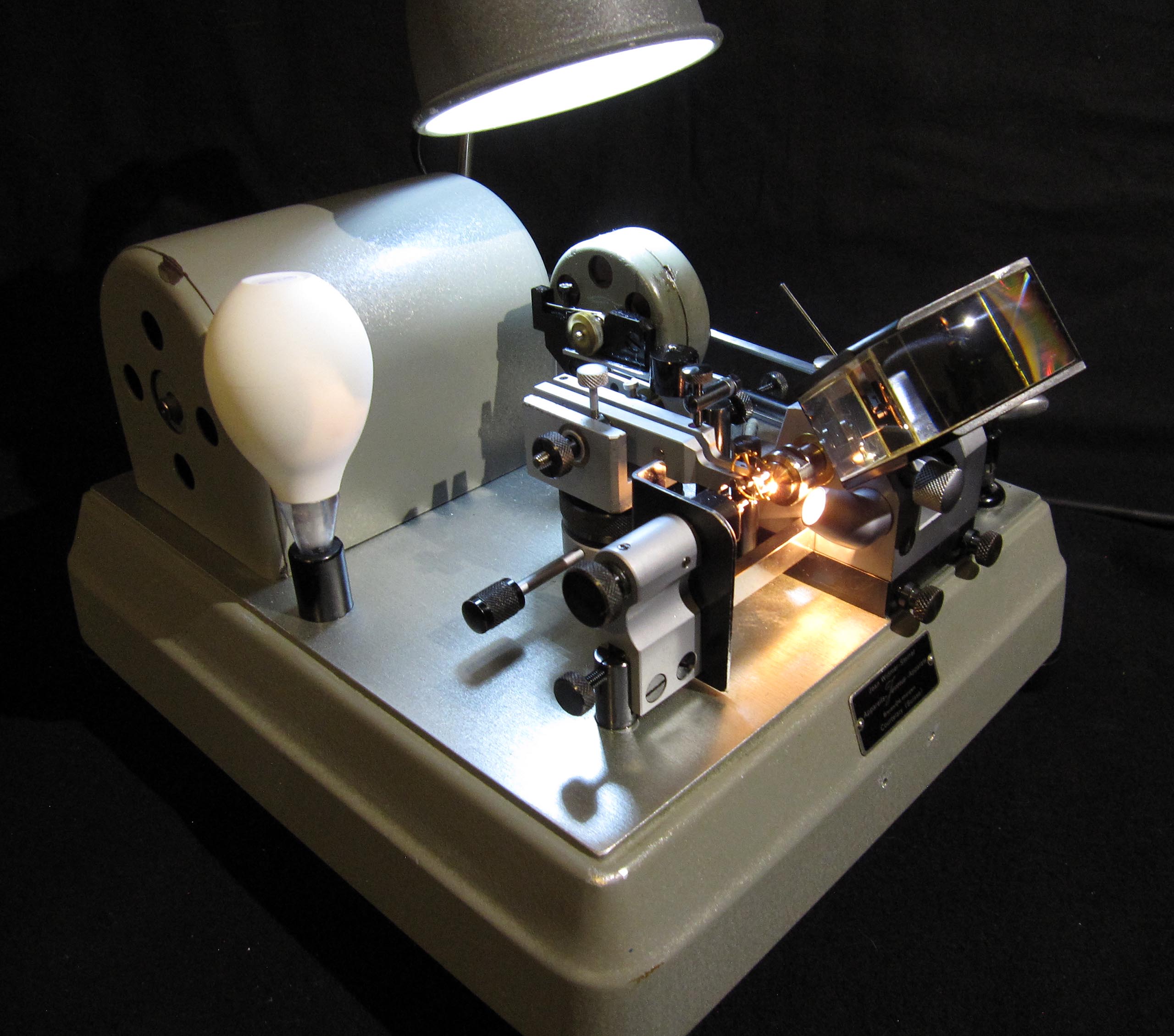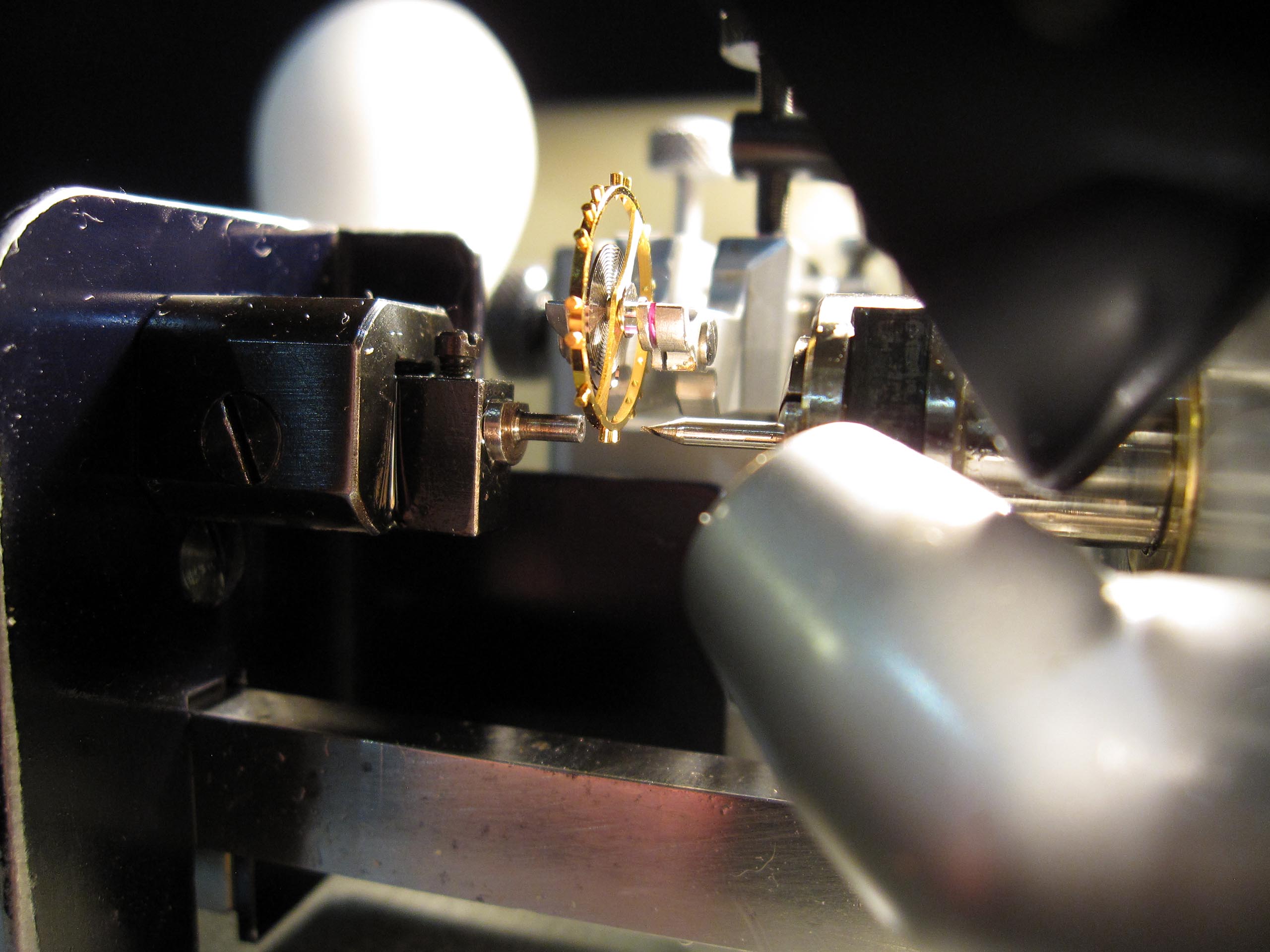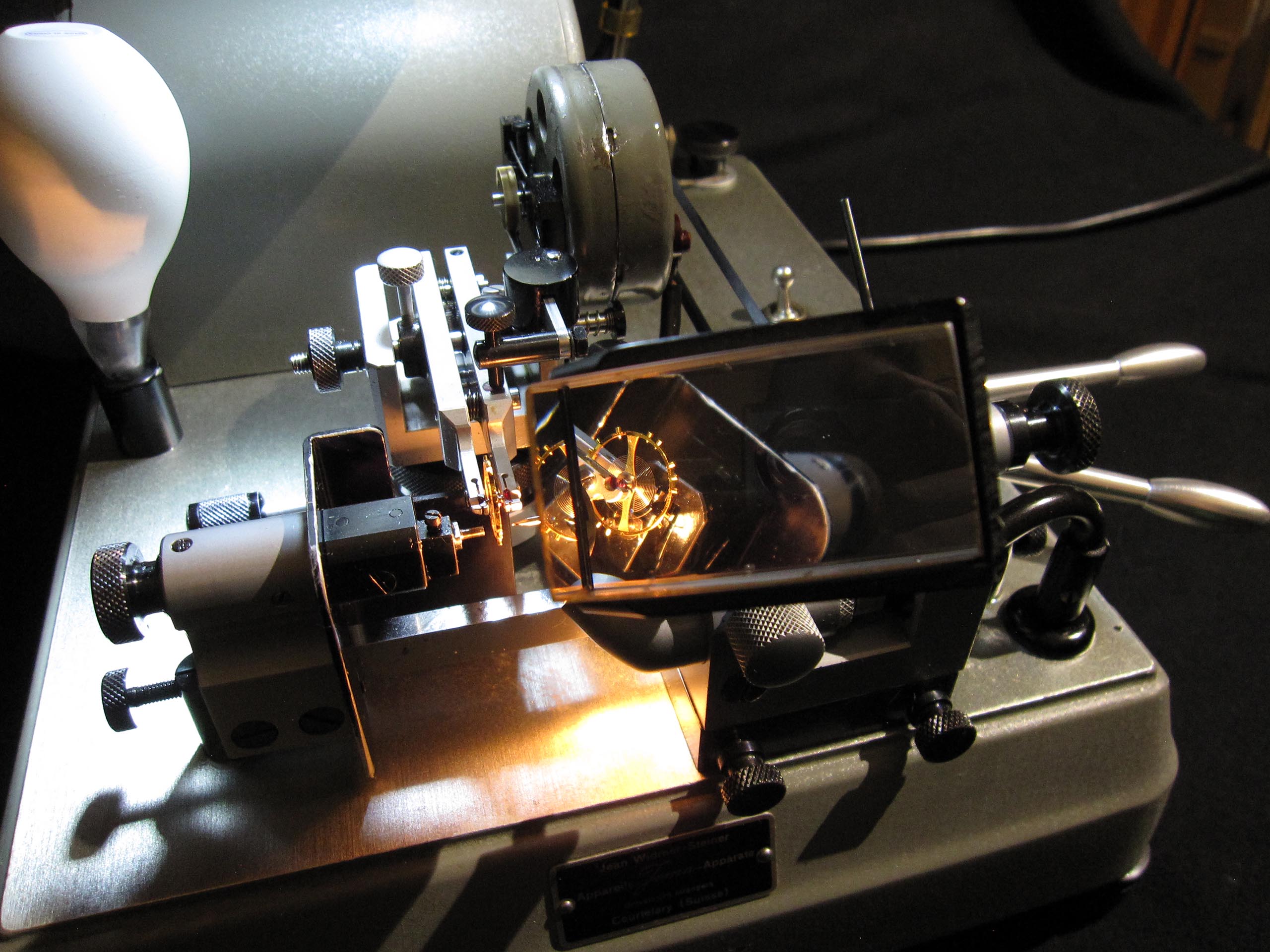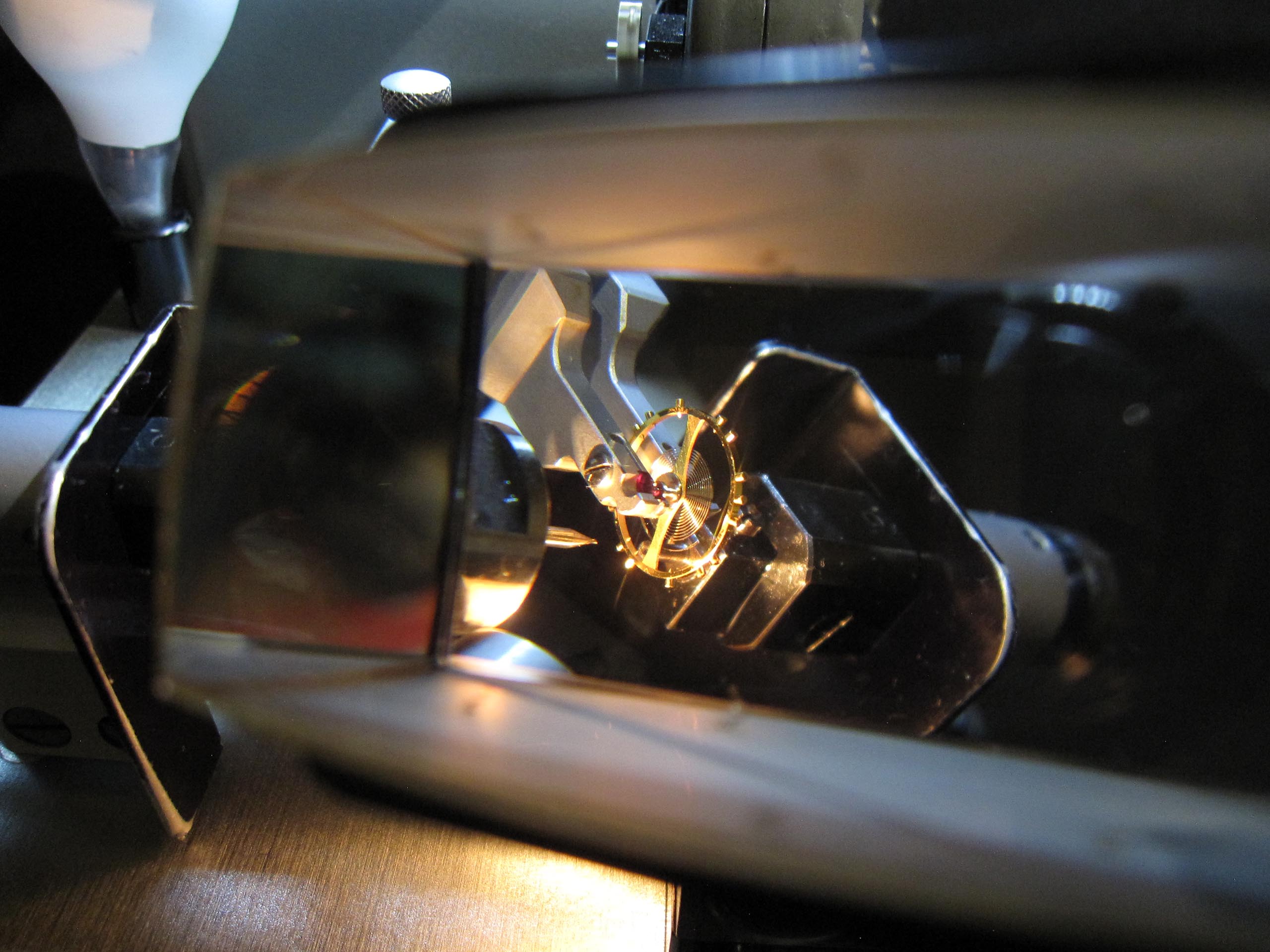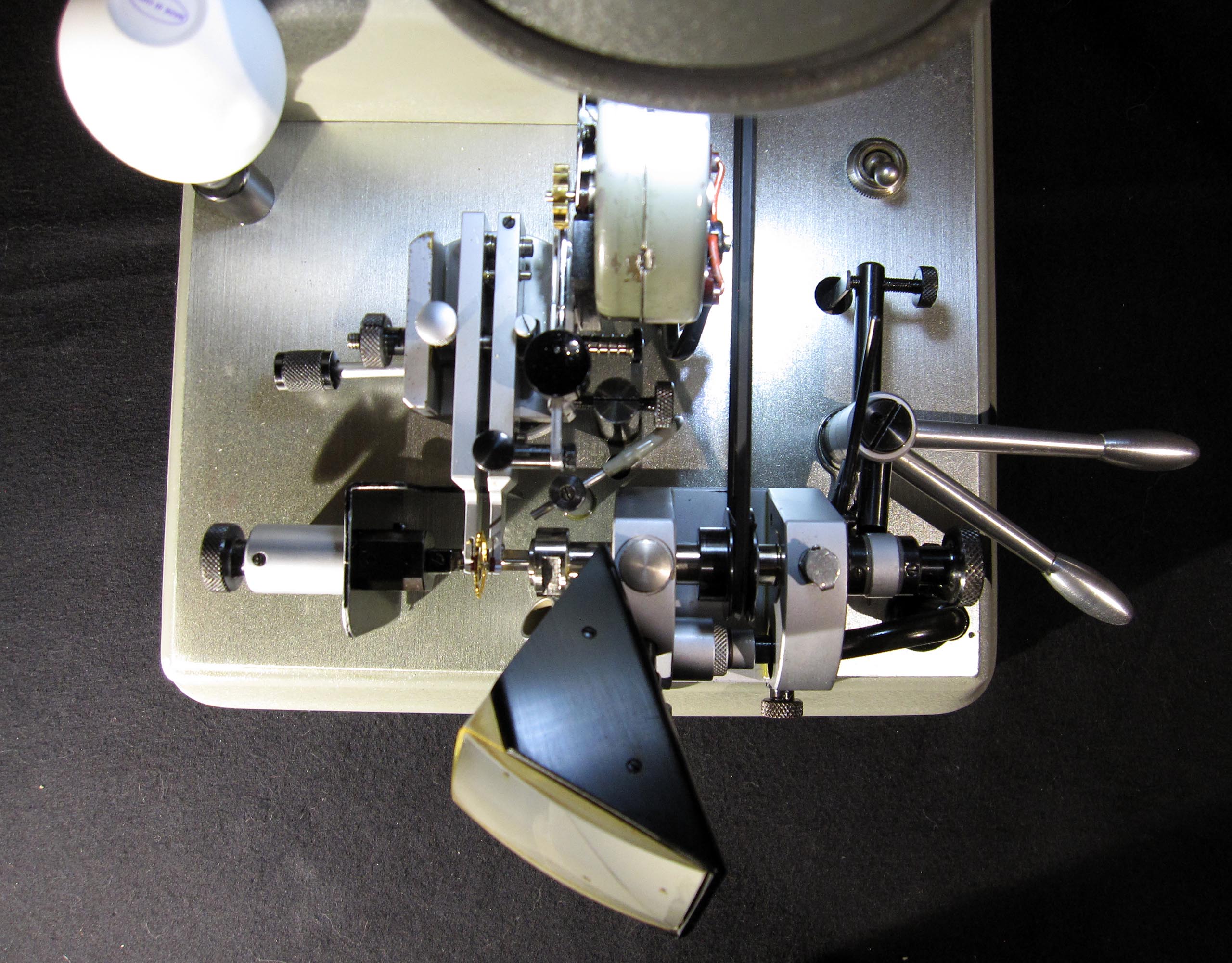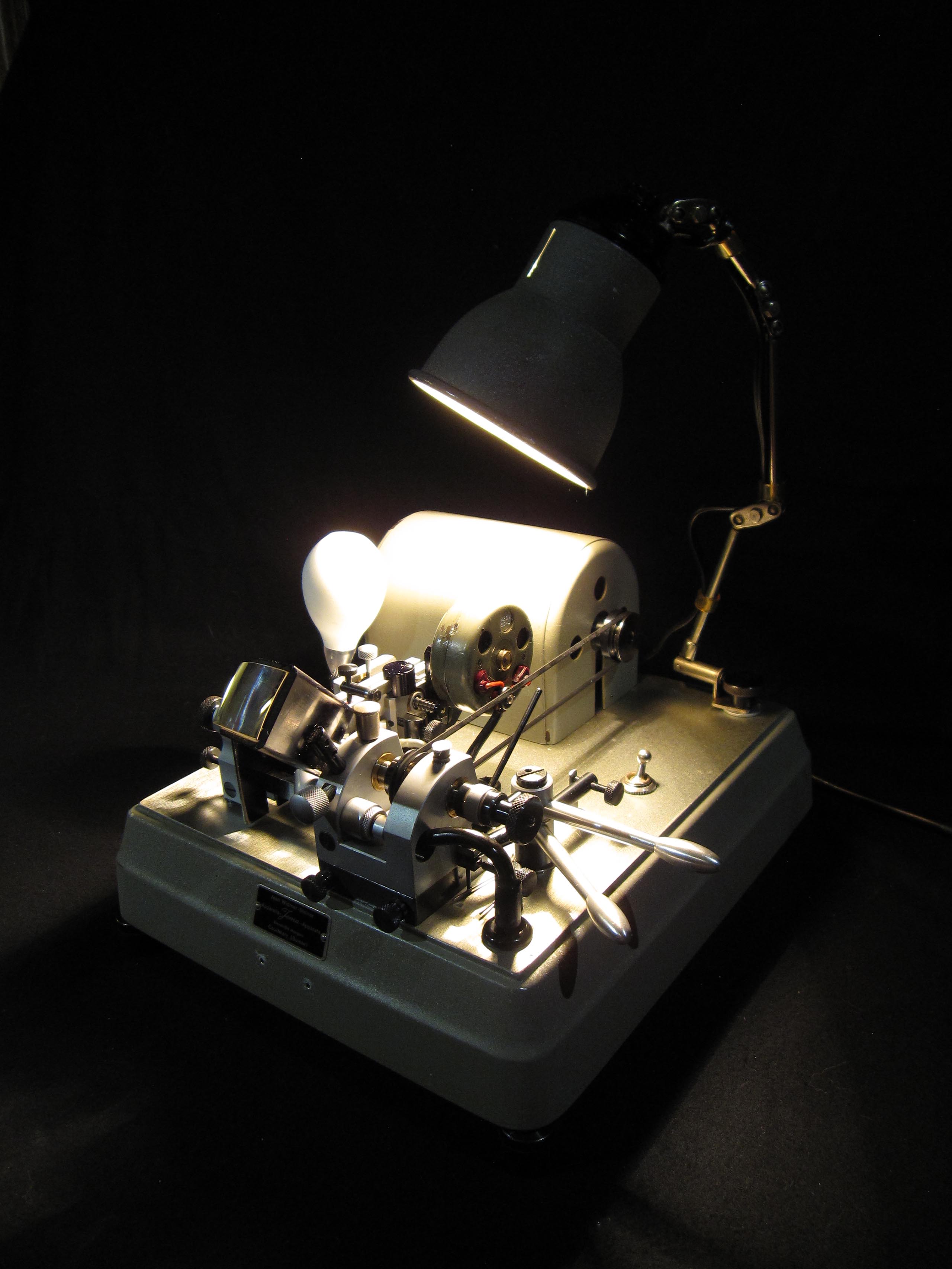
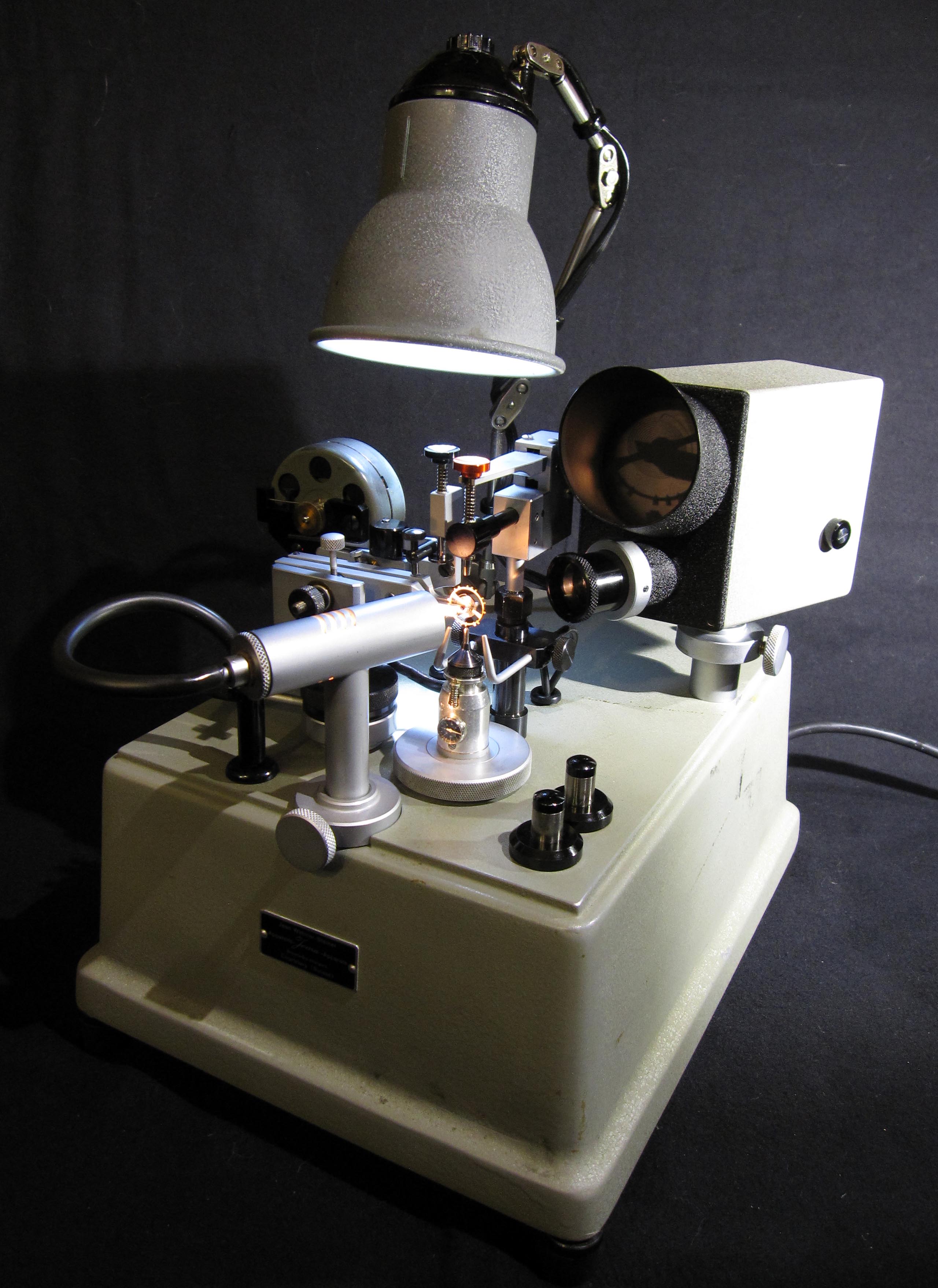
Jean Widmer-Steiner Type 1 for poising screw balances. Using a light beam, the black silhouette of the balance is projected onto a small screen.

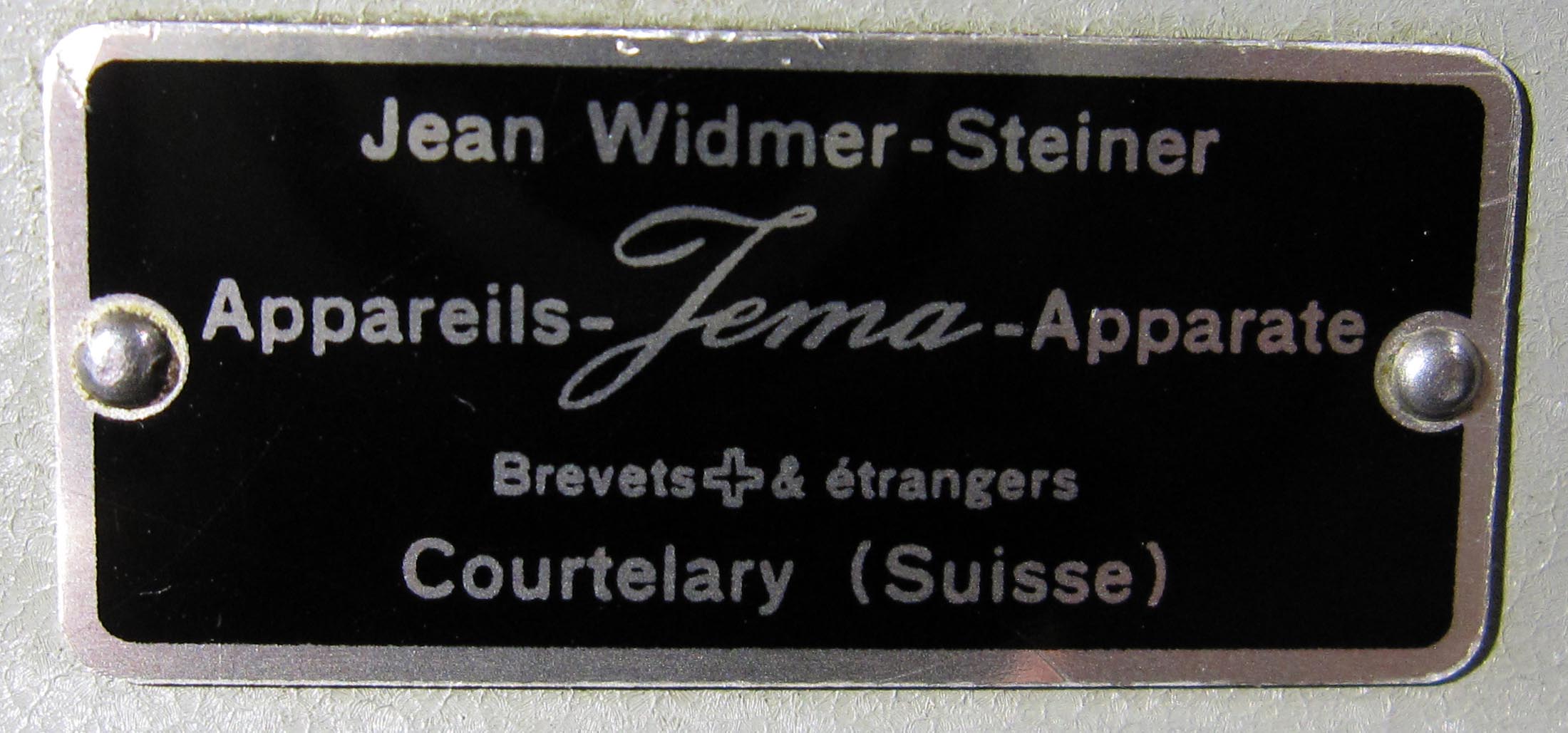
Jean Widmer-Steiner

Appareils-Jema-Apparate
Brevets Swiss & étrangers
Courtelary (Suisse)

Logo of Jean Widmer-Steiner for poising screw balances, made in Switzerland.

As far as I know, there are two types of this precision device. Type I is designed for leveling a screw balance that is drilled vertically. On Type II, the balance rim can be drilled together with the axis.

Both devices, of course, replace simple balance scales.

I know very little about Jean Widmer-Steiner. In November 1949, he received a U.S. patent for a shock-resistant device. From this, I concluded that he was an engineer and entrepreneur in Switzerland. I also date the appearance of these devices to the 1950s.


Type I

Jean Widmer-Steiner Type 1 apparatus for vertical drilling to poise screw balances. General view.

The manufactured balance is placed on the measuring lever. Pressing the hand pumps supplies air to the movable nozzle, causing the balance to rotate. When the balance comes to rest, any imbalance becomes visible, and the heavier part moves downward under gravity.
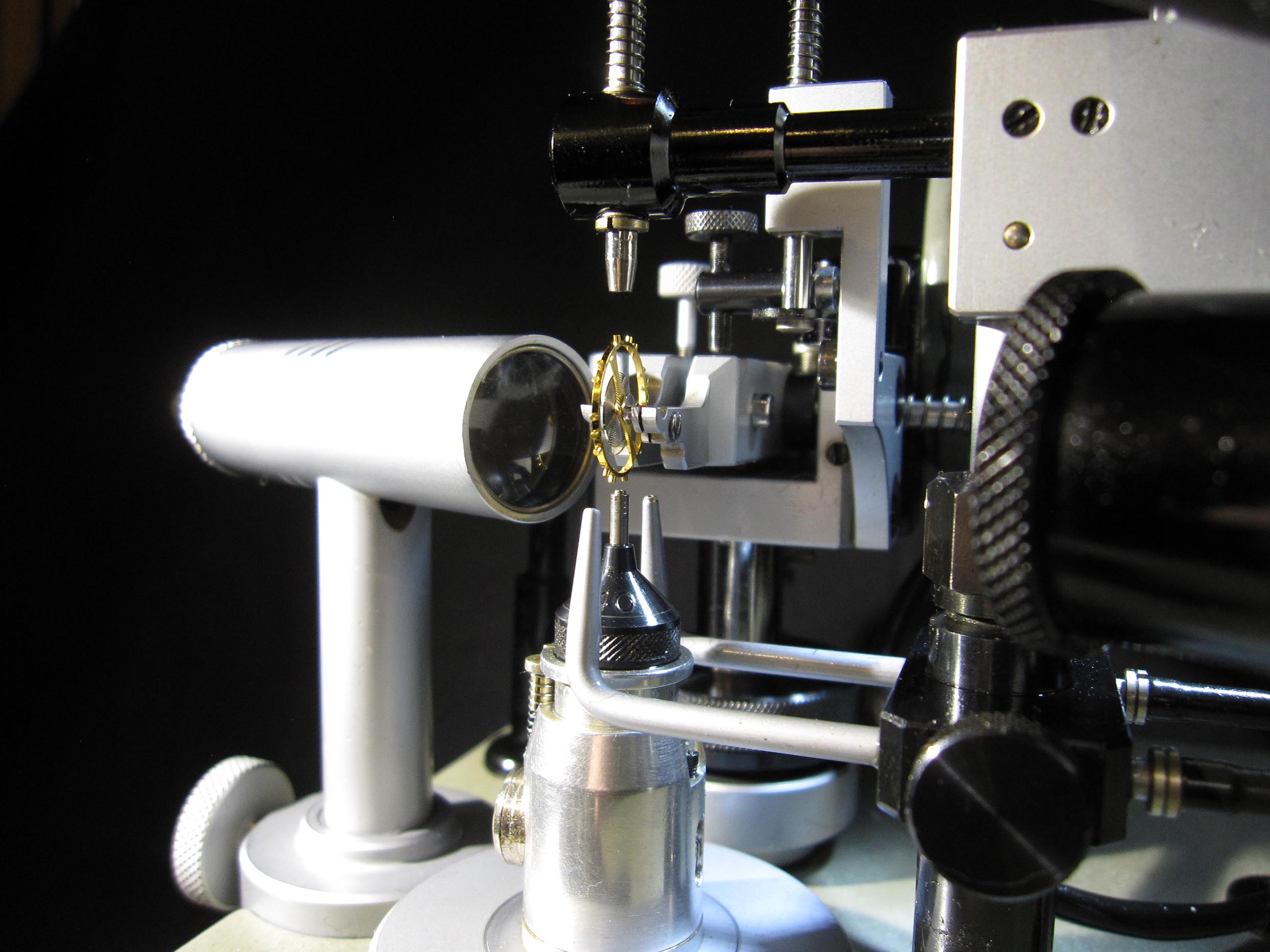
Jean Widmer-Steiner Type 1 apparatus for vertical drilling to poise screw balances. Close-up of a balance in the machine.

Pressing the lever activates the vibrator, improving the measurement procedure.
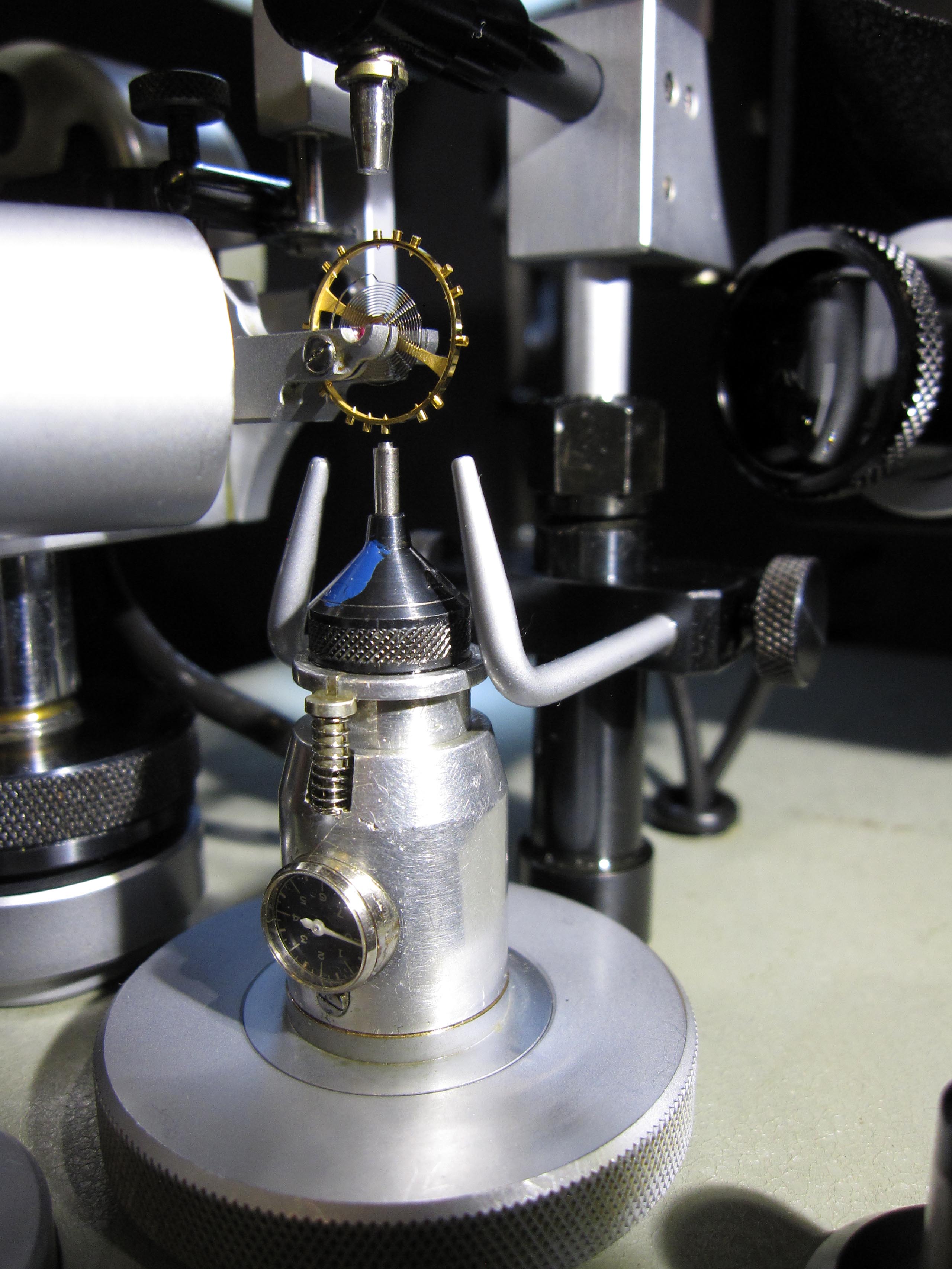
Jean Widmer-Steiner Type 1 apparatus for poising screw balances. Close-up of the poising operation in the machine. Drilling depth gauge.

The next step is to identify the screw that needs to be lightened. Material is then drilled out of the screw head. The device has a drilling spindle with a collet that holds a 0.4 mm drill bit. The drill diameter is limited by a gauge, and the drilling depth is indicated on a measuring dial, allowing precise balance leveling.
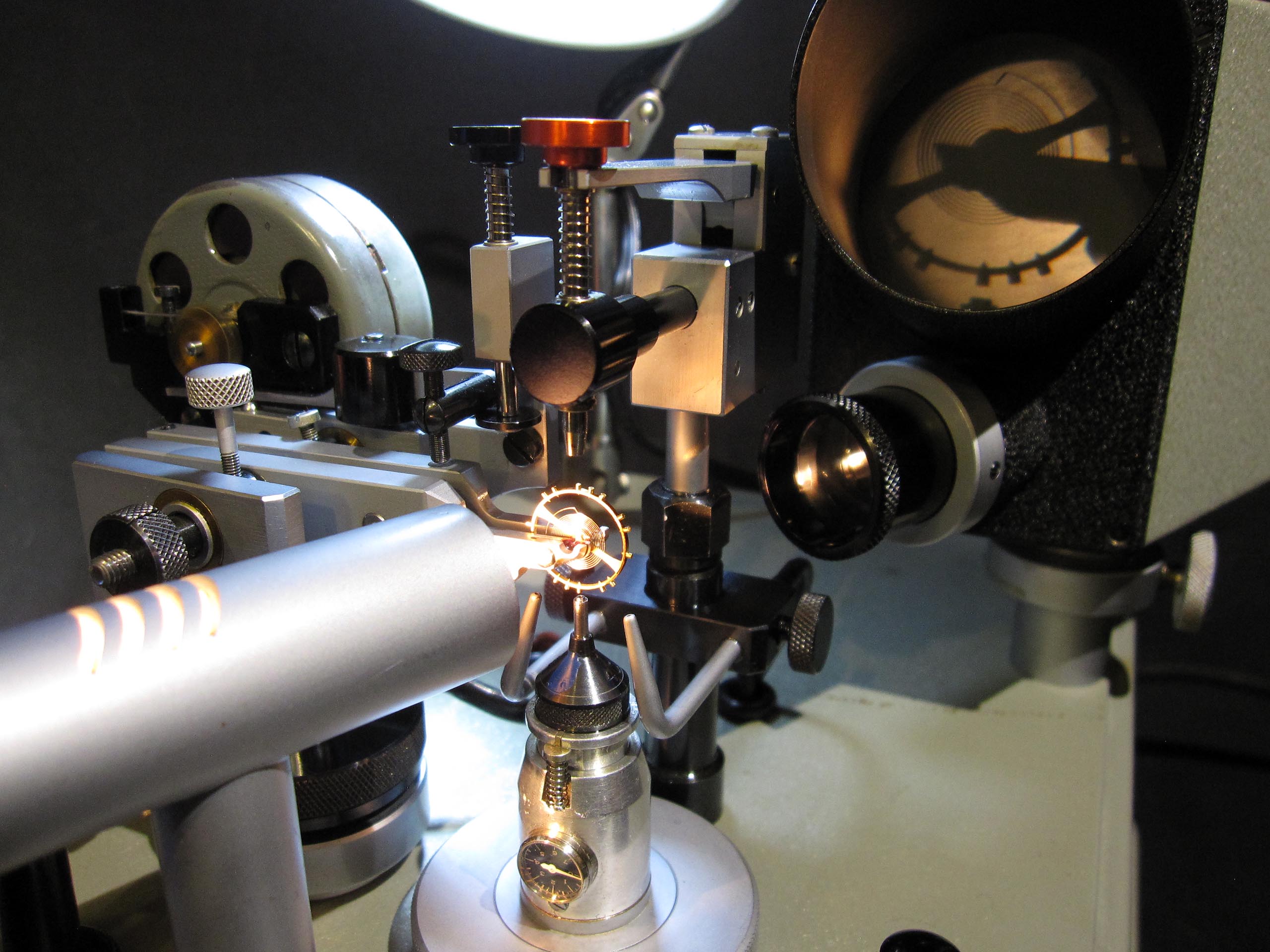
Jean Widmer-Steiner Type 1 apparatus for poising screw balances. Using a light beam, the black silhouette of the balance is projected onto a small screen.

Setting up and adjusting the device is very versatile. For example, the drill can be precisely aligned with the indicator needle. All critical components use ball bearings or ruby bearings, minimizing the effect of gravity on the indicator. Using a light beam, the black silhouette of the balance is projected onto a small screen—an interesting complement to the watchmaker’s loupe.
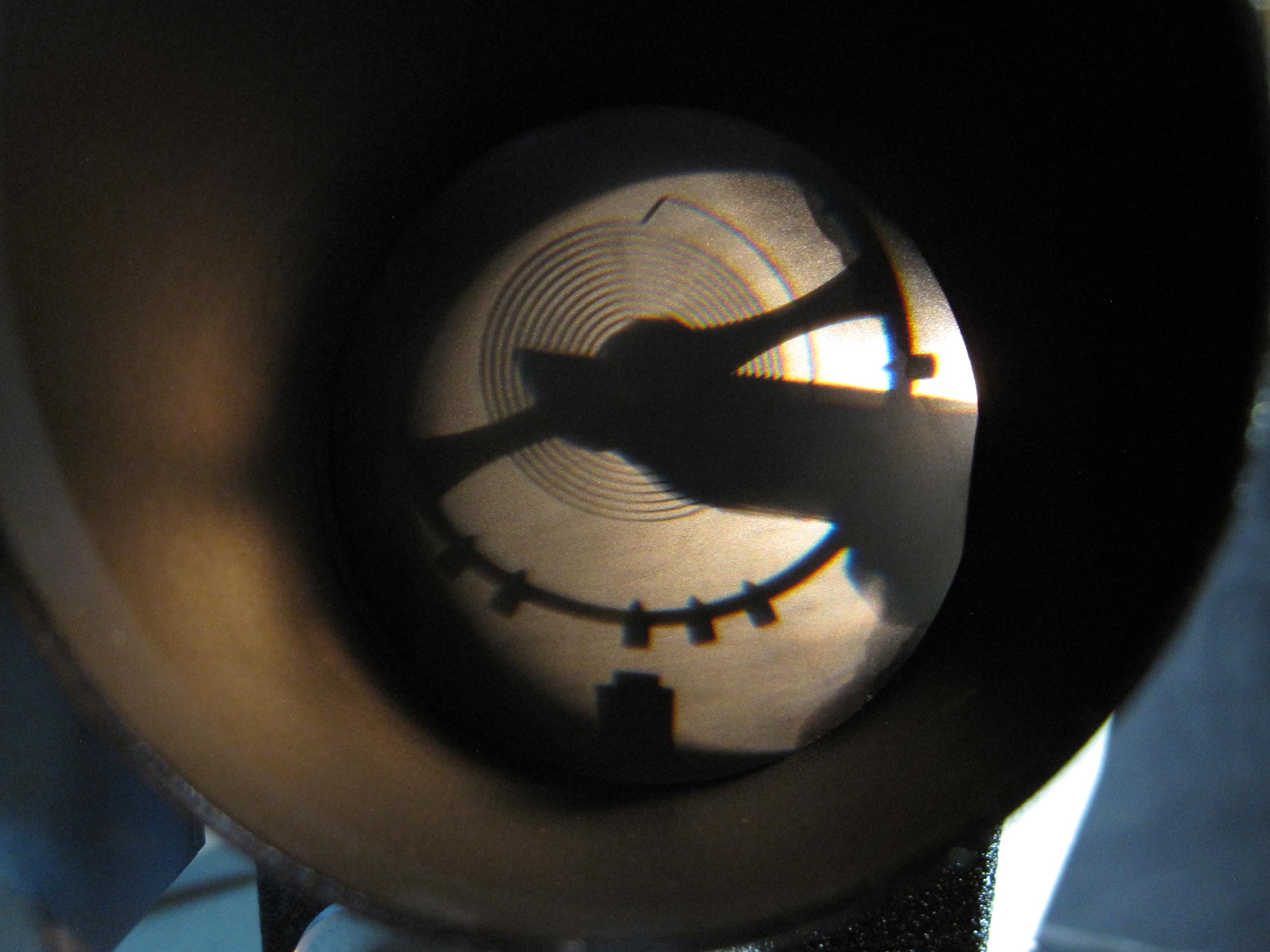
Jean Widmer-Steiner Type 1 apparatus for poising screw balances, silhouette projection system.

In fact, I deduced how the device operates myself through trial and error.
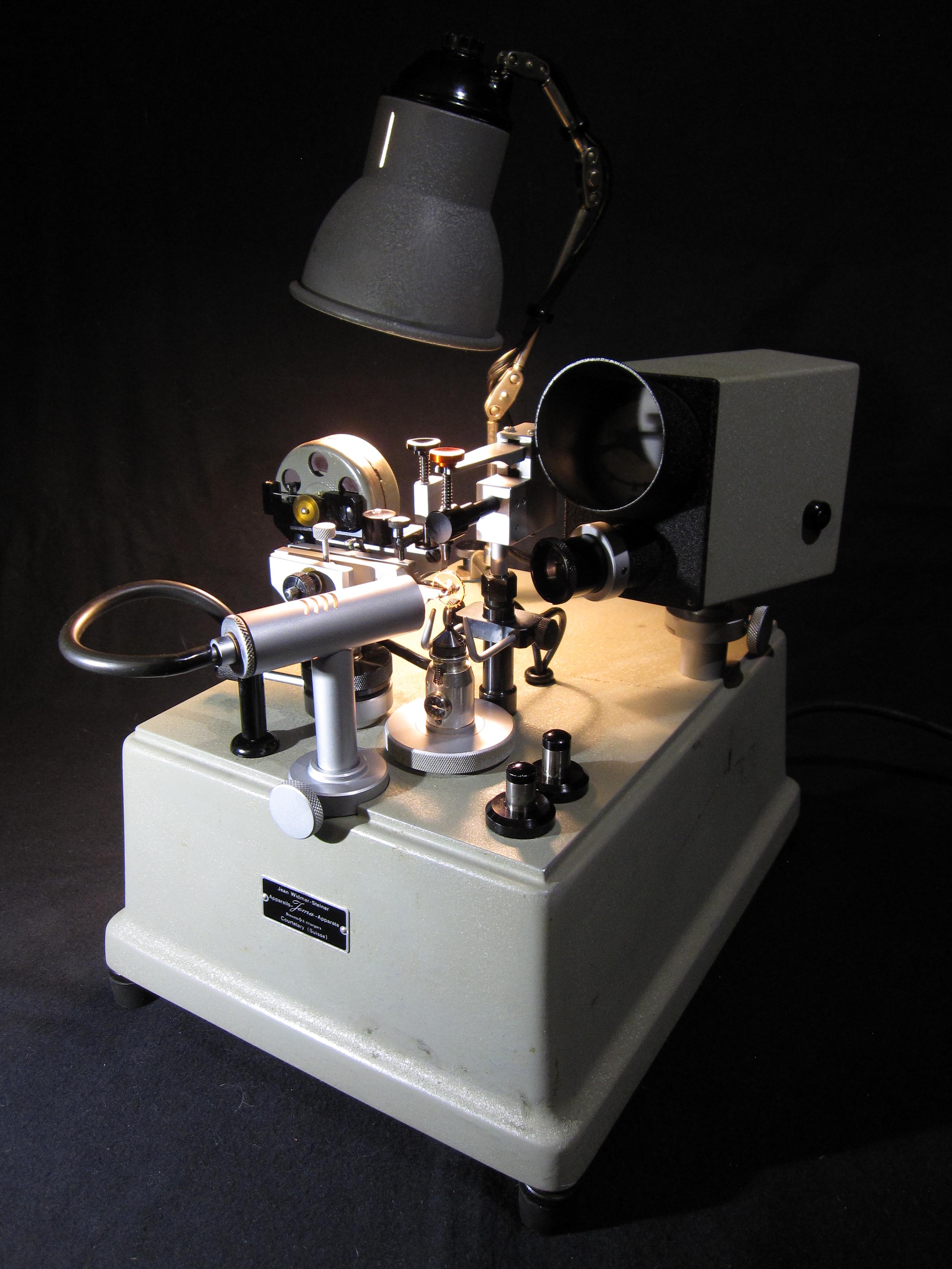
Jean Widmer-Steiner Type 1 apparatus for vertical drilling to poise screw balances. Detailed general view.

It goes without saying that the device must be meticulously leveled before use, just like a standard balance leveling instrument. This is done using adjustable feet and a level, as there is no built-in leveling mechanism.
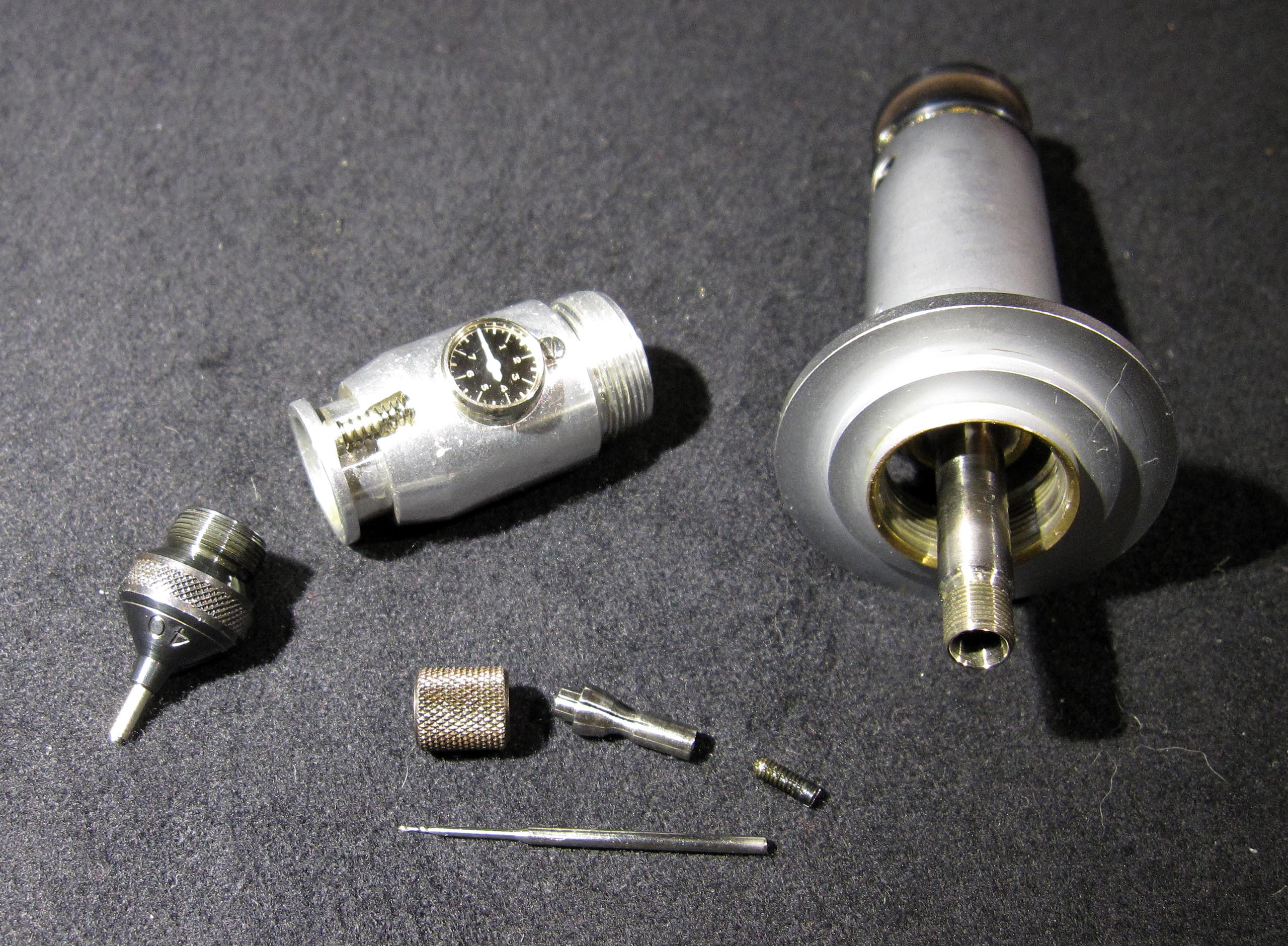
Jean Widmer-Steiner Type 1 for poising screw balances. Disassembled spindle: drill, collet, probe (sensor).

I was also able to see two other devices of this type, where I could compare the modifications and improvements. On one older device, obvious wear on some surfaces had been corrected by the designers with ruby replacements.
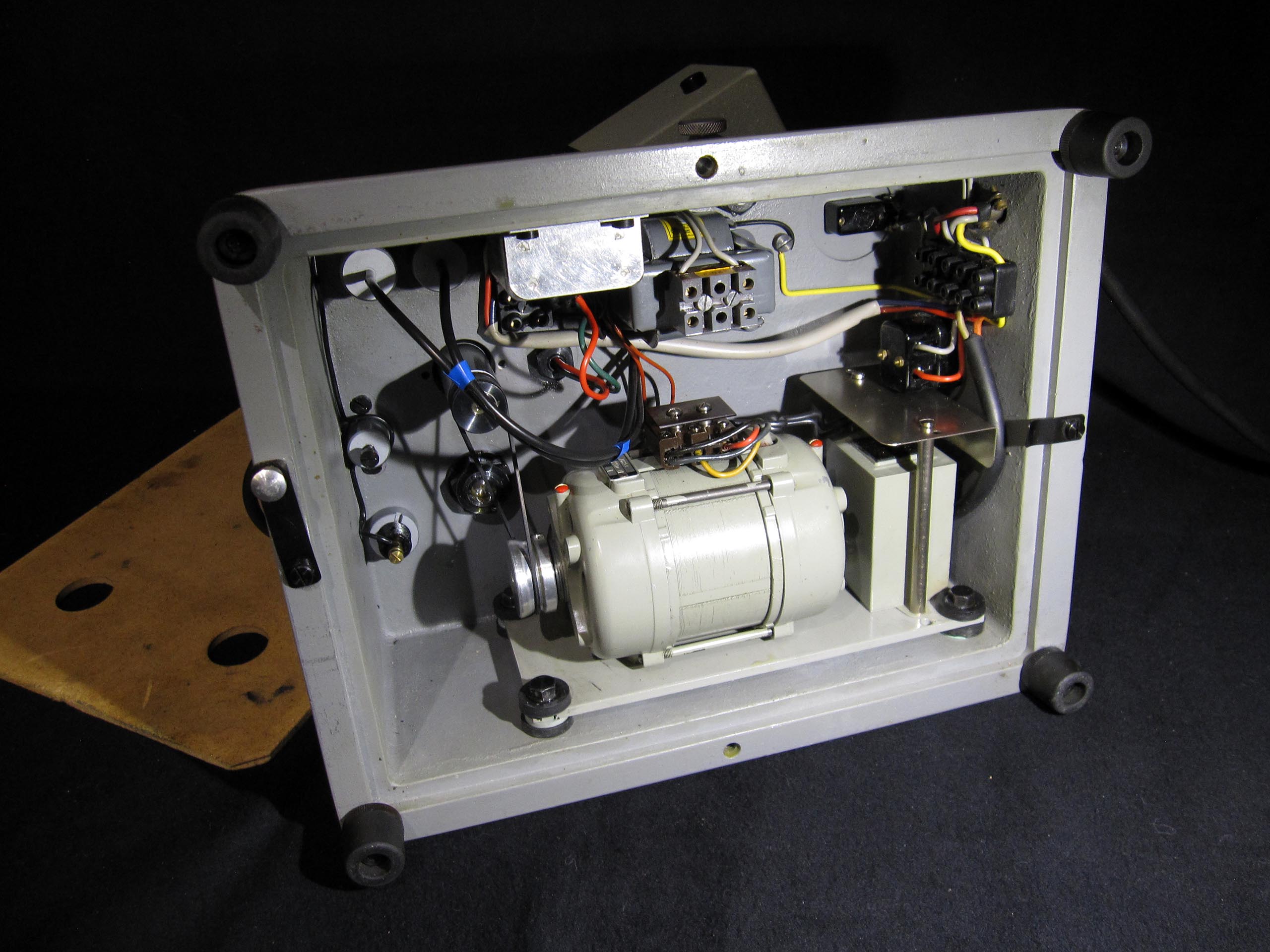
Jean Widmer-Steiner Type 1 for poising screw balances. Close-up bottom view.

In general, the long-term performance of the machine in a factory can only be judged by the large pile of metal shavings, indicating how many balances were leveled here.

The main components of the device are made of aluminum and brass, chosen for their non-magnetic properties necessary for the measurement process.
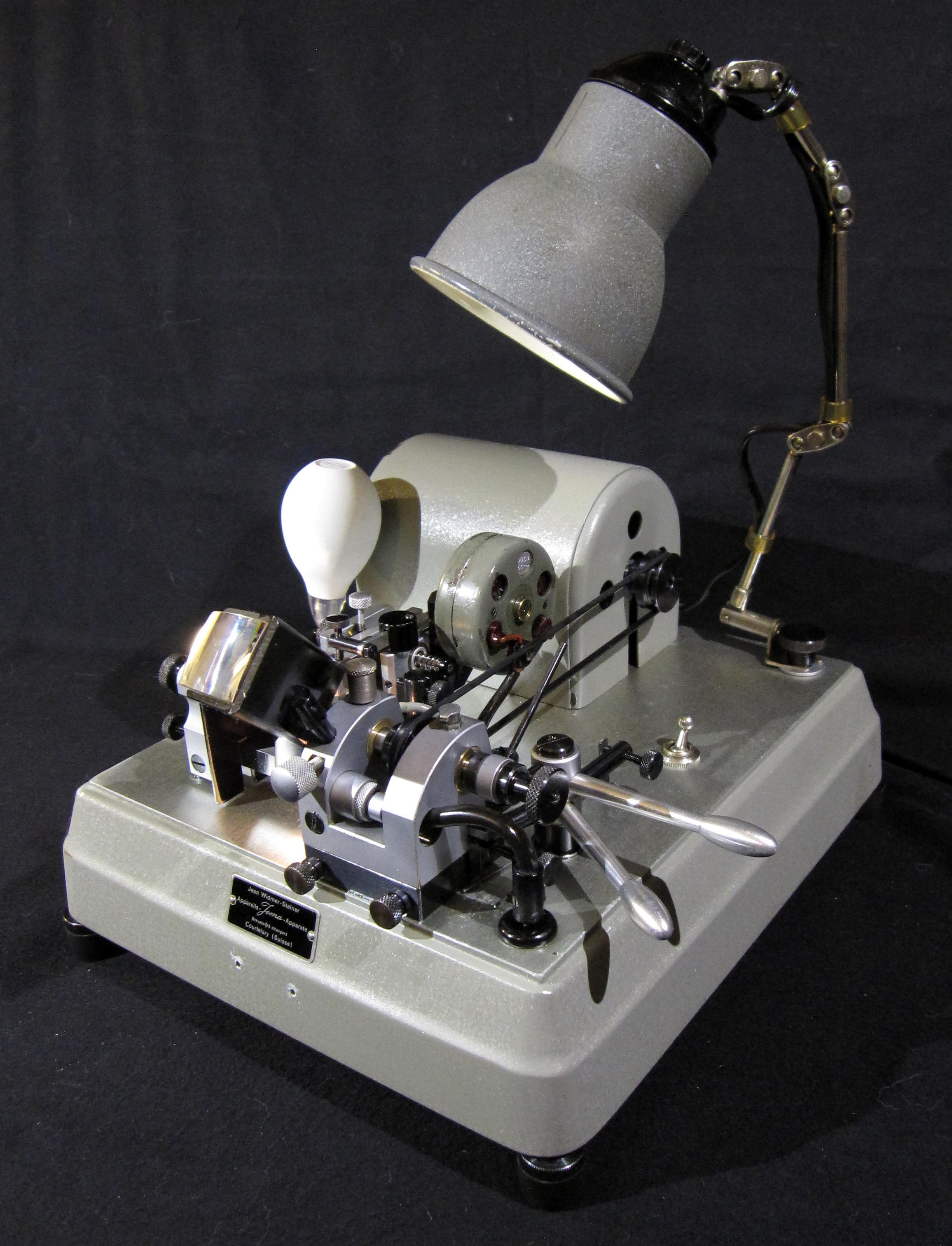
Type II

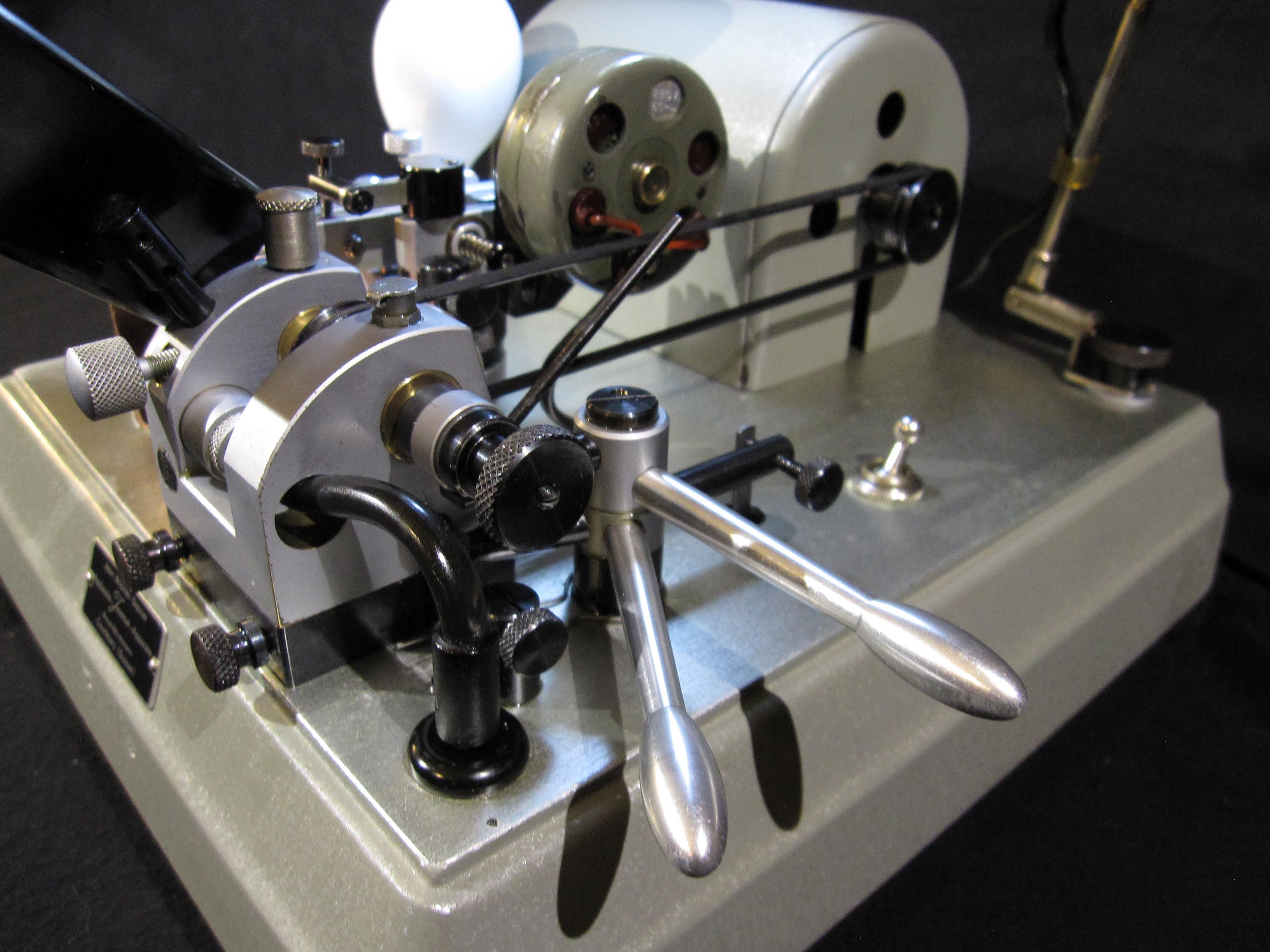
Jean Widmer-Steiner Type 2 apparatus for poising screw balances, allowing the rim to be drilled while mounted on the staff. General view.

This machine operates similarly to Type I. The vibrating device, however, is permanently active and cannot be turned off.

Jean Widmer-Steiner Type 2 apparatus for poising screw balances, allowing the rim to be drilled while mounted on the staff. Control levers.

Instead of two, there is only one air nozzle, which is almost non-adjustable. There is no air pump, so a medical rubber bulb must be used.

Jean Widmer-Steiner Type 2 apparatus for poising screw balances, allowing the rim to be drilled while mounted on the staff. Rubber air bulb.

The machine is equipped with a drilling spindle using 6 mm watch collets, allowing drill bits of any size to be clamped.

Jean Widmer-Steiner Type 2 apparatus for poising screw balances, allowing the rim to be drilled while mounted on the staff. Drilling spindle with control levers.

The drilling depth can be adjusted with a stop screw, but there is no indicator for this.

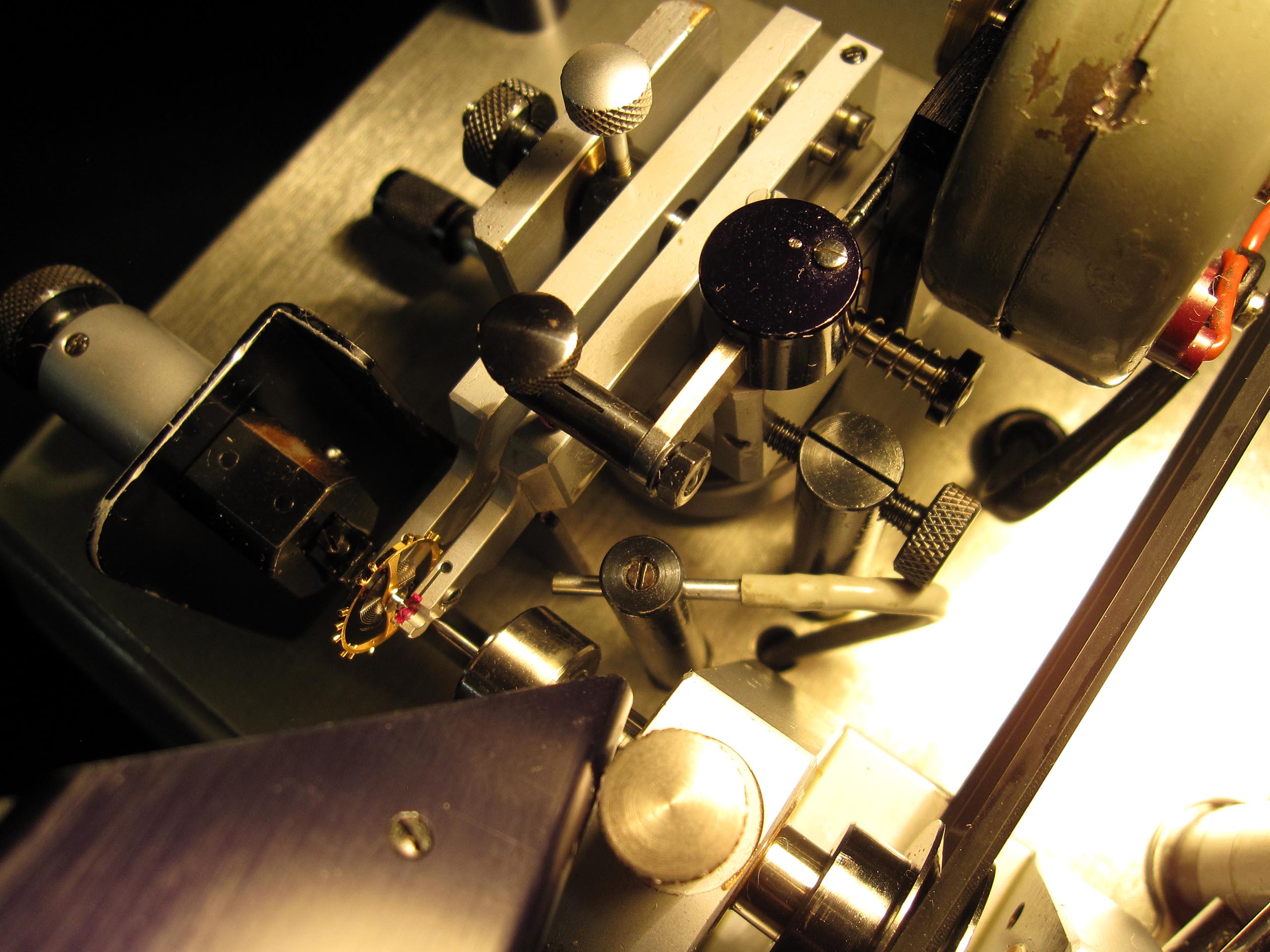
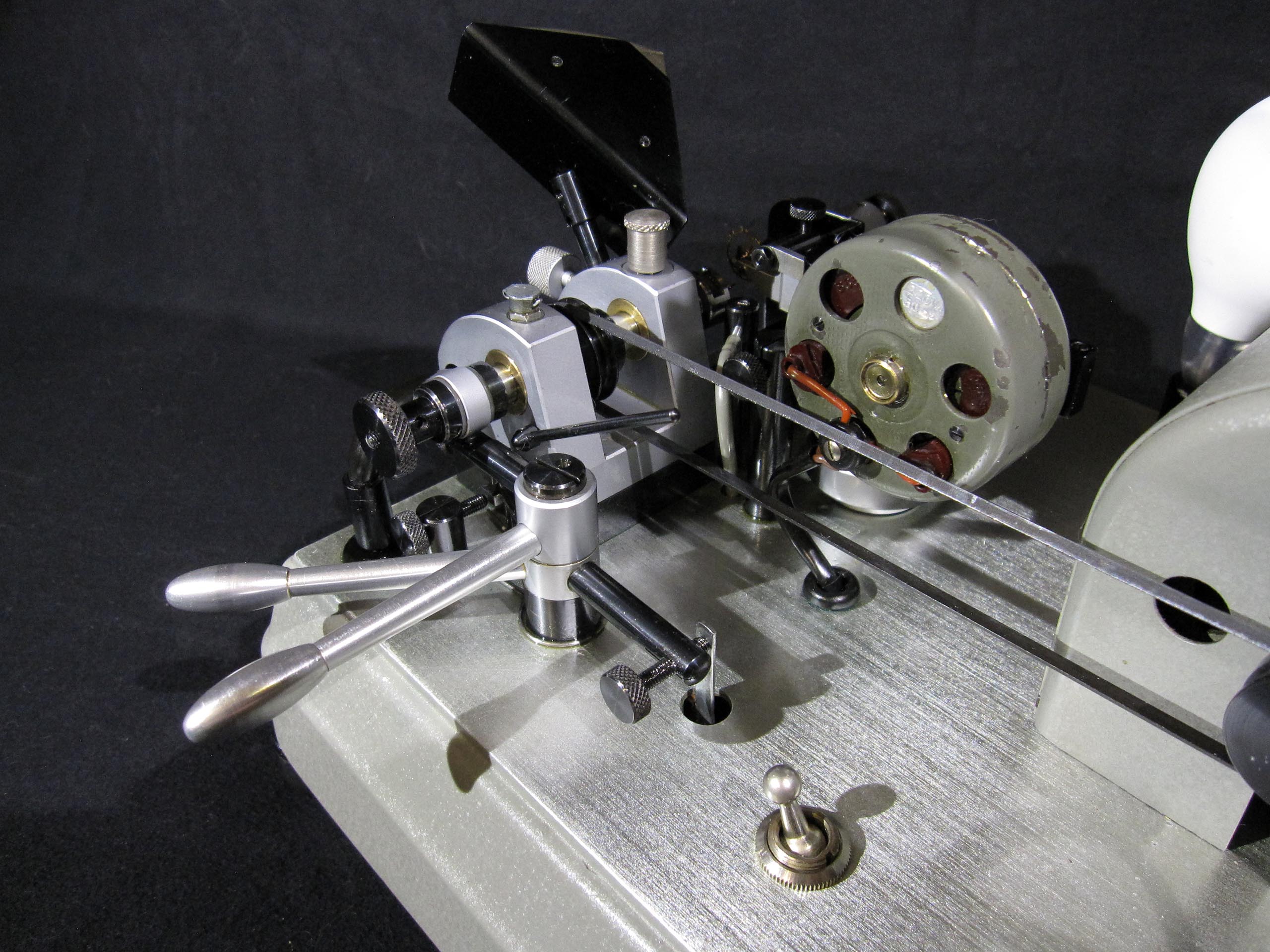
Jean Widmer-Steiner Type 2 apparatus for poising screw balances, allowing the rim to be drilled while mounted on the staff. Top view.

Drilling requires simultaneous operation of two levers. The first lever moves the response pin to the balance rim and starts the motor; the second lever controls the drill.

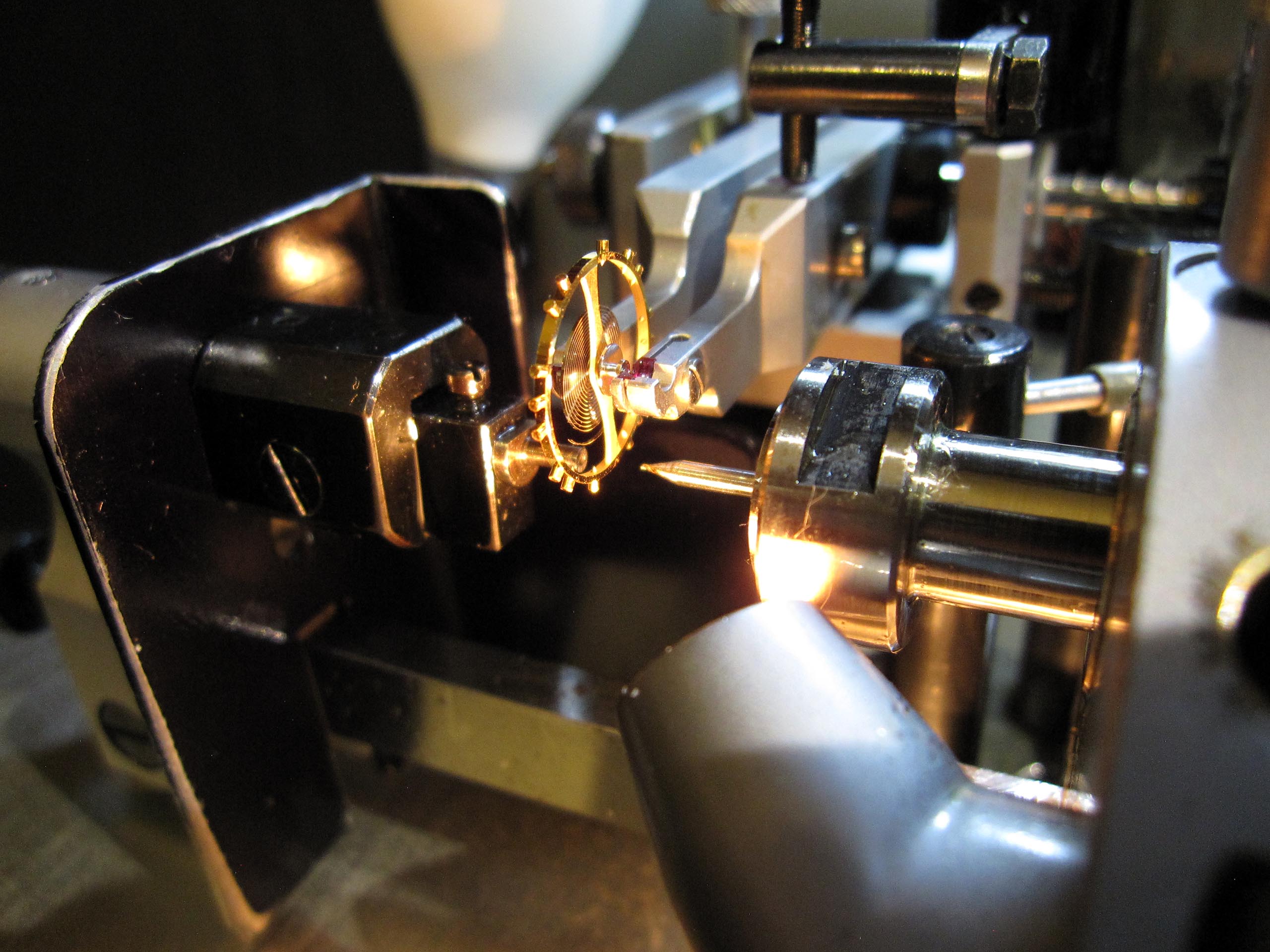
Jean Widmer-Steiner Type 2 apparatus for poising screw balances, allowing the rim to be drilled while mounted on the staff. Spindle with drill bit and balance.

The device must also be adjusted and set for the specific balance being worked on.

Jean Widmer-Steiner Type 2 apparatus for poising screw balances. Adjusting and setting up the device for a specific balance.

As auxiliary optics, the Swiss designers added a prism with a lens, making the balance clearly visible in enlarged view. A watchmaker’s loupe can also be used, and the prism is removable for convenience.

Jean Widmer-Steiner Type 2 apparatus for poising screw balances, allowing the rim to be drilled while mounted on the staff. Using a prism with a lens.

Many components are otherwise similar to Type I.

Jean Widmer-Steiner Type 2 for poising screw balances. Extreme close-up of the balance seen through a viewing prism with magnifying lens.

The measuring lever can accommodate a balance with a maximum diameter of 23 mm, although with some ingenuity, a 45 mm balance can also be placed.

Jean Widmer-Steiner Type 2 apparatus for poising screw balances, allowing the rim to be drilled while mounted on the staff. Top view. Jean Widmer-Steiner Type 2 apparatus for poising screw balances, illuminated by its integrated lamp. General view.