Filimonovo Toys
The Filimonovo toy is a traditional Russian folk craft. The toy takes its name from the village of Filimonovo, located in the Odoyevsky district of the Tula region. Since ancient times (possibly as far back as seven hundred years ago), craftsmen began using a special type of clay found in the area to make pottery and whistle-toys. According to legend, the first was a newcomer named Filimon, who discovered the high-quality, rich, and plastic clay and began crafting pots from it.
While the men typically handled the pottery, the women sculpted the whistles, often assisted by young girls who were taught the craft starting at age 7 or 8. On winter evenings, the craftswomen would gather to create these clay toys while singing folk songs. In the spring, before the field work began, the items were fired in special kilns. On the slopes of a large ravine between the villages of Filimonovo and Karasenki, brick kilns were built. Pottery was packed inside in dense rows, and the gaps between the pots were filled with whistles. Everything was covered with tiles, surrounded by birch firewood, and set ablaze. This was a solemn event for the entire village. These massive fires burned late into the night. According to eyewitnesses, the firing was an extraordinarily colorful spectacle. Well-dressed men, women, and children would gather by the kilns, waiting for the wonderful culmination of all their winter labors.
To create a toy, a lump of clay is taken, and the craftswoman pulls the entire figure out from it all at once—this sculpting method makes the toys graceful and fluid. In cross-section, all parts of the body must be round. As the clay hardens, it "shrinks" or settles, requiring the craftswoman to "pull" and smooth the piece again and again. This causes the forms to stretch and lengthen even further. This process is repeated several times until the toy finally "freezes" into its permanent shape.
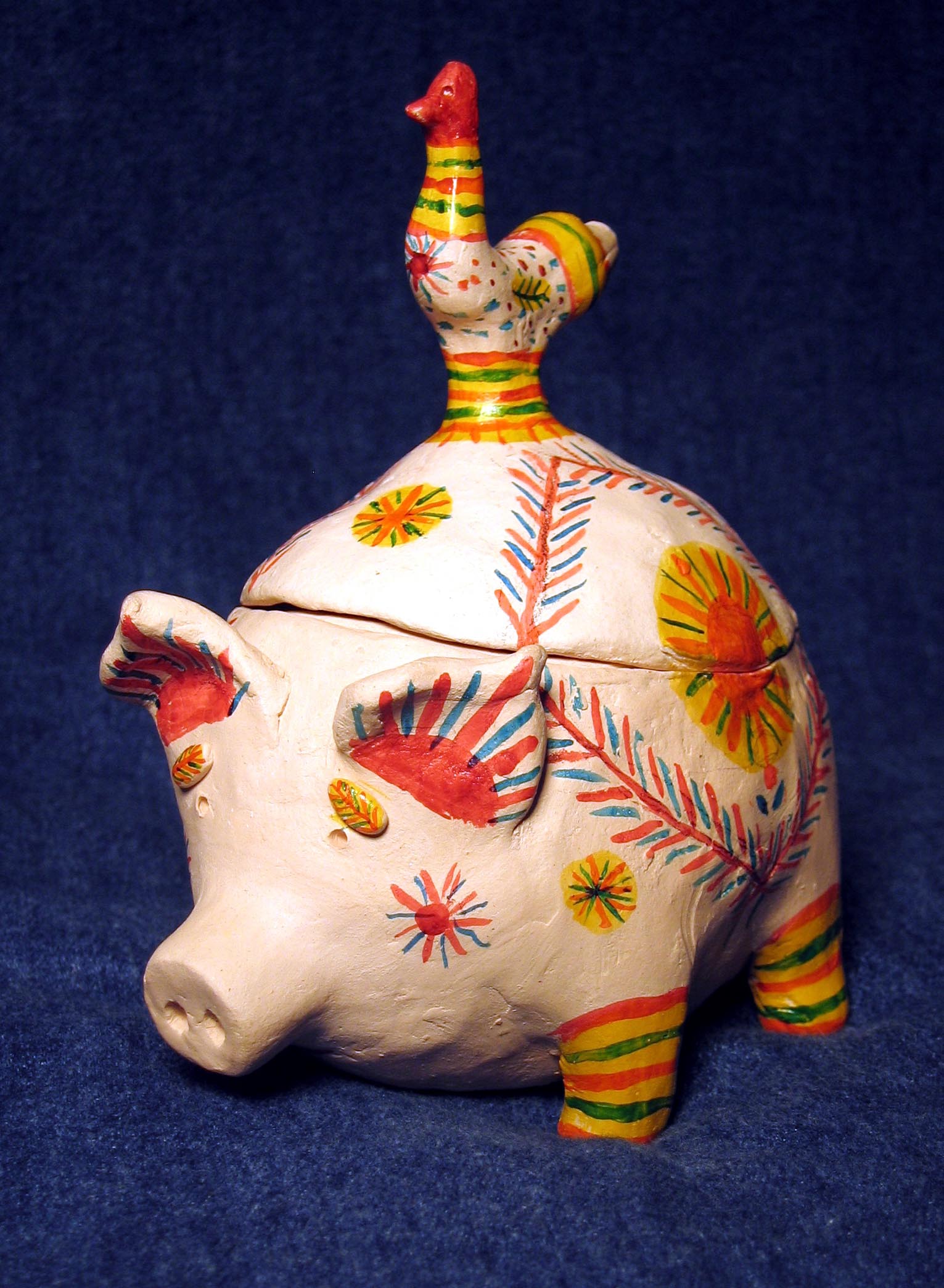
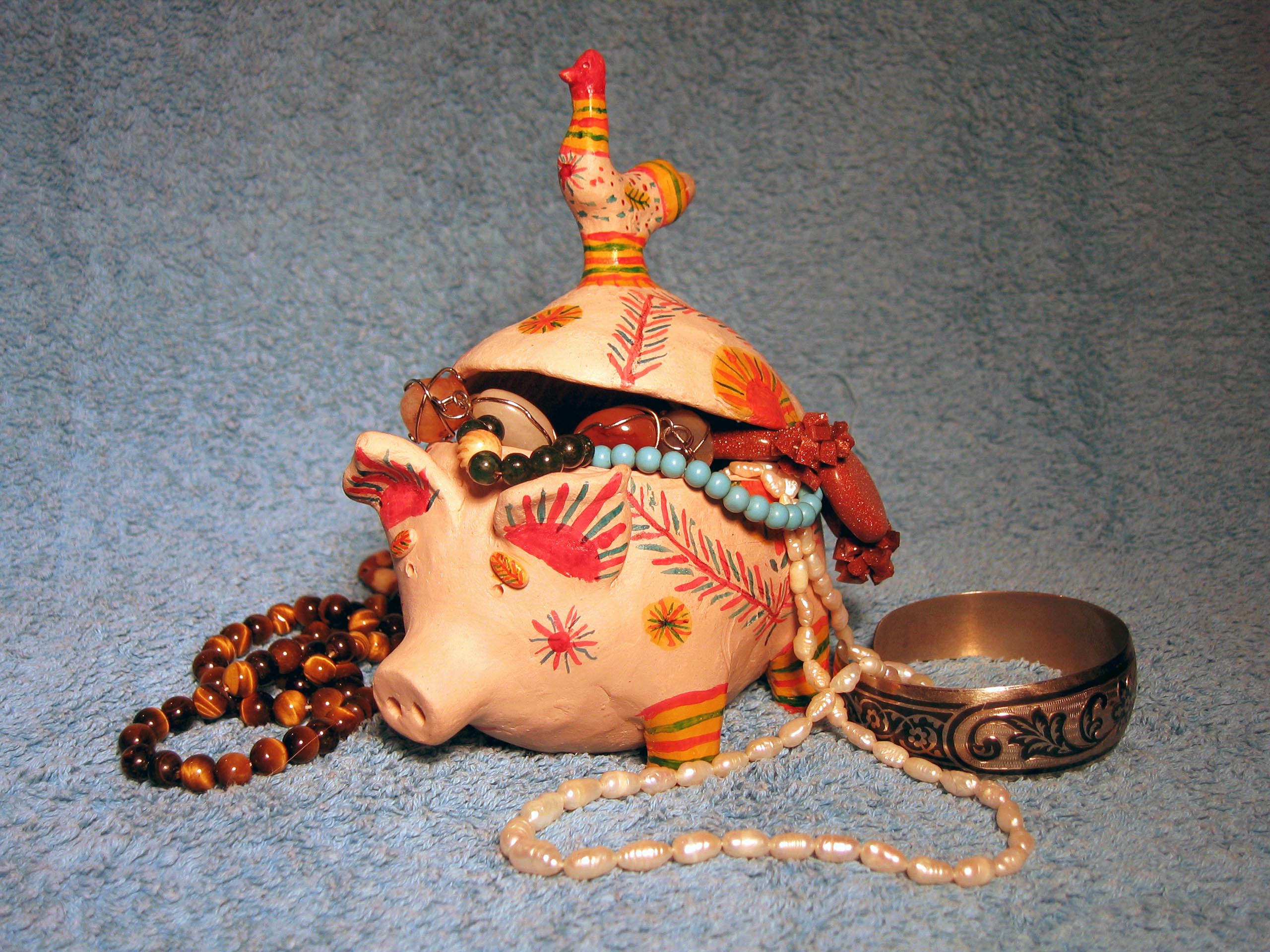
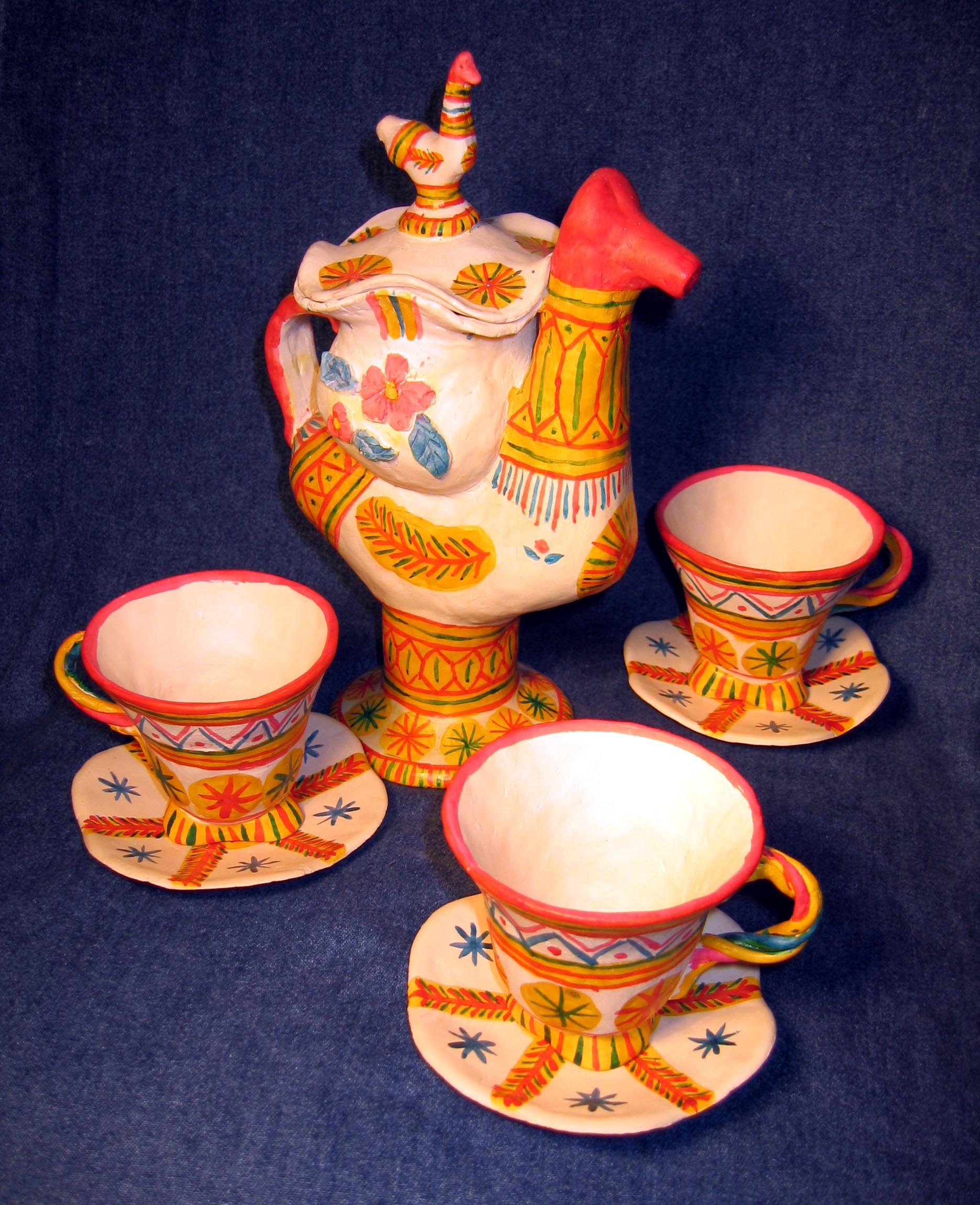
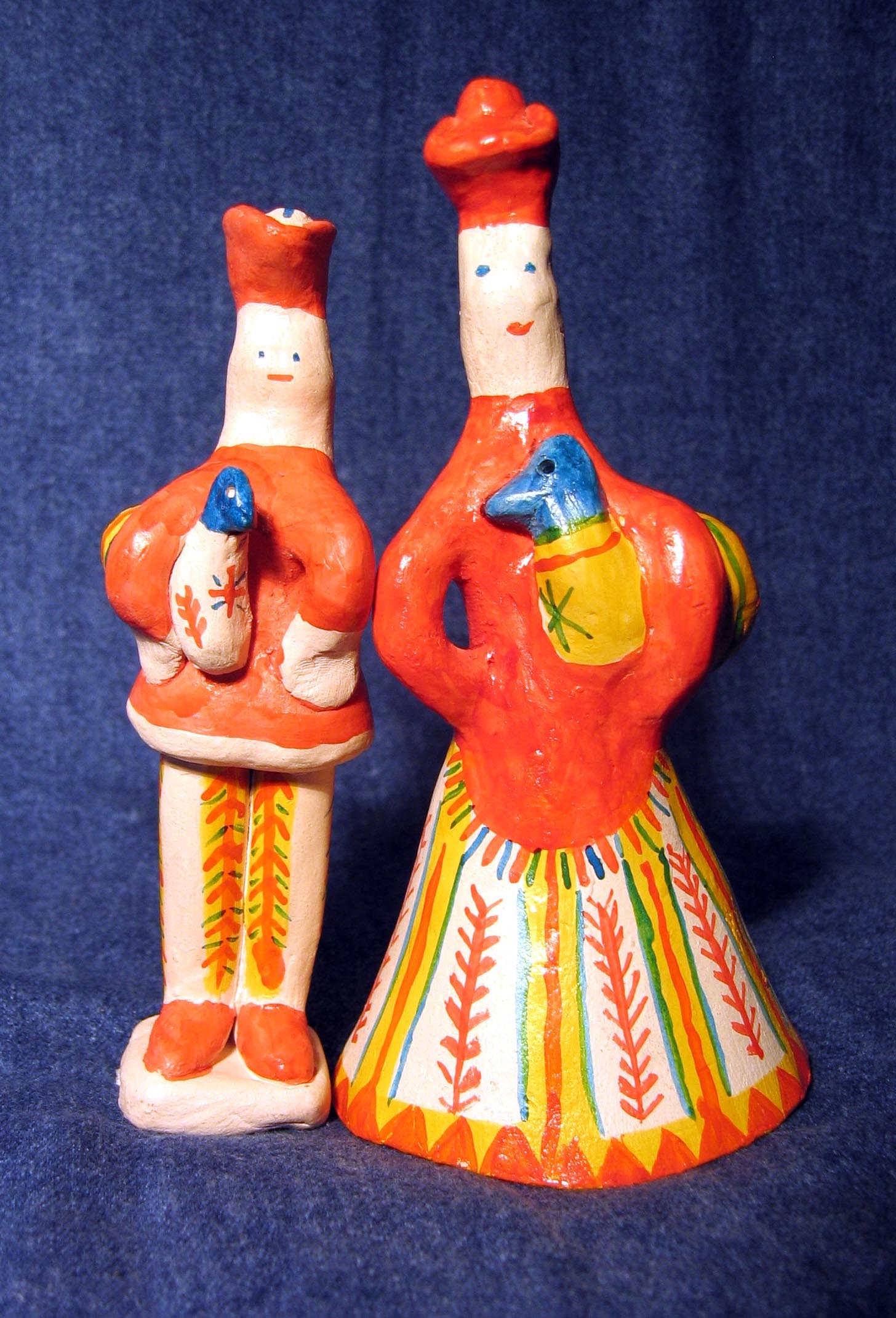
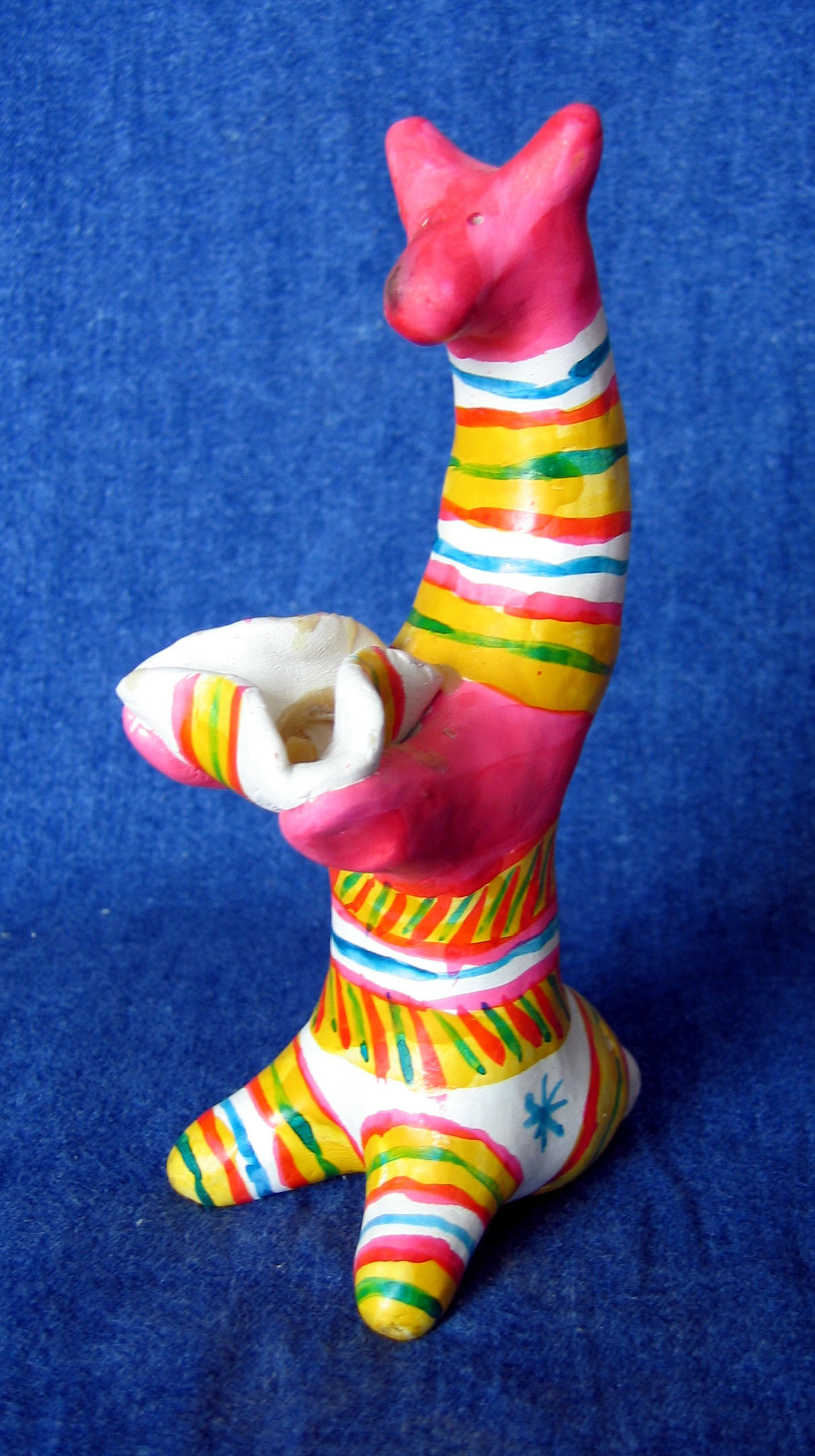
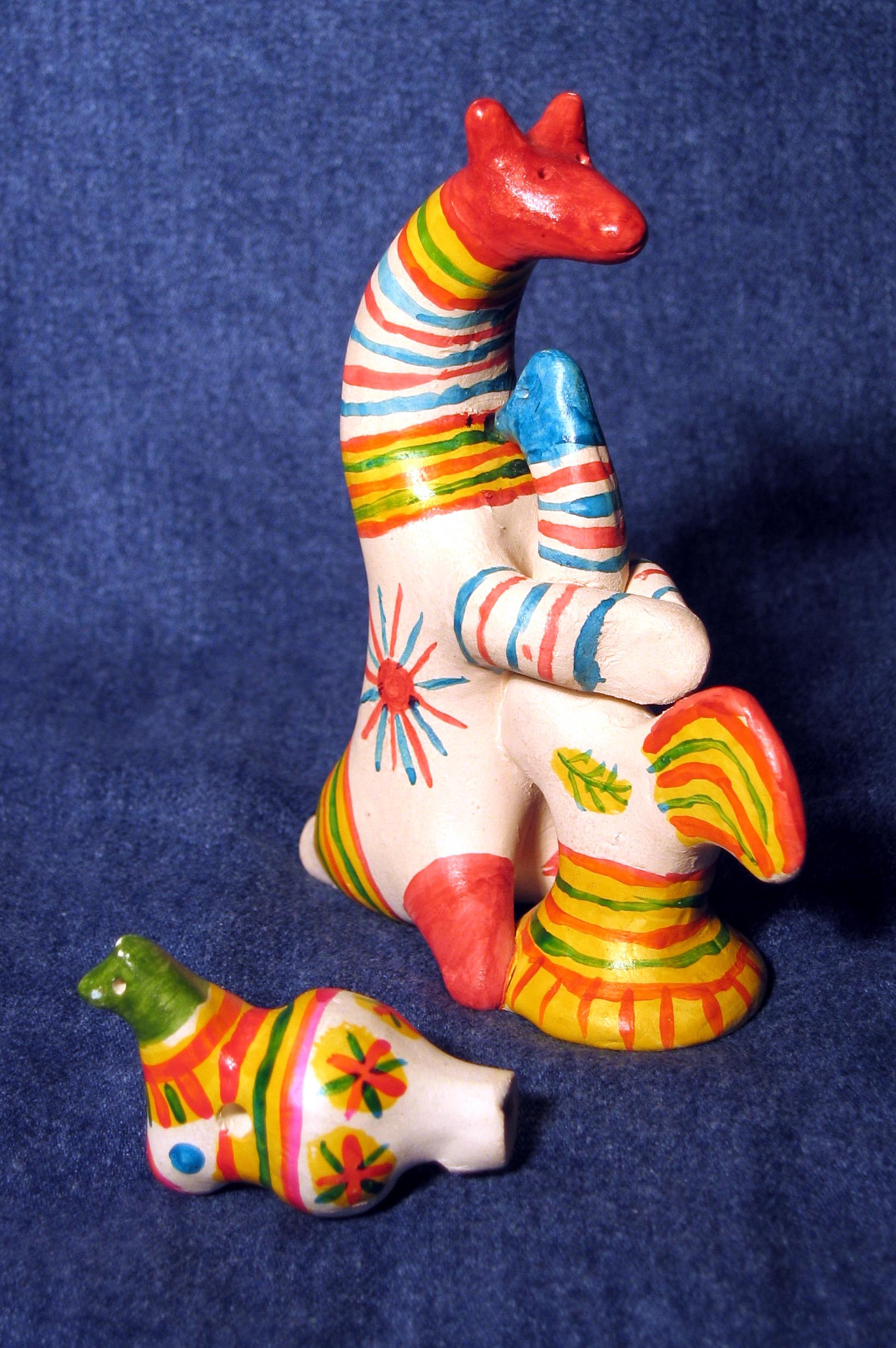
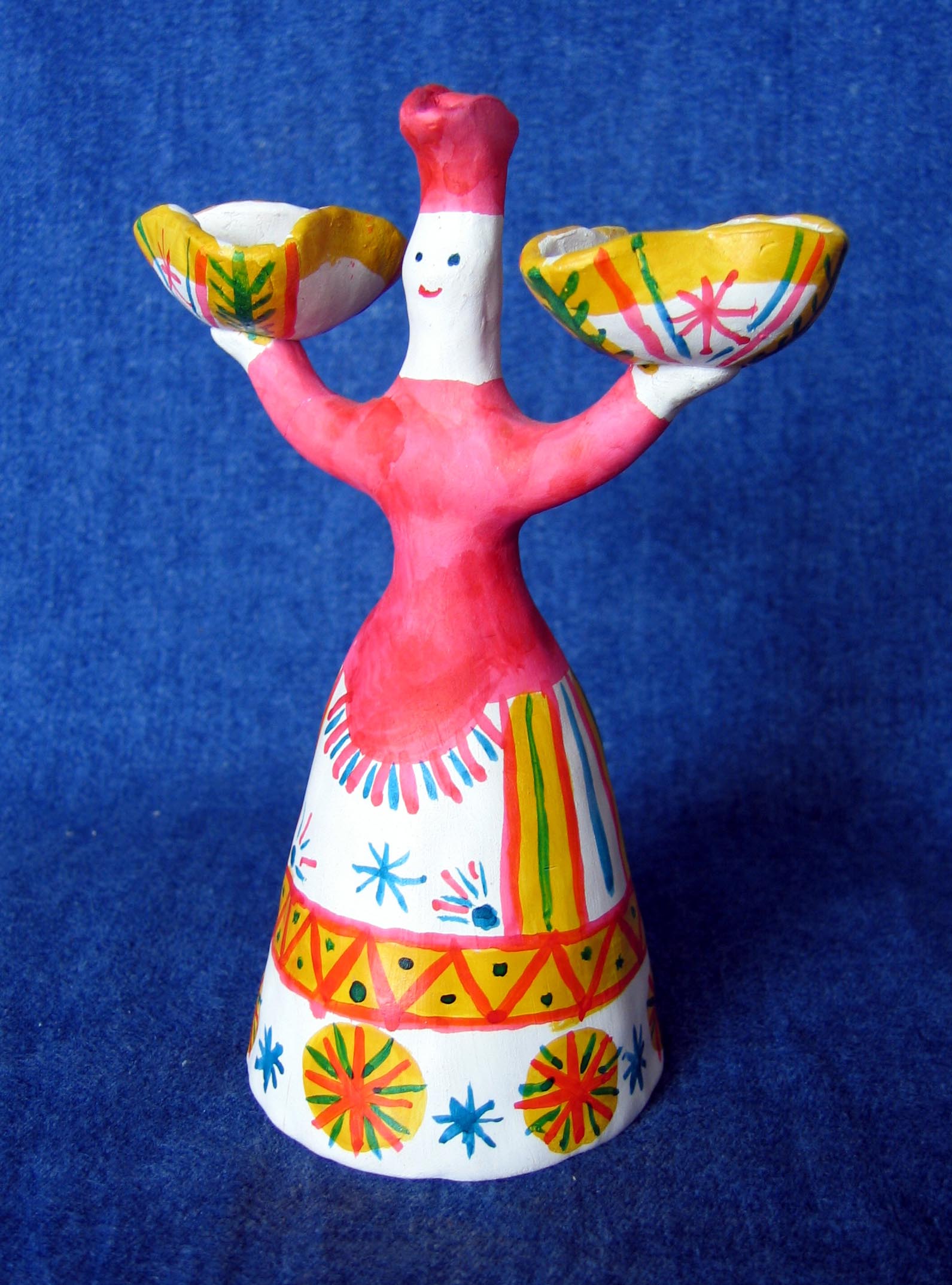
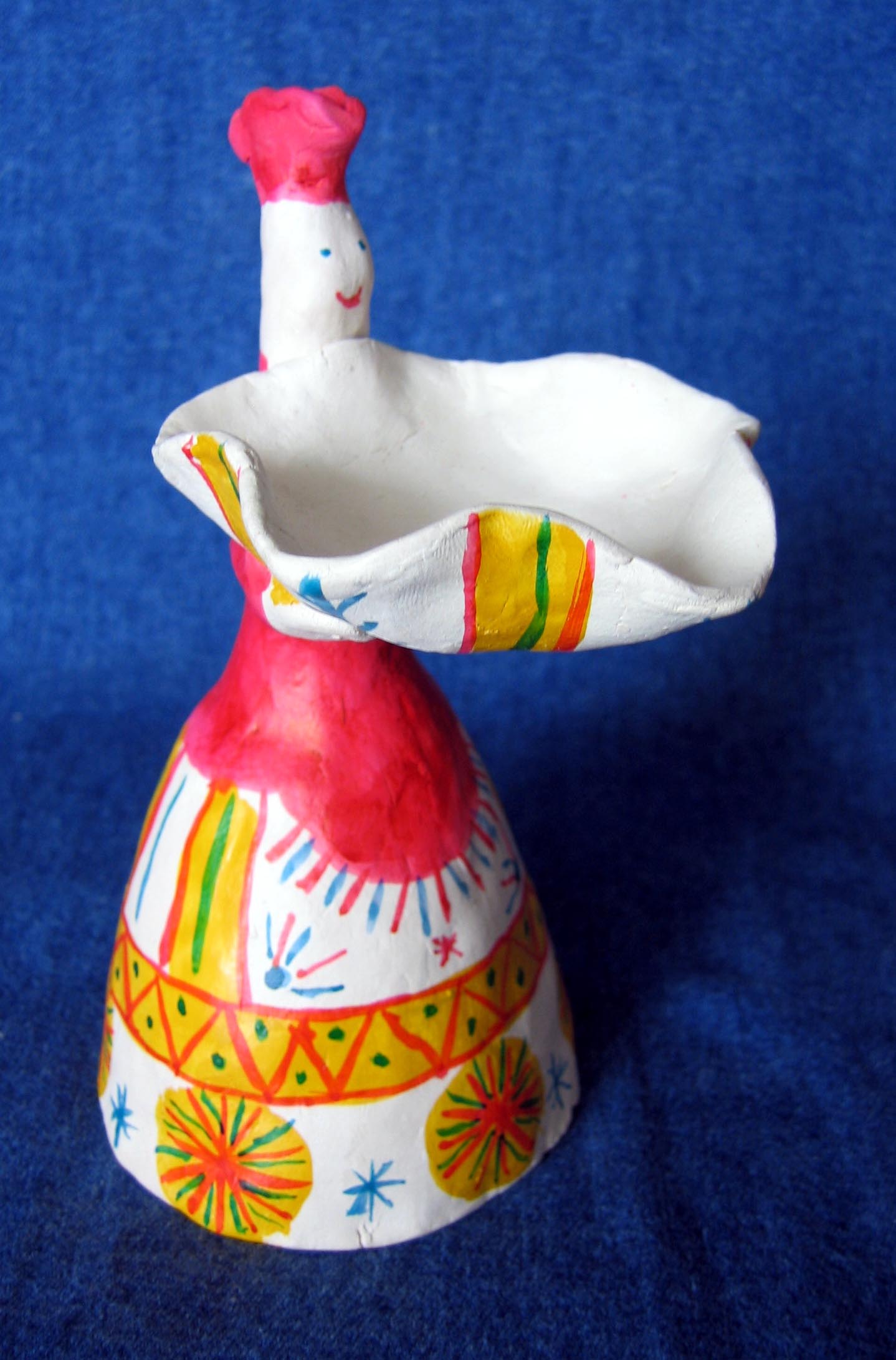
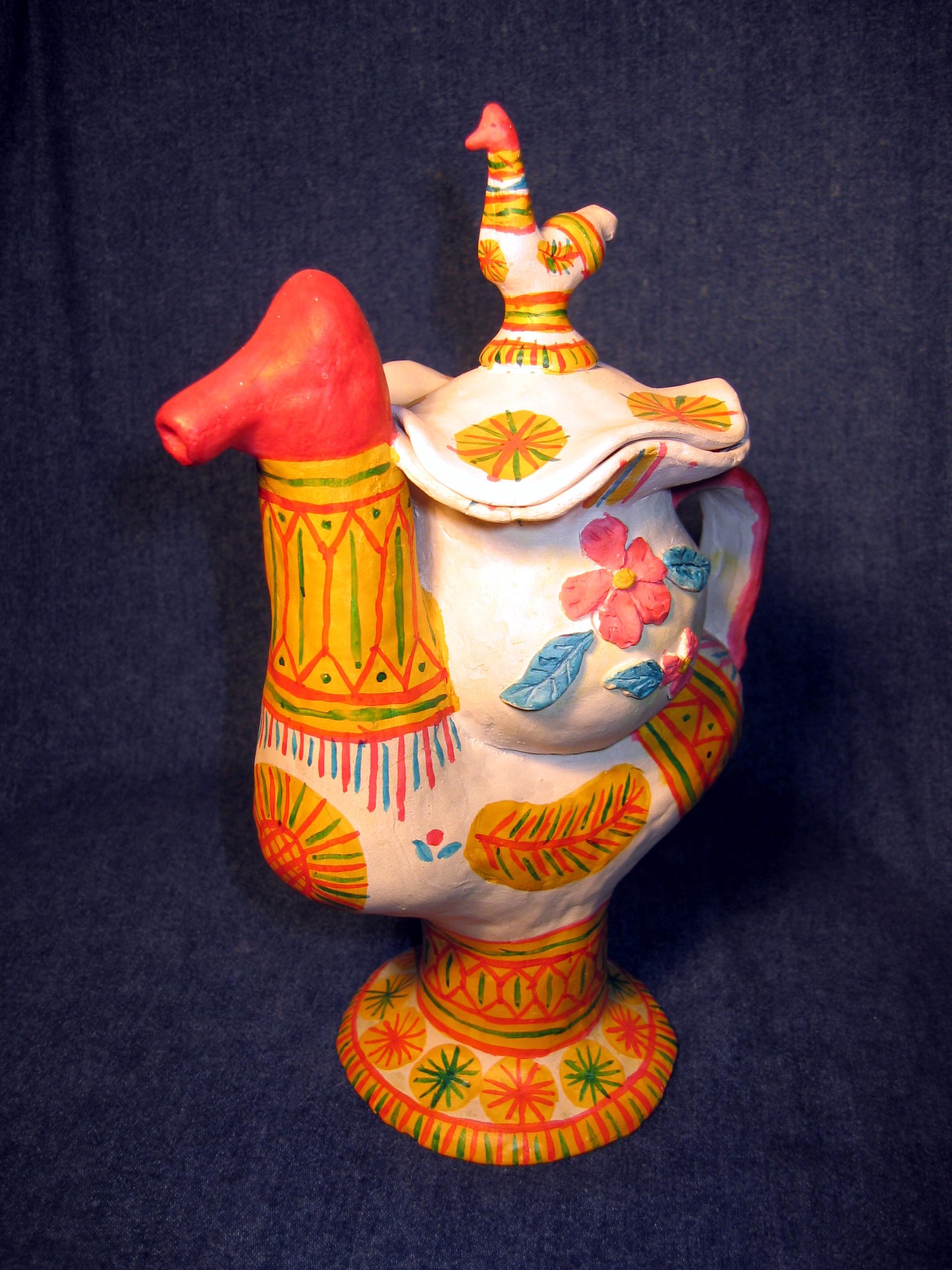
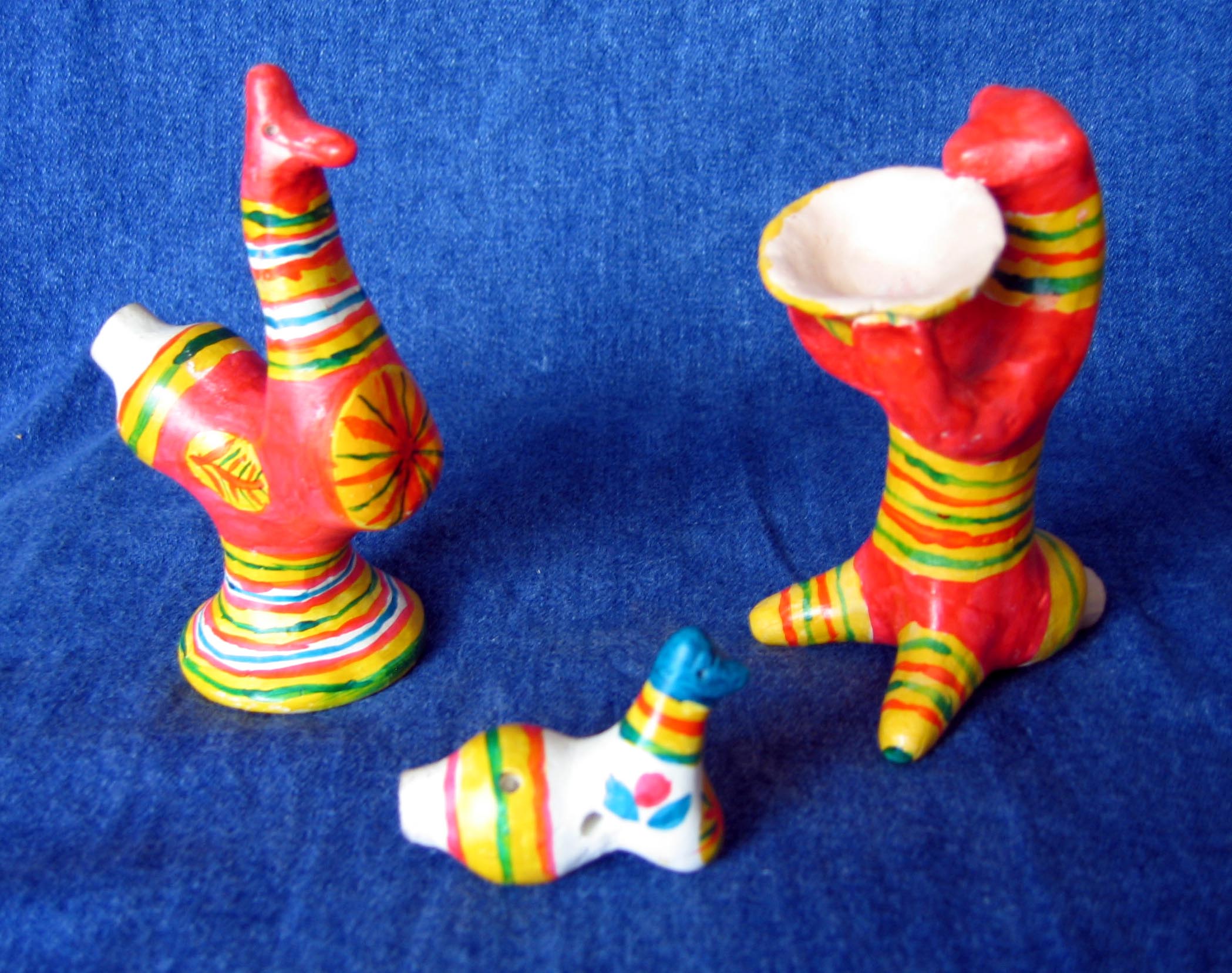
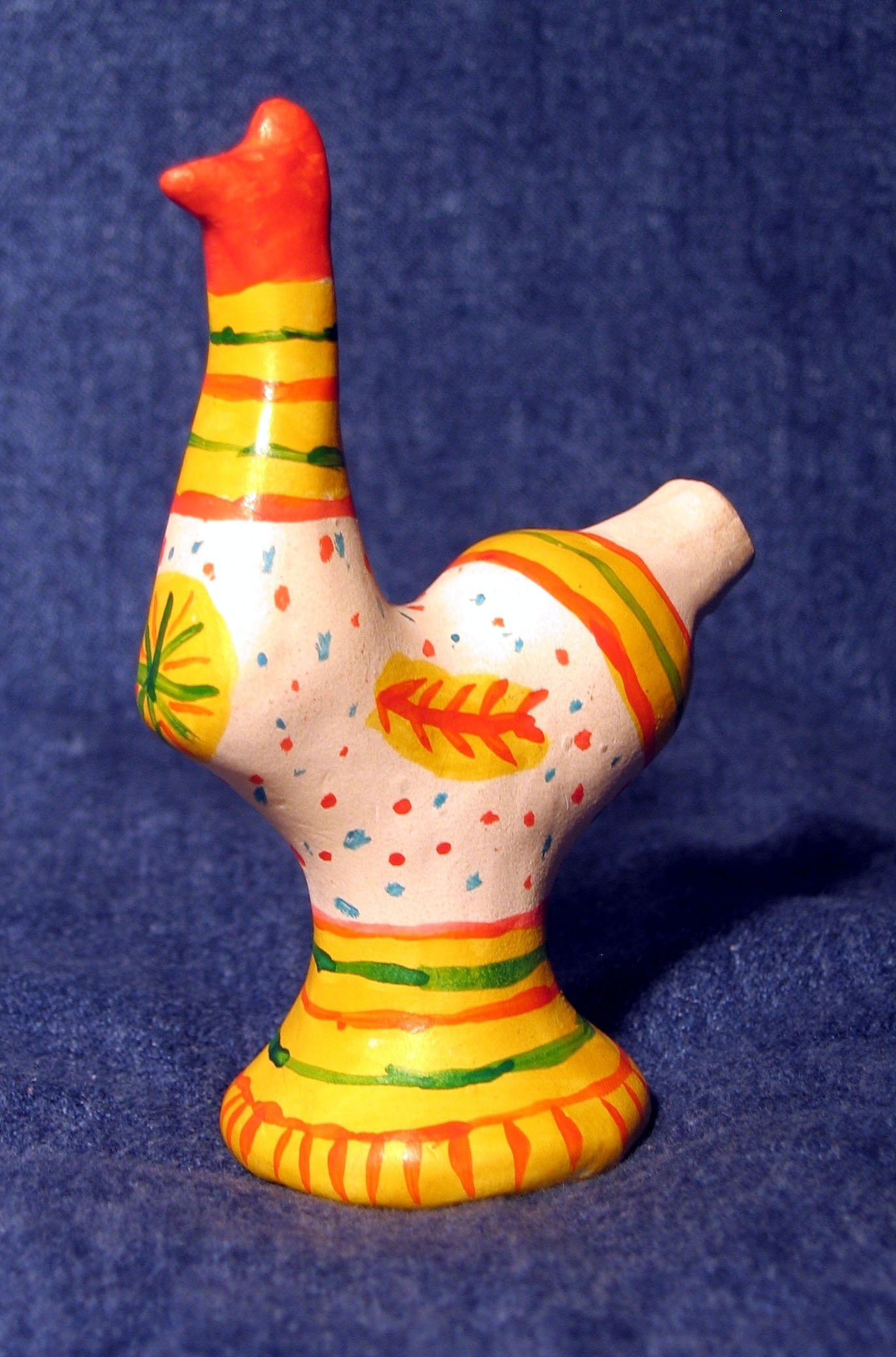
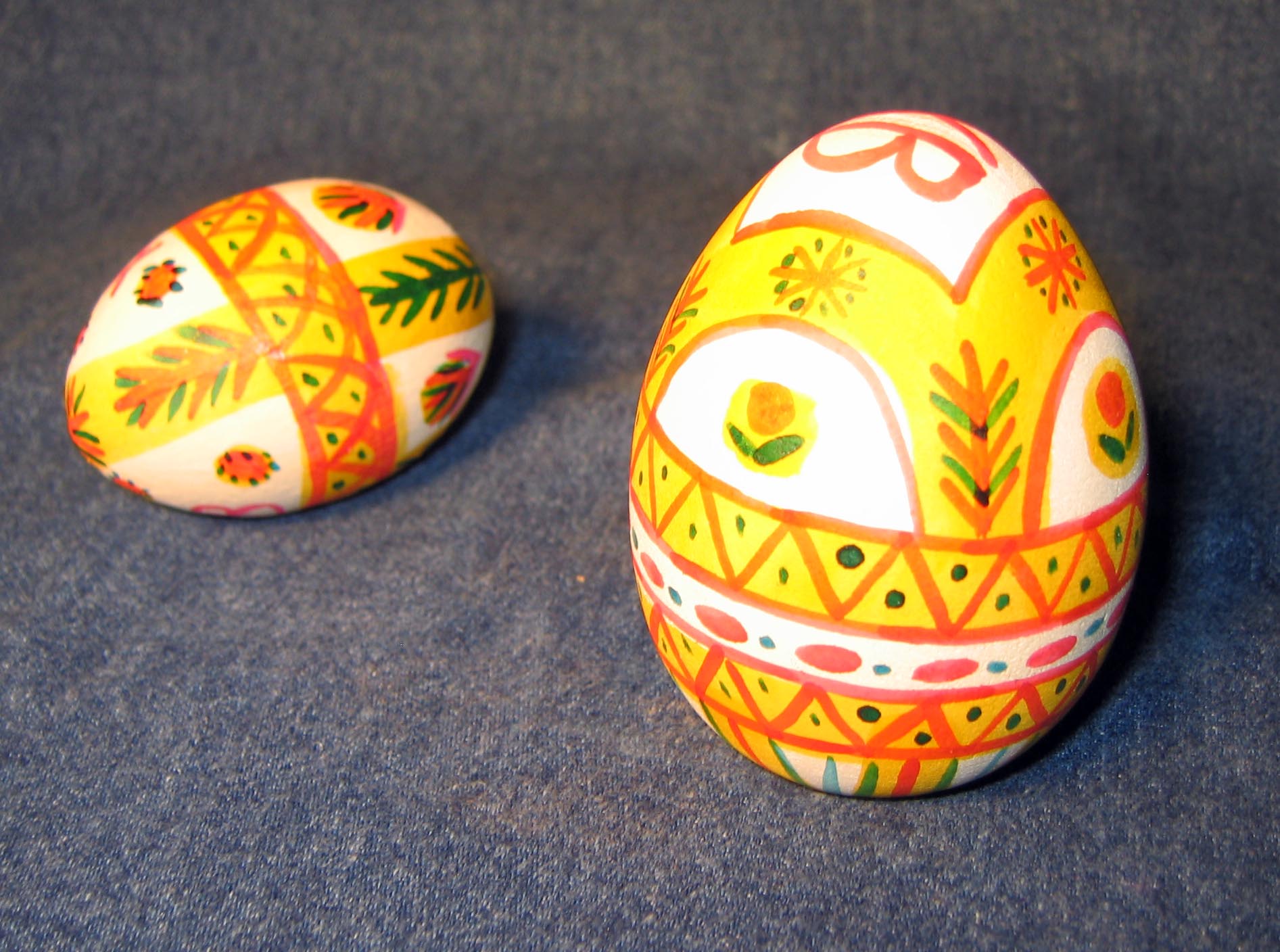
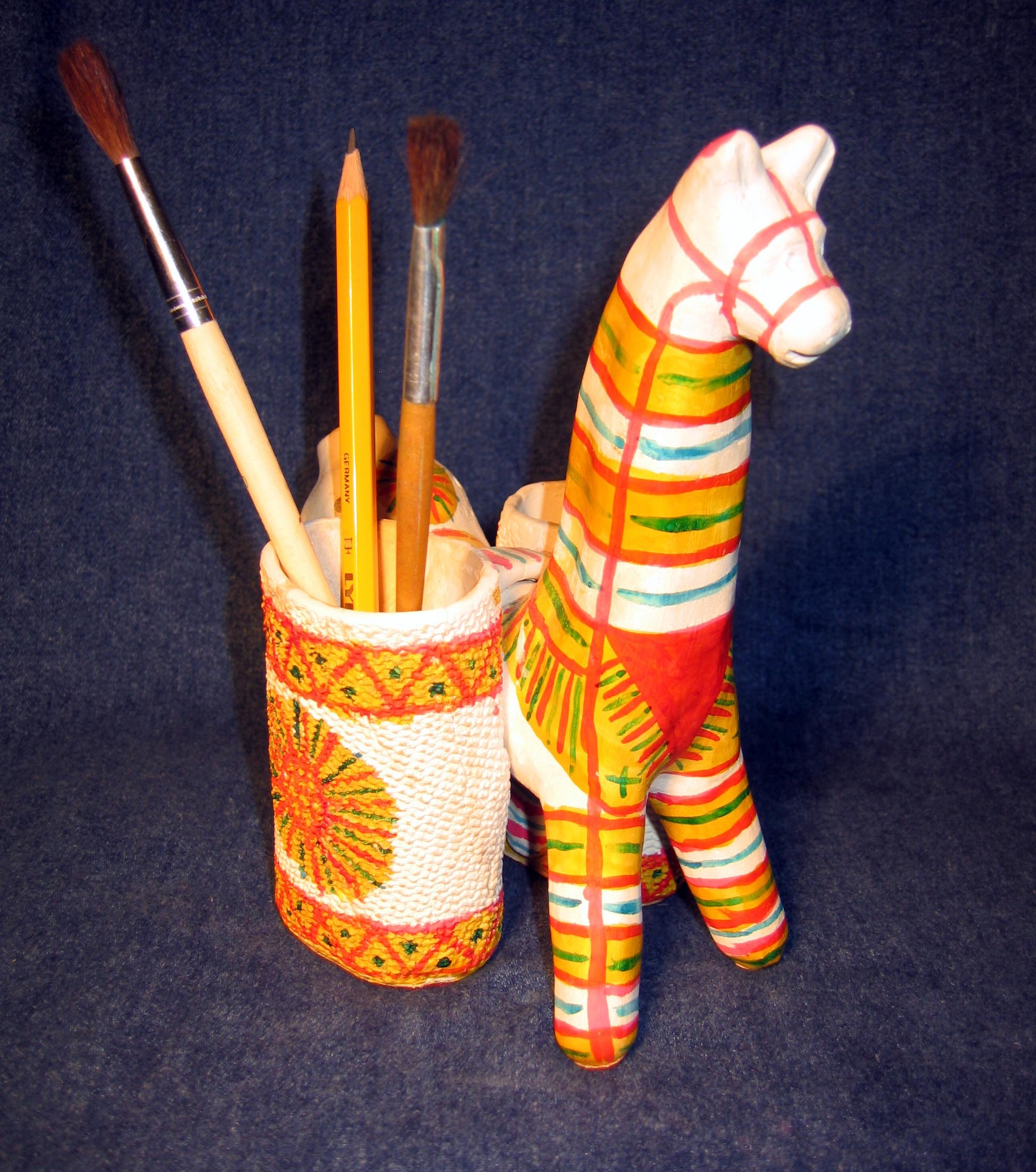
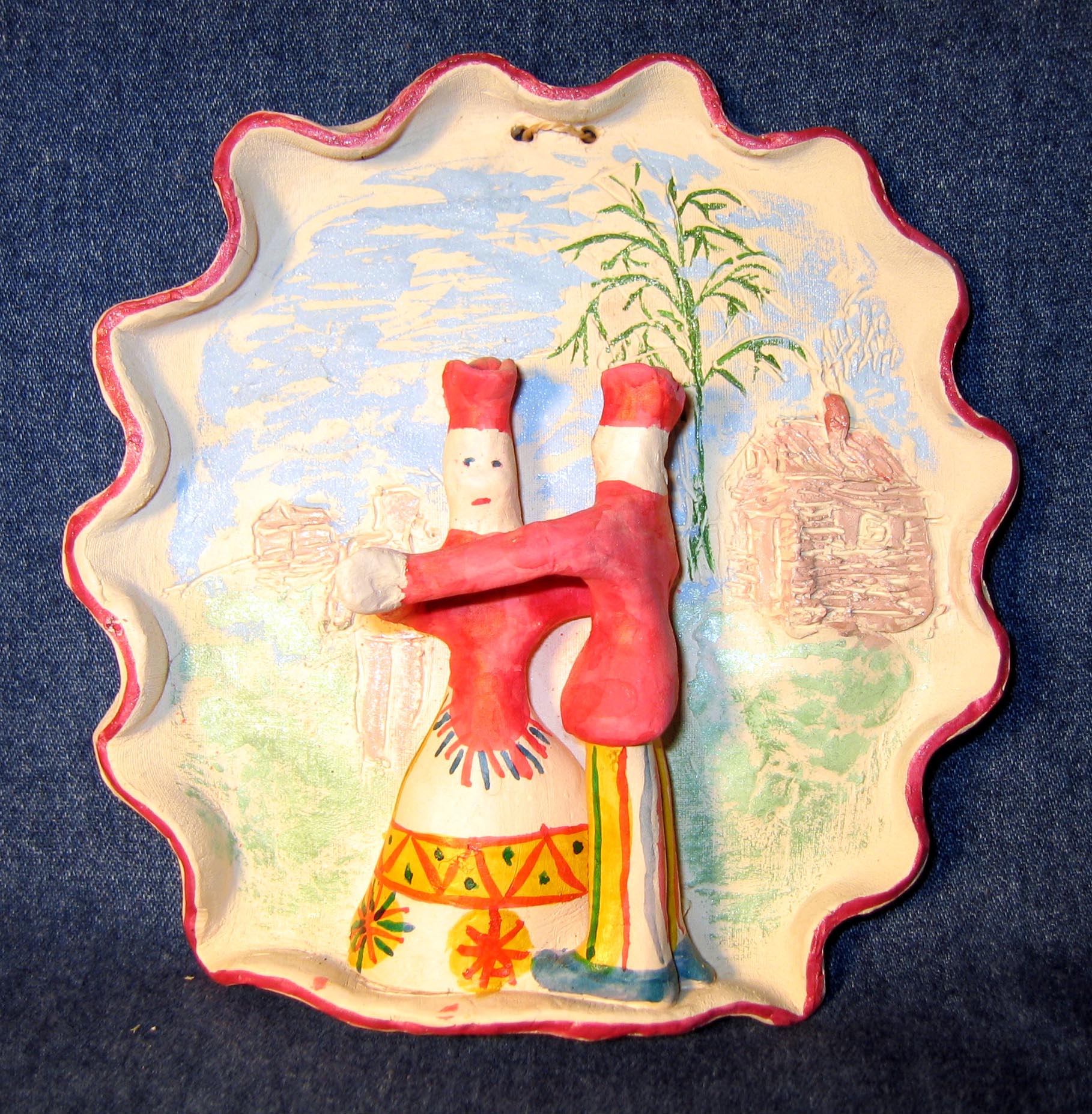
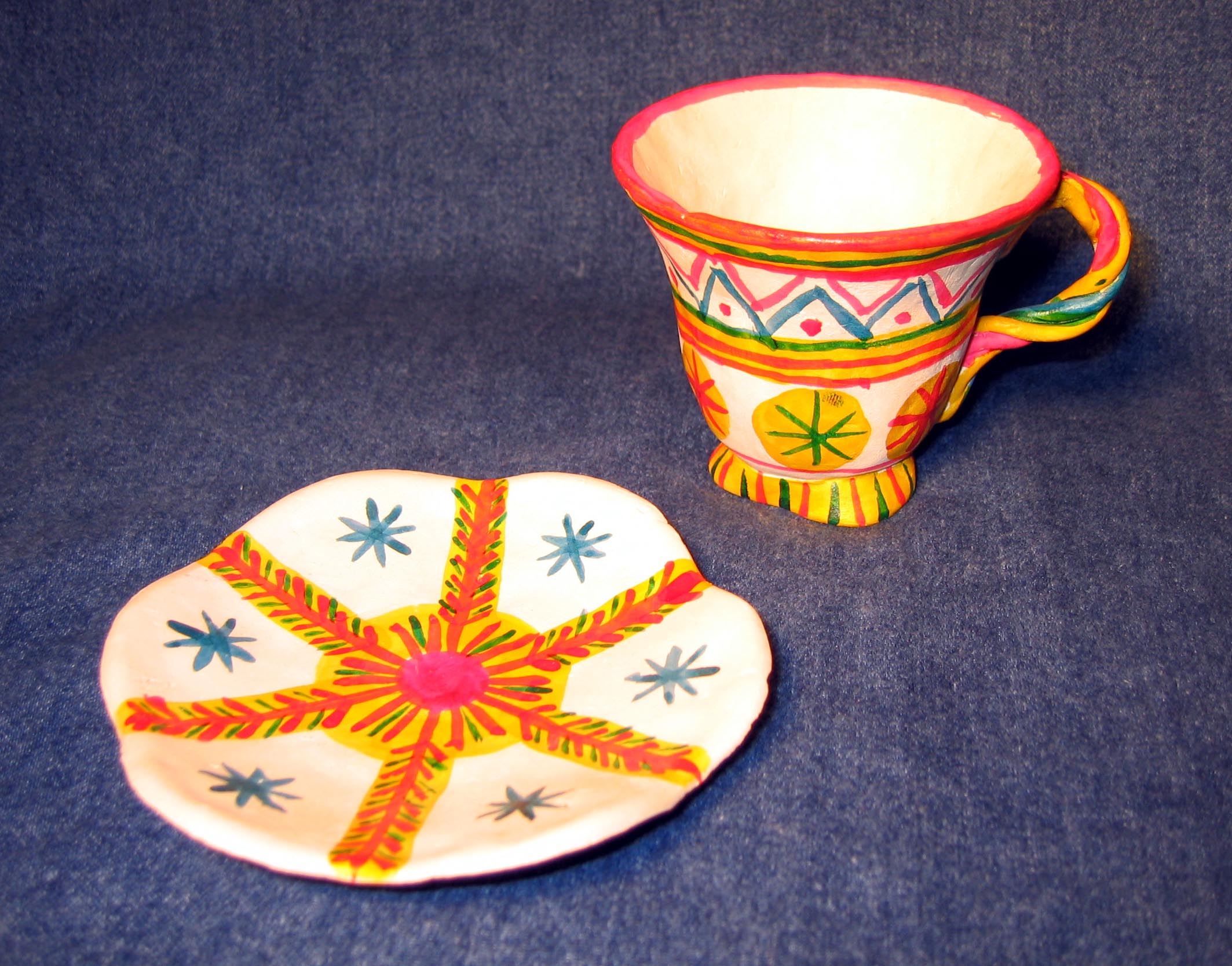
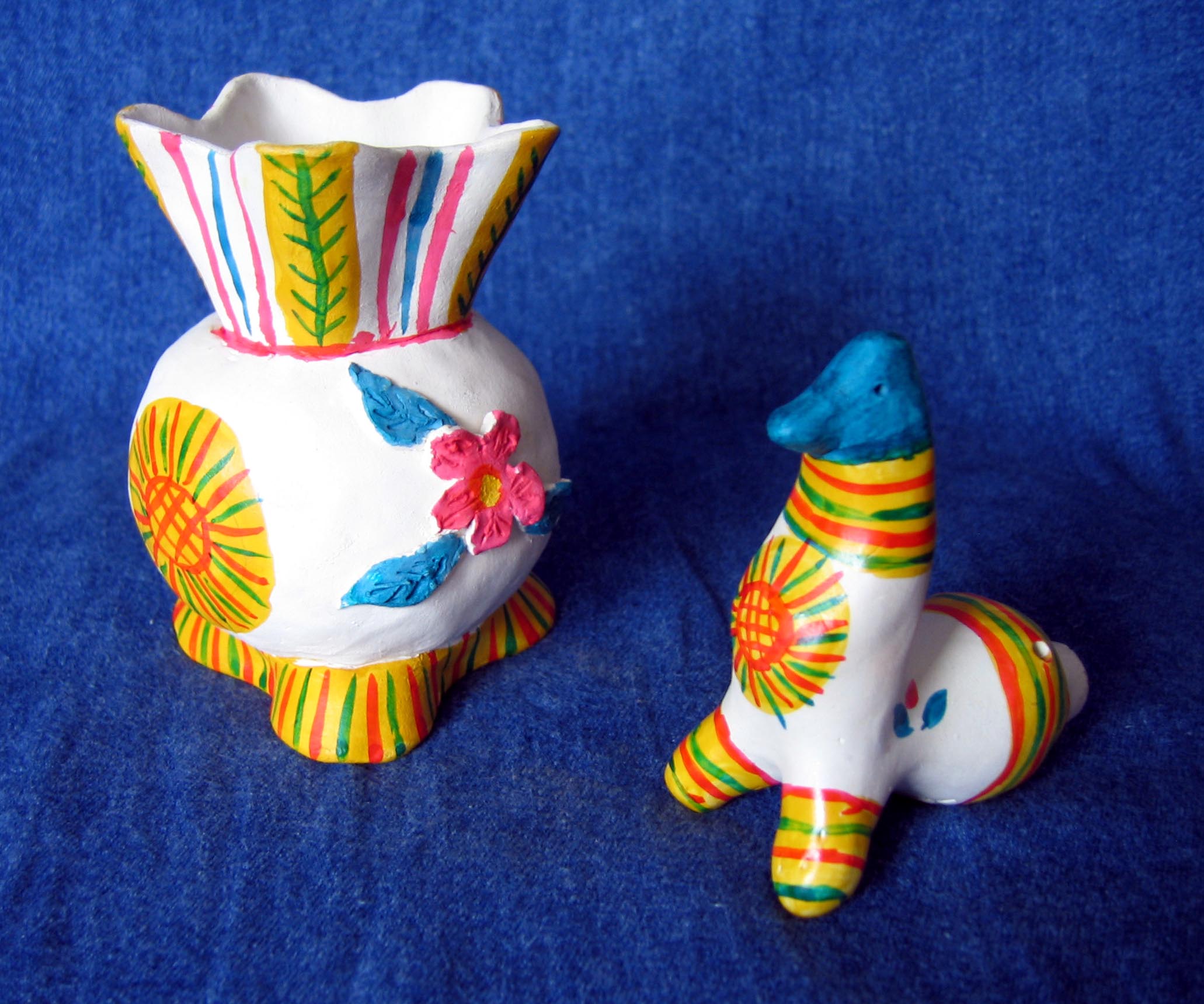
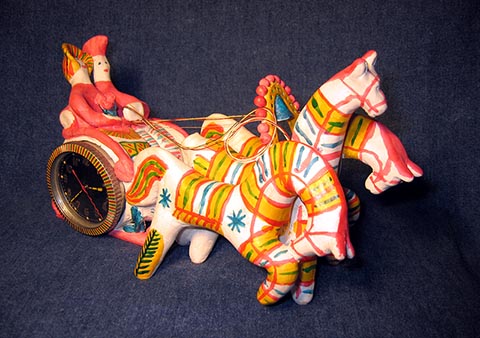
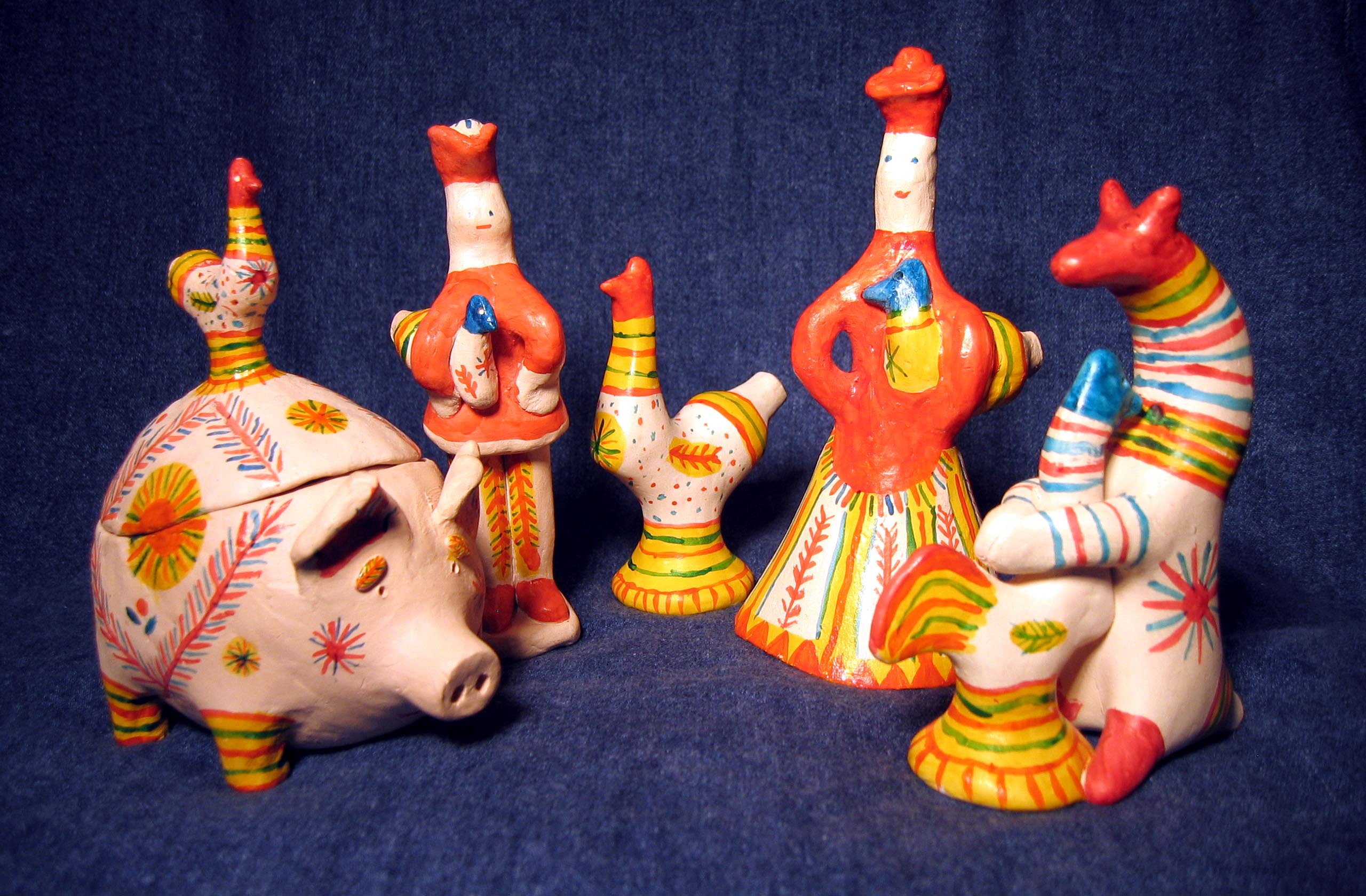
After firing, the sinika (as the local clay is called for its bluish-grey color) turns white, and the toy is ready to be painted immediately. First, yellow stripes and spots are applied; then they are outlined with a red "feather," followed by green, and more rarely, blue or violet. The painting follows a traditional scheme: colored stripes run along the form, alternating with vibrant, solid spots. More complex patterns can be found, especially on the skirts of the "Lady" figures: branched "fir trees," bright "berries," radiant "stars," or "suns" intertwine into joyful, patterned blossoms. The ladies' jackets and the soldiers' shirts are usually painted in a single color (crimson, green, or yellow). In these designs, a circle represents the sun, a triangle represents the earth, and fir trees or sprouts symbolize vegetation and life. All these patterns serve as a reminder of the bond between humanity and nature.
Chicken and goose feathers are used for the painting. Originally, aniline dyes were diluted with egg, resulting in rich, natural tones; unfortunately, these faded and dulled quickly. Later, craftswomen began using acetone—the paint became more durable, although the tones lost some of their natural softness.
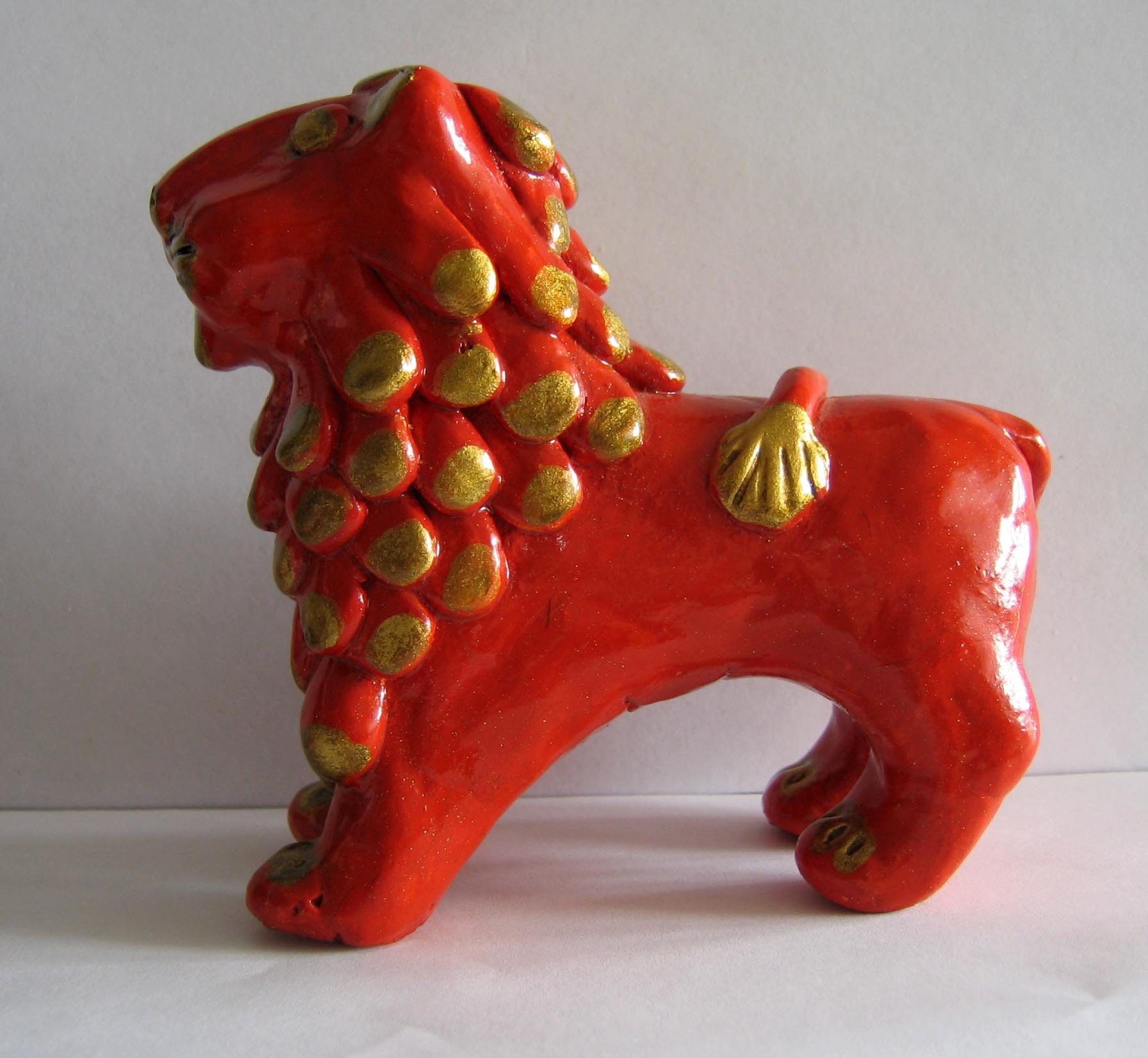
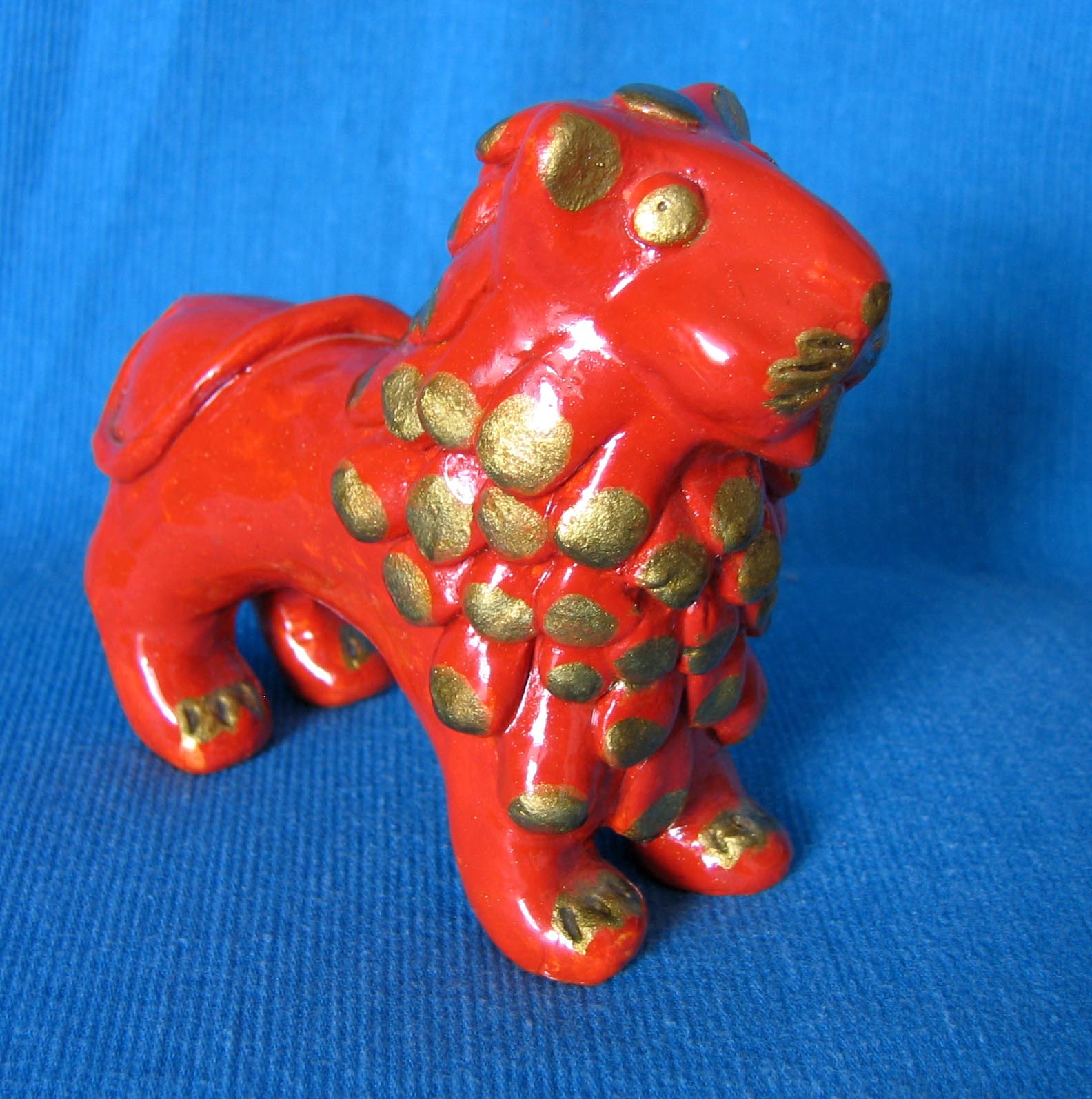
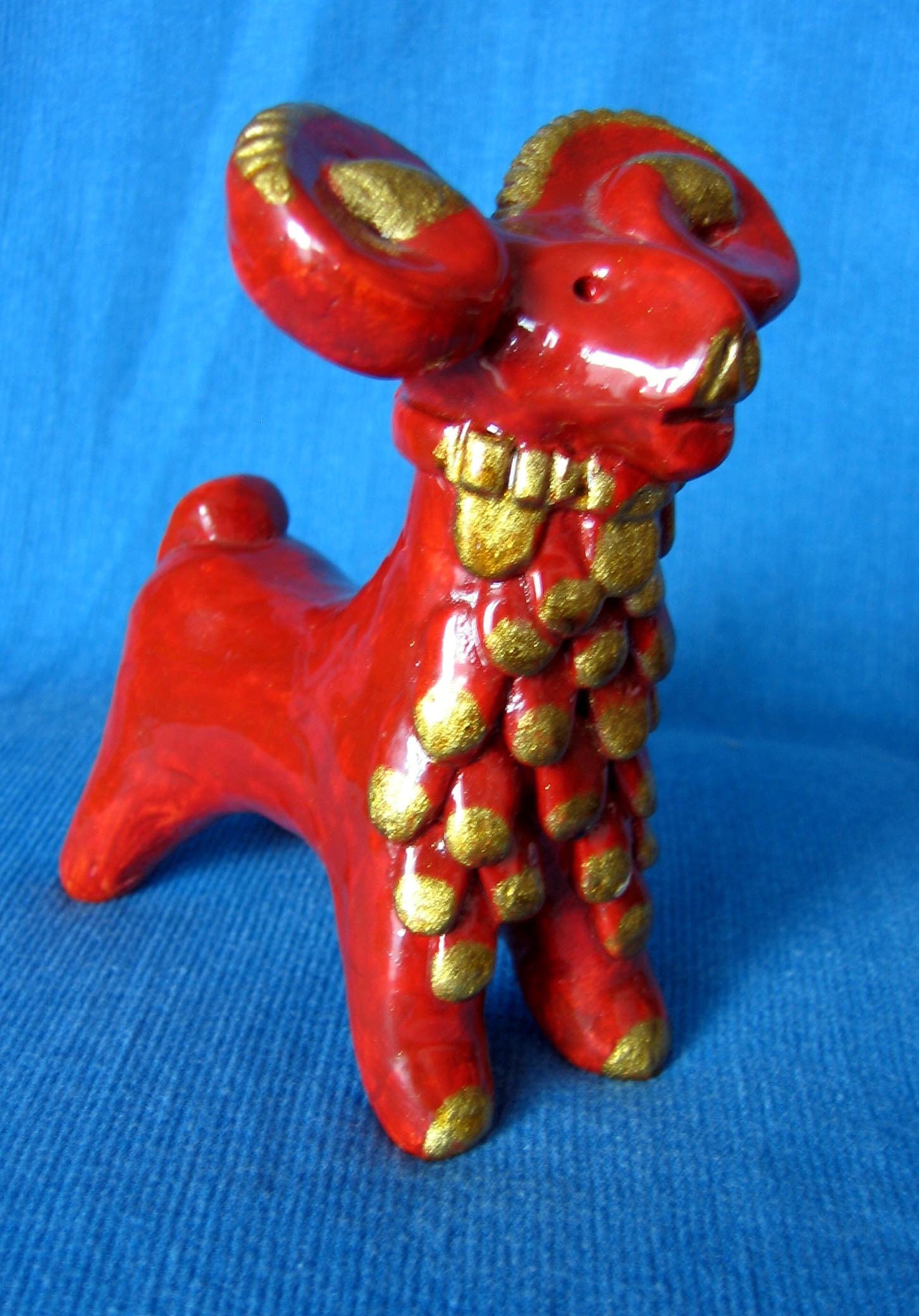
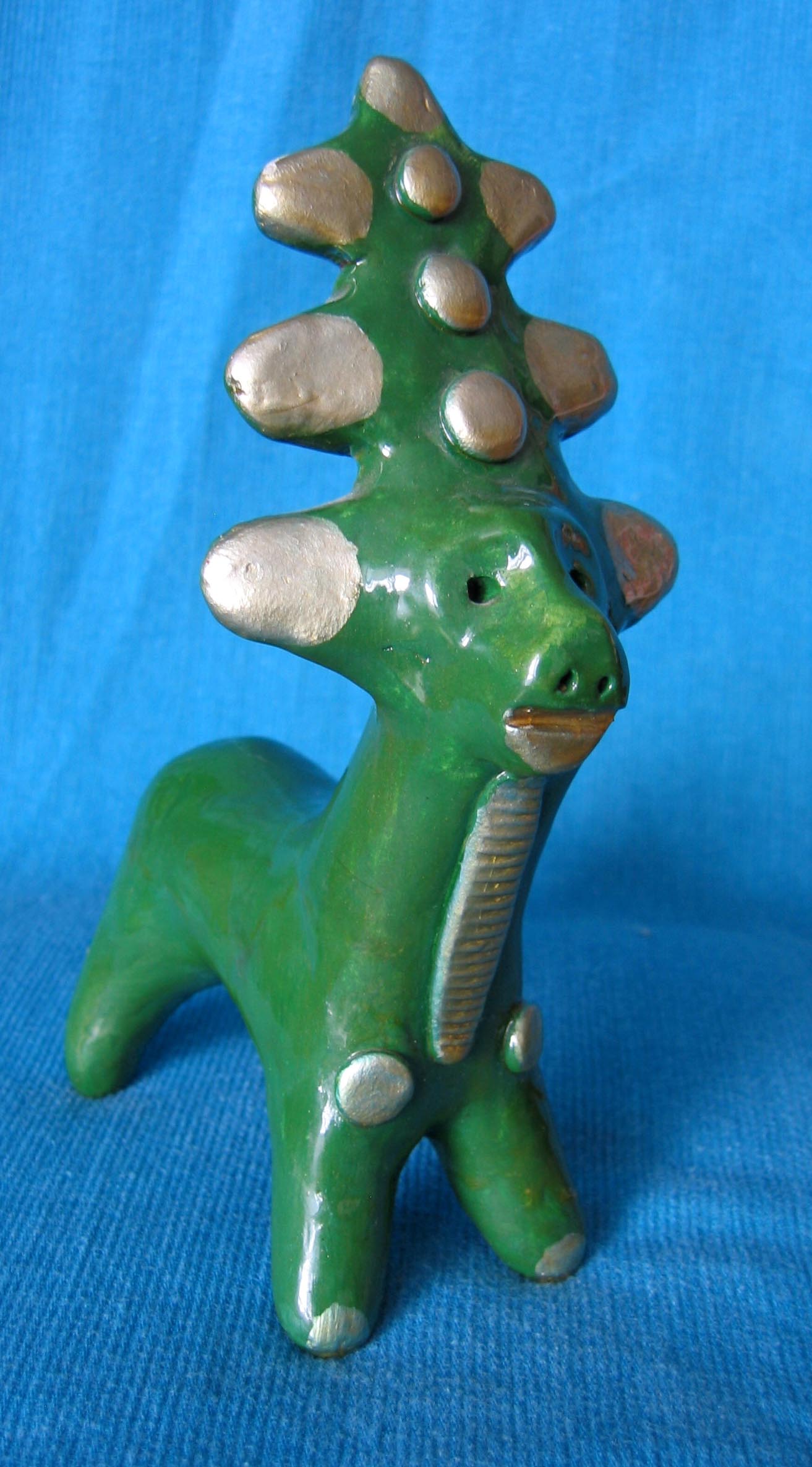
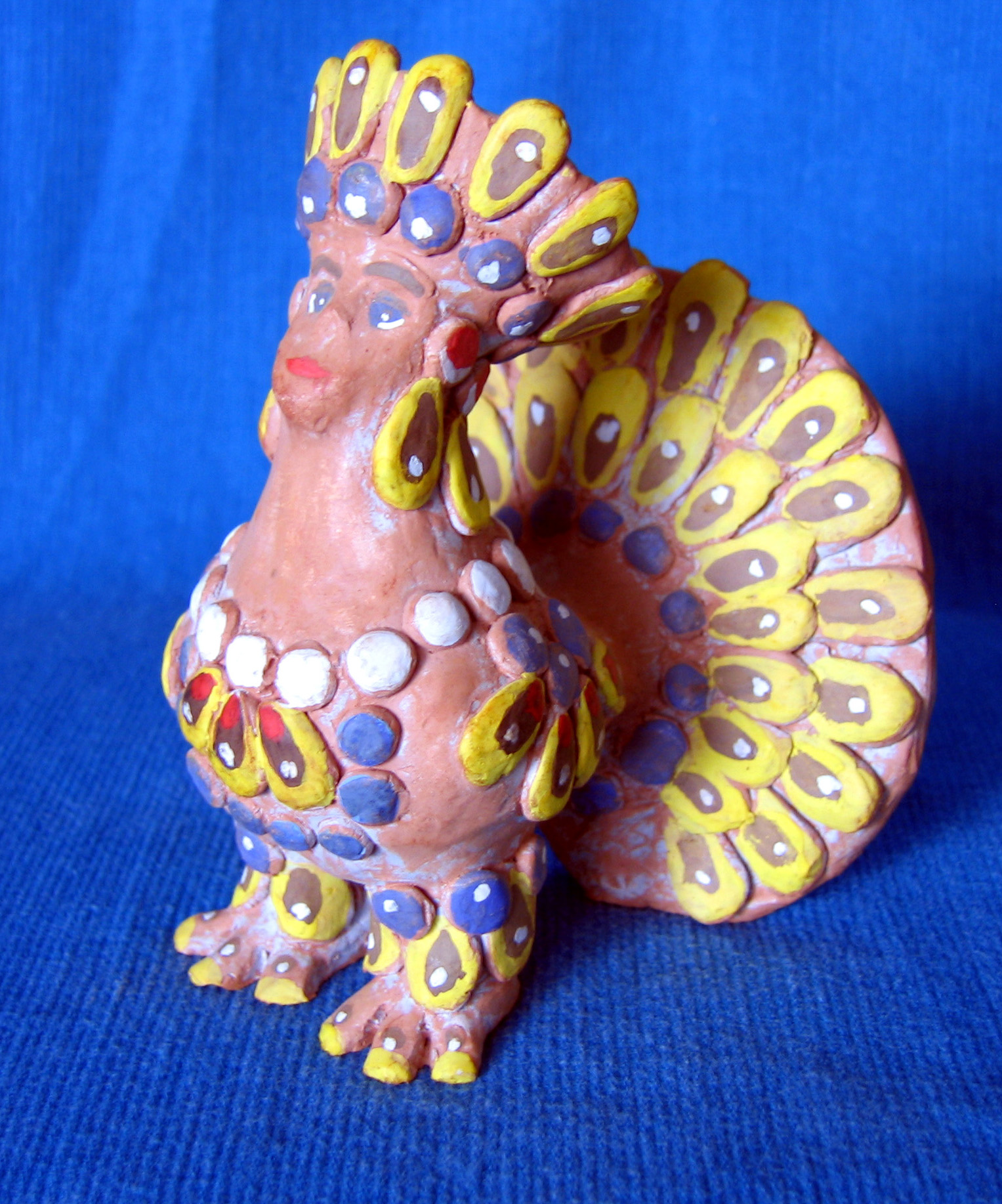
The characters and subjects of Filimonovo toys are traditional: elegant ladies, peasant women, soldiers, dancing couples, and riders on horseback. Animals include cows, rams, horses, and bears, while birds feature chickens, roosters, and many others. All Filimonovo toys are whistles—even the ladies and gentlemen. The whistle is always located in the tail of the animals or birds that the figures are holding.
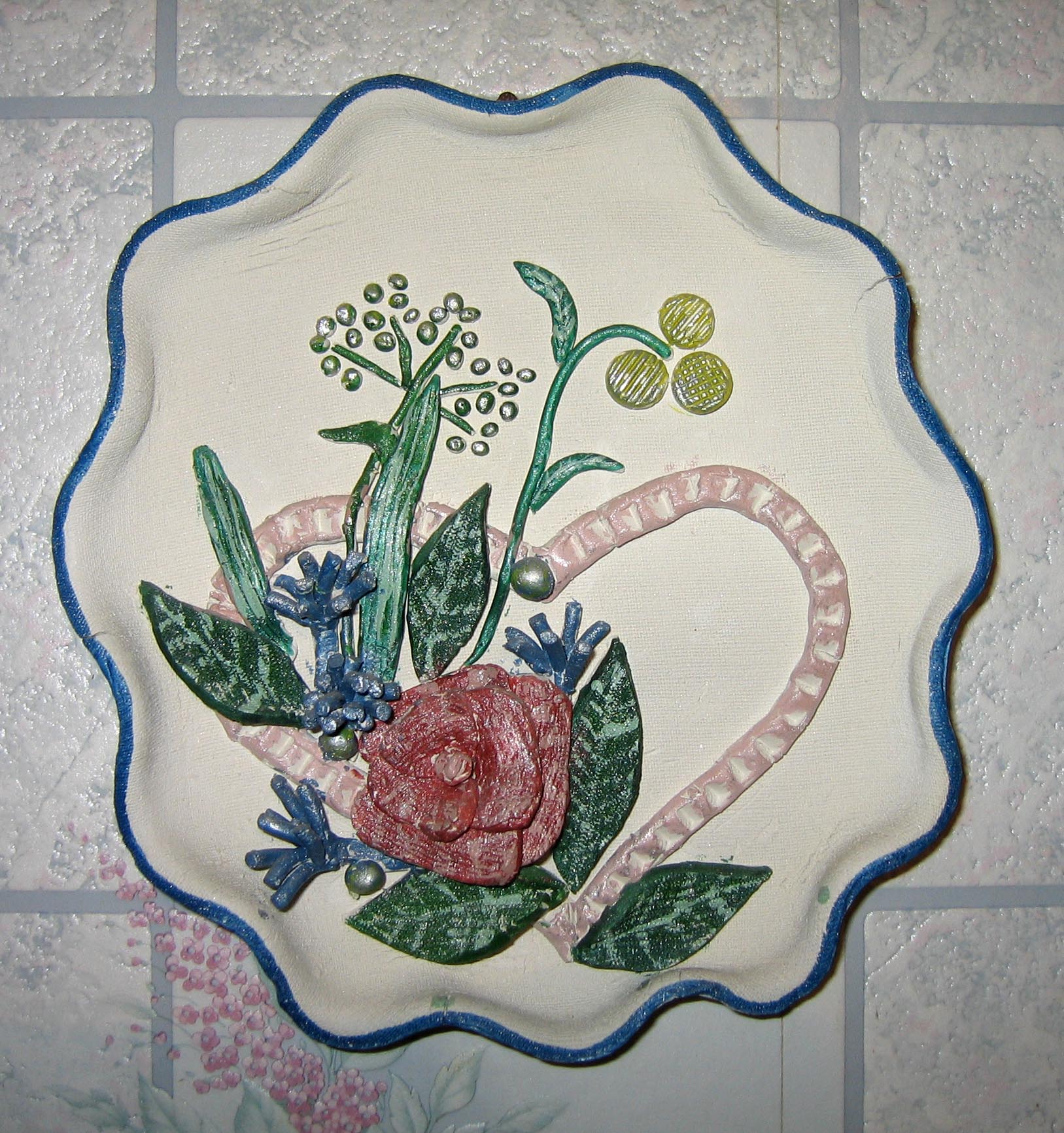
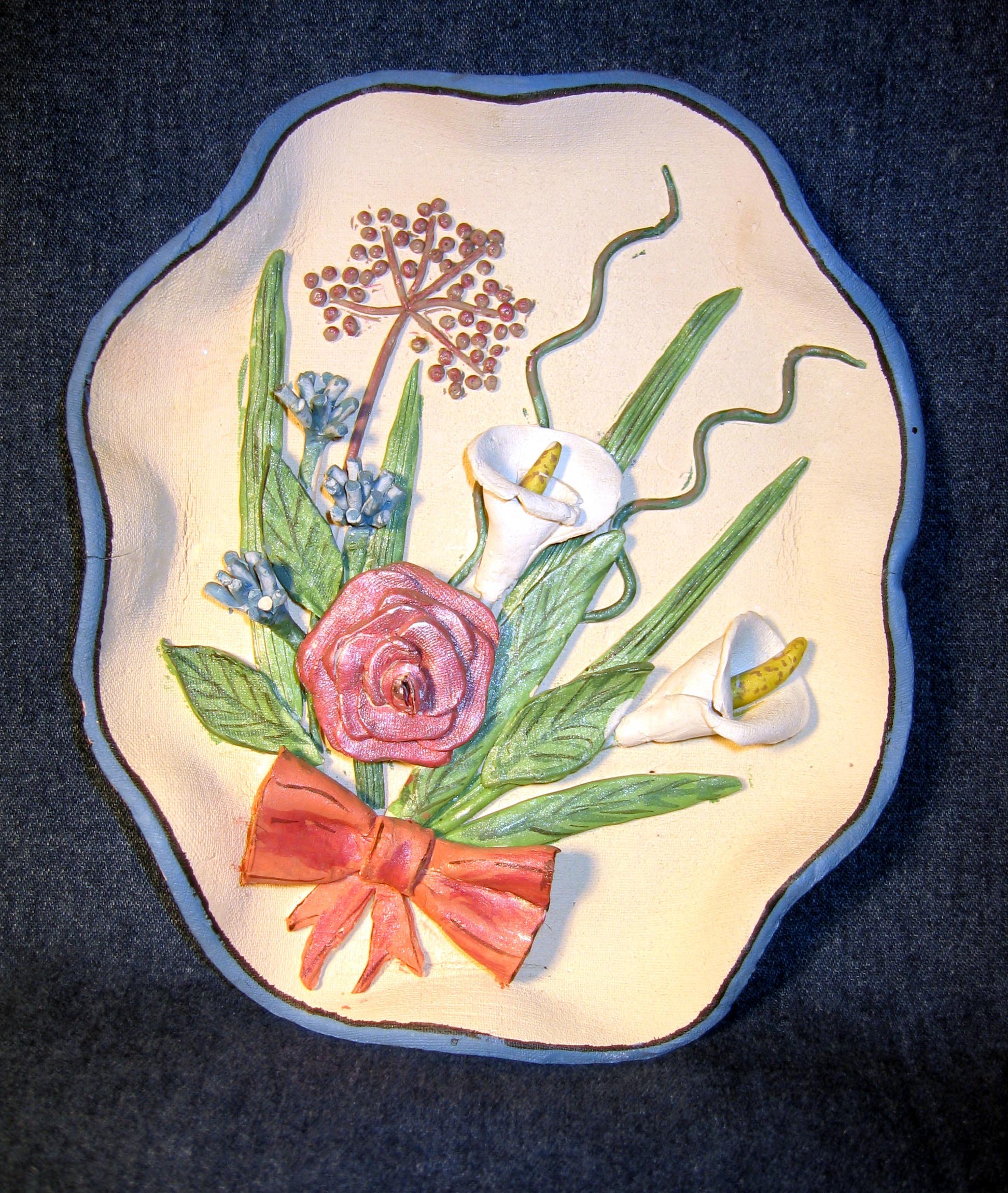
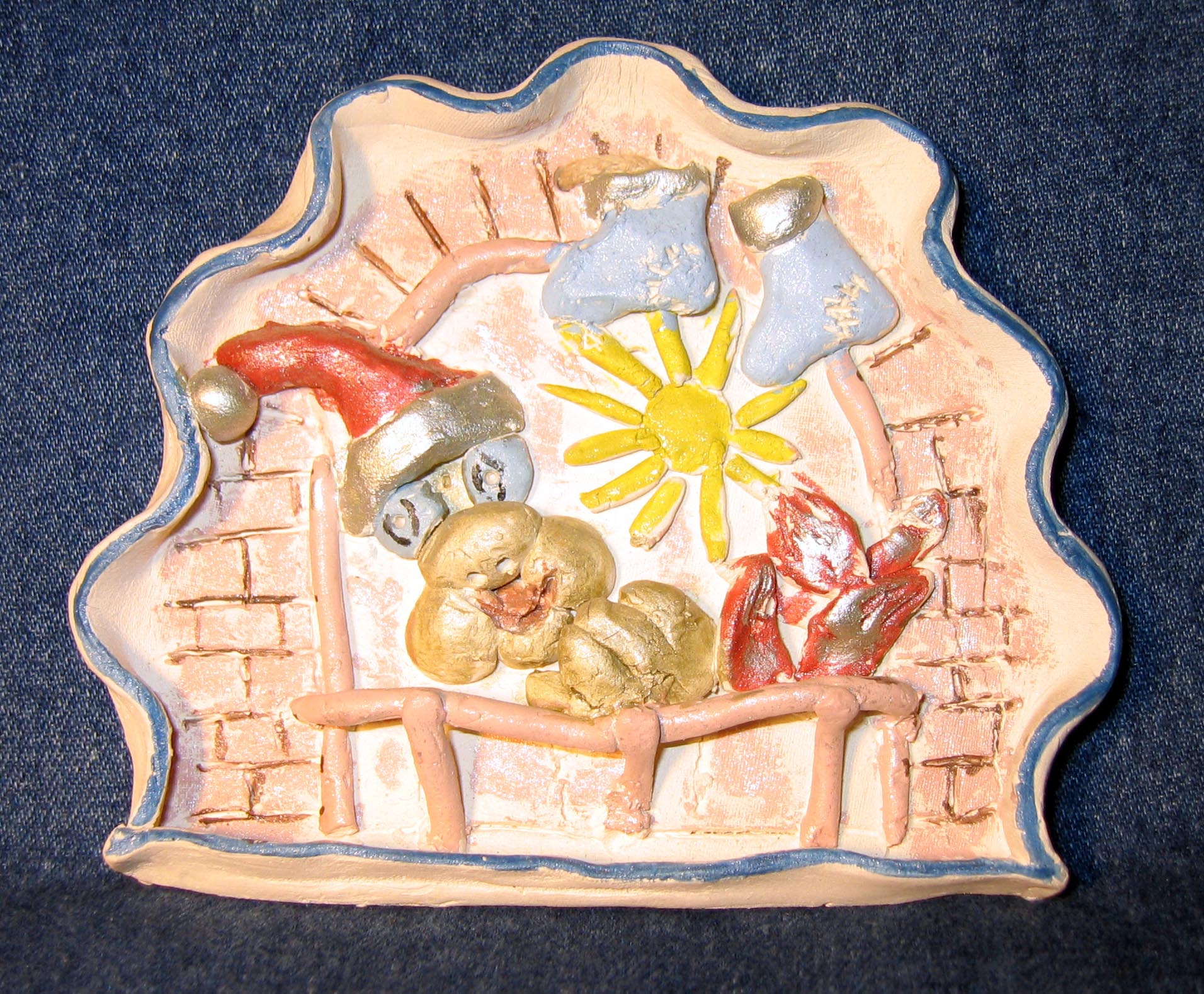
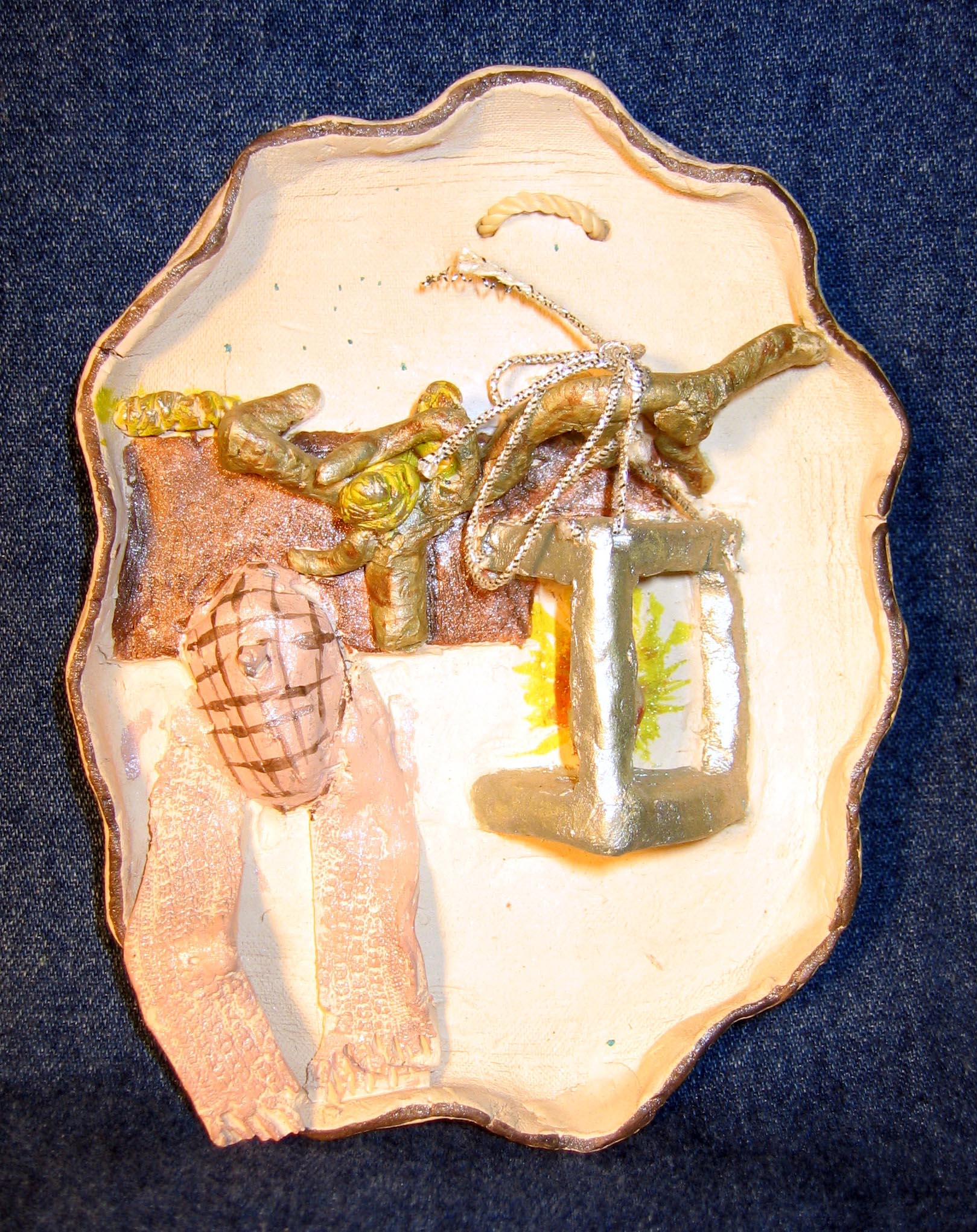
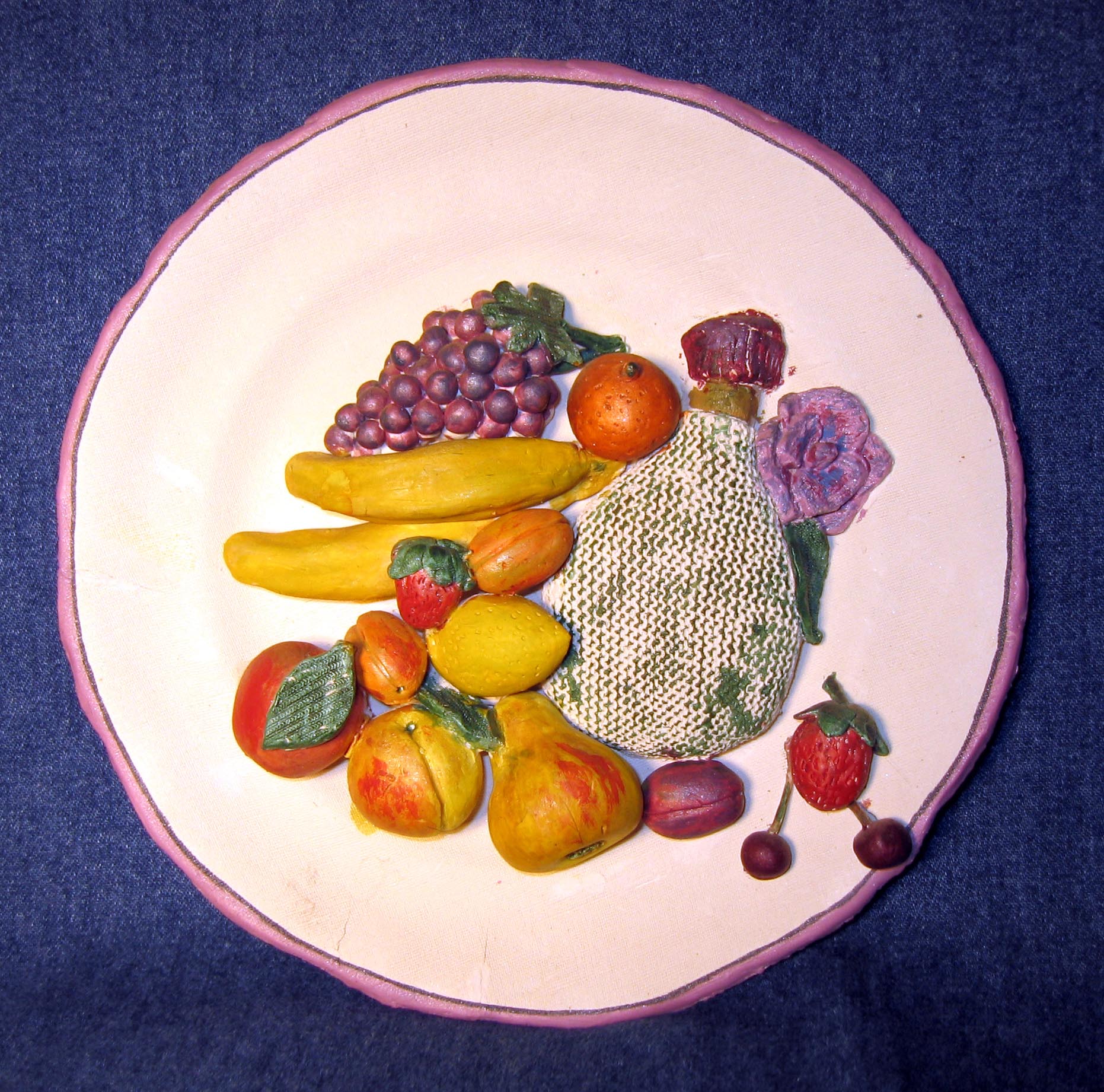
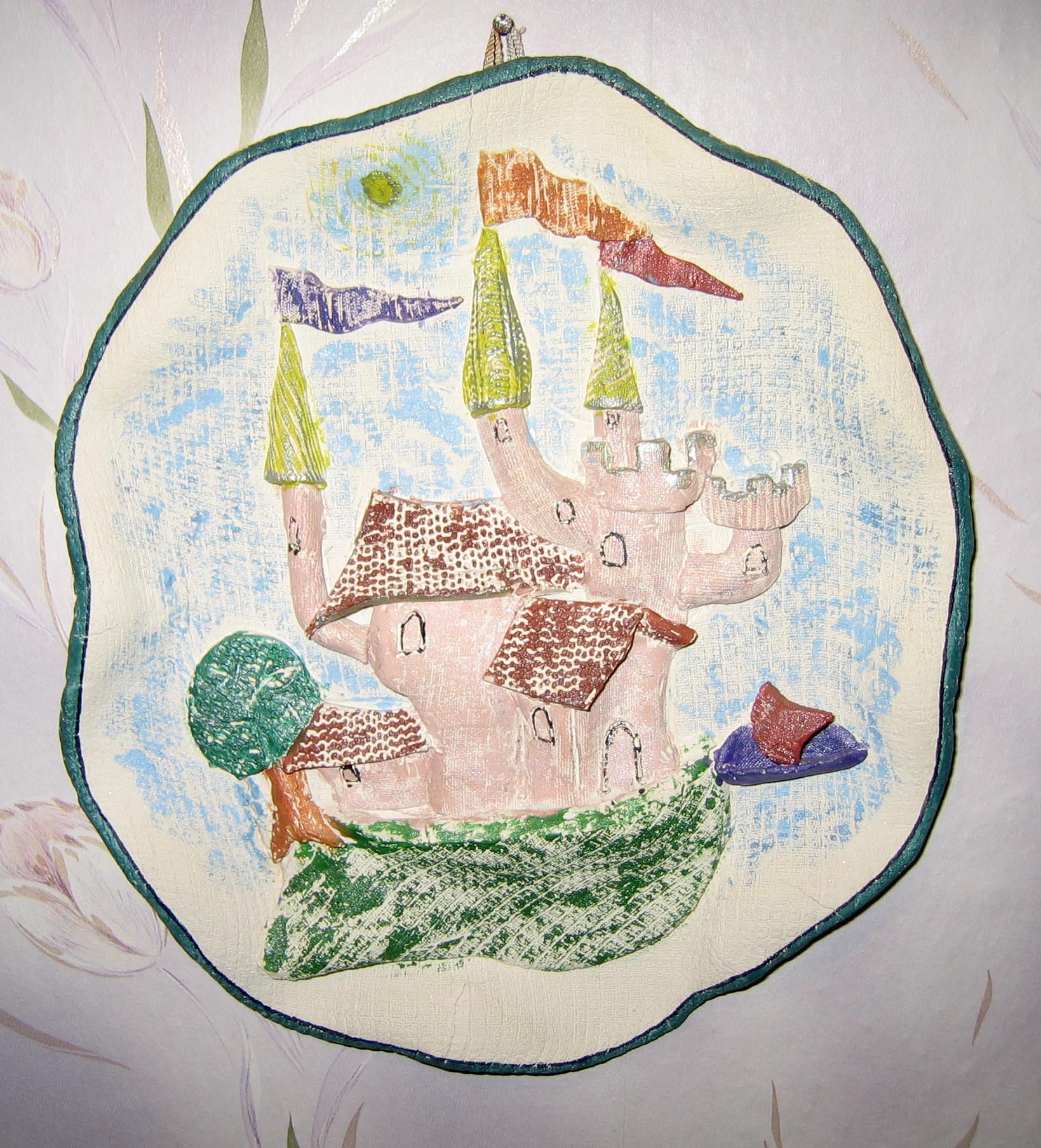
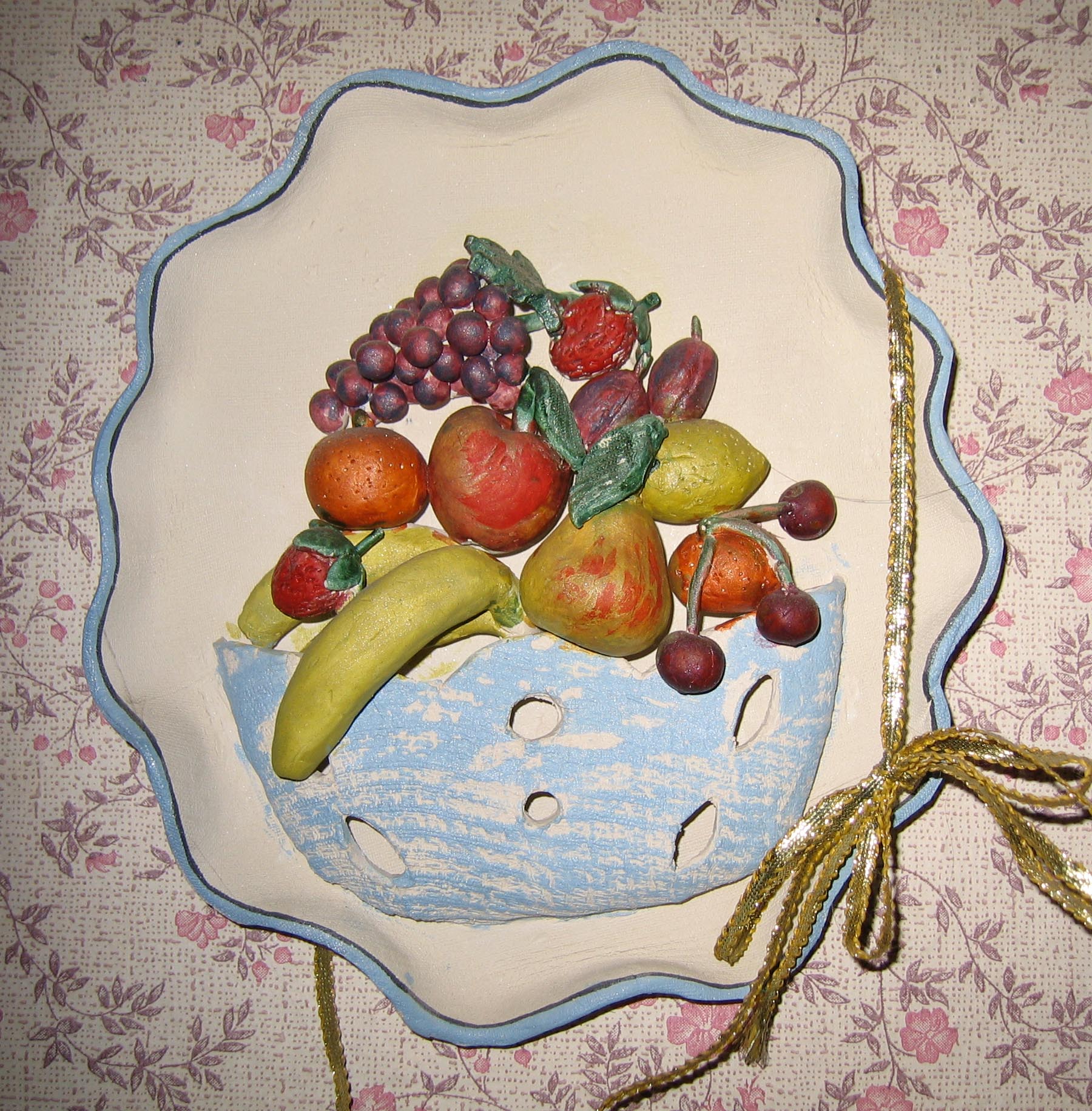
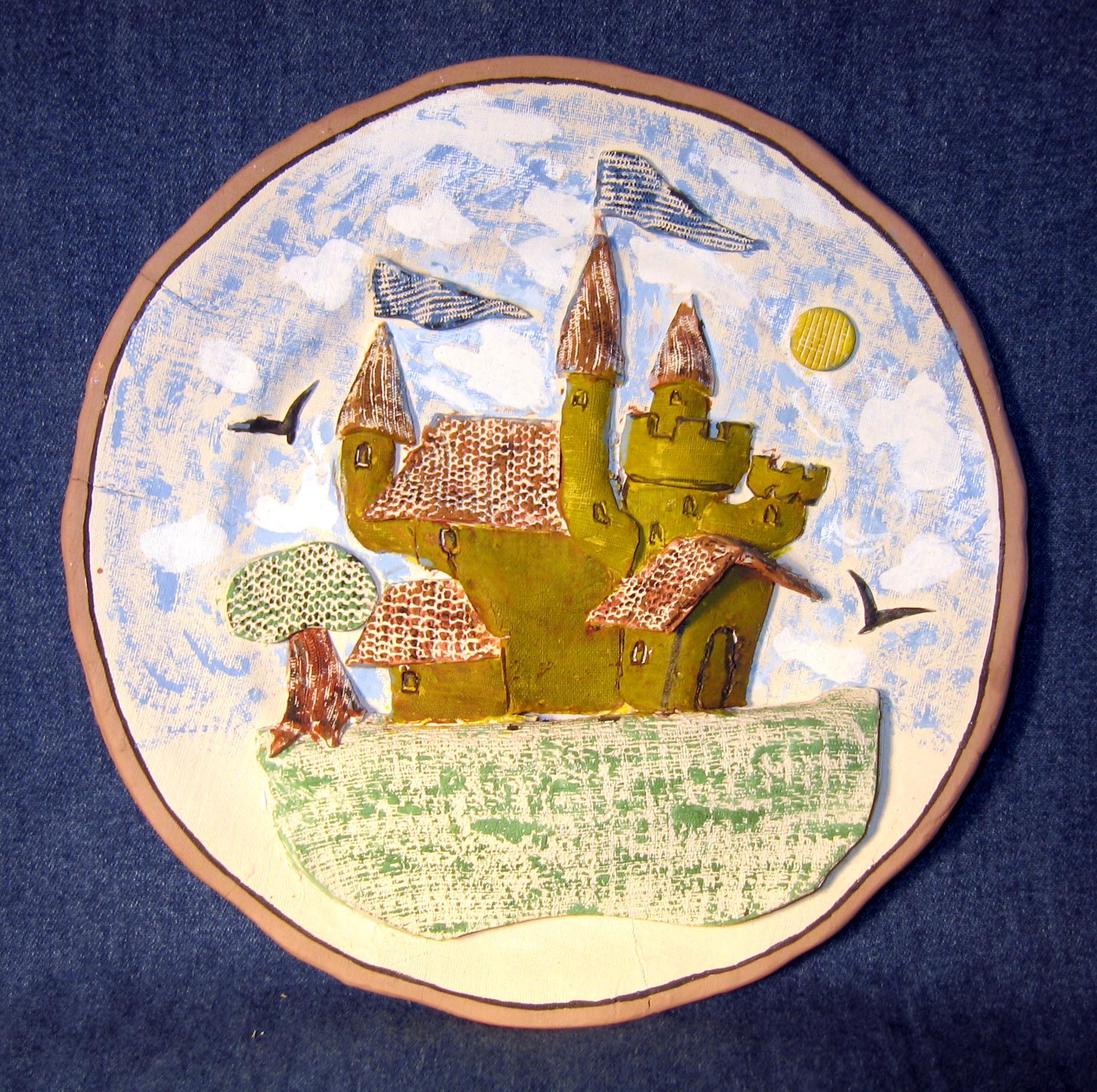
These works date back to my time studying at the art school in the city of Novomoskovsk (Russia).